
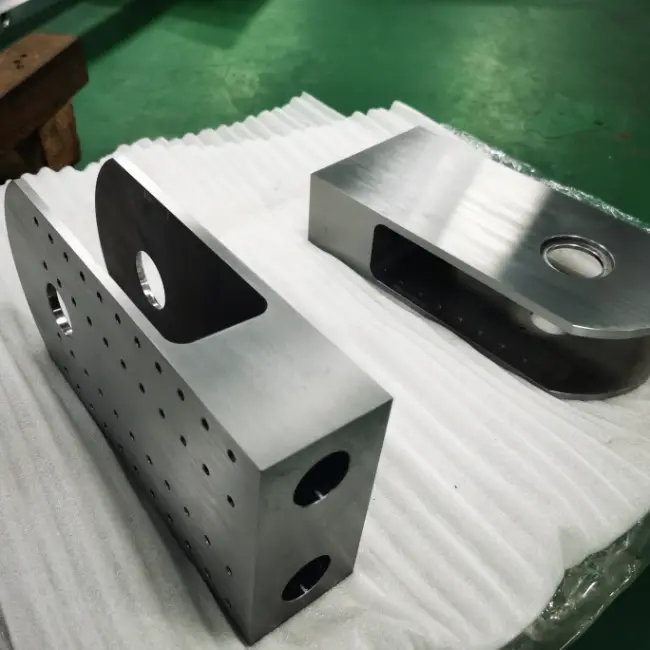
S235 is a non-alloy structural steel commonly used for machine frames, brackets, connecting plates, and welded structures. It is well suited to manufacturing routes that combine cutting, bending, welding, and CNC machining. When purchasing custom S235 parts, confirm the complete grade, stock form, and thickness first. Then define the critical dimensions, heat treatment, and surface protection requirements.
What Is S235 Steel?
S235 belongs to the EN 10025-2 structural steel system. The “S” stands for structural steel, while “235” indicates a minimum yield strength of 235 MPa within the specified thickness range. The minimum yield strength specified by the standard changes as material thickness increases, so purchase orders should state both the grade and thickness.
JR, J0, and J2 distinguish the impact test requirements:
| Grade | Impact energy requirement | Purchasing consideration |
|---|---|---|
| S235JR | 27 J at +20°C | General structural parts |
| S235J0 | 27 J at 0°C | Projects with low-temperature toughness requirements |
| S235J2 | 27 J at −20°C | Structures requiring further control of brittle fracture risk at low temperatures |
The impact test temperature is a material acceptance condition, not the lowest permissible operating temperature of the finished part. Low-temperature applications also require assessment of thickness, loads, and the applicable design code. ArcelorMittal’s S235 product data lists the corresponding thickness groups and property requirements.
What Is the Chemical Composition of S235 Steel?
S235 consists mainly of iron, with controlled amounts of carbon, manganese, phosphorus, sulfur, copper, and nitrogen. Composition limits vary slightly by impact grade and material thickness.
| Element | S235 reference limit | Main effect |
|---|---|---|
| Carbon (C) | Max. 0.17%–0.20% | Strength and weldability |
| Manganese (Mn) | ≤1.40% | Strength and toughness |
| Phosphorus (P) | Max. 0.025%–0.035% | Impact toughness |
| Sulfur (S) | Max. 0.025%–0.035% | Hot-working and weld quality |
| Copper (Cu) | ≤0.55% | Controlled residual element |
| Nitrogen (N) | JR/J0: ≤0.012%; J2 per specification | Toughness and aging behavior |
| Silicon (Si) | No common limit in the cited data | Verify on the material certificate |
Carbon equivalent is limited to ≤0.35% for 5–40 mm thickness and ≤0.38% for thicknesses above 40 mm up to 150 mm. It is used to assess weldability and is not a separate chemical element.
For purchasing and inspection, verify the complete grade, thickness, product standard, and heat analysis on the material certificate. Source: ArcelorMittal S235 product data.
What Are the Key Properties of S235?
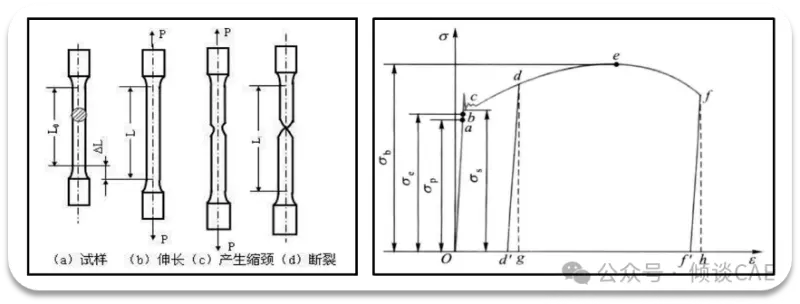
The following figures use S235JR hot-rolled products supplied by a steelmaker as an example. Final acceptance should follow the specified purchasing standard, product form, thickness, and material test certificate for the batch.
| Property | Reference requirement or value | Applicable condition |
|---|---|---|
| Minimum yield strength | 235 MPa | Thickness of 5–16 mm |
| Minimum yield strength | 225 MPa | Thickness greater than 16 mm and up to 40 mm |
| Tensile strength | 360–510 MPa | Thickness of 5–100 mm in the cited product data |
| Elongation after fracture | At least 24% | Thickness of 5–40 mm in the cited product data, measured using the specified specimen |
| Impact energy | At least 27 J | S235JR at +20°C |
| Elastic modulus | Approximately 210 GPa | Common structural design reference value |
| Density | Approximately 7.85 g/cm³ | Common weight-estimation value |
The relatively low carbon content of S235 supports welding and forming, but chemical composition limits vary with the product and thickness. For example, the cited steelmaker specifies a maximum carbon content of 0.17% for S235JR products 5–40 mm thick. When planning welding or a substitution across standards, check the material test certificate for the actual heat rather than relying on a generic “typical composition” table.
S235 is electrically conductive and ferromagnetic, but its primary purpose is structural load bearing. If a part must provide grounding, heat dissipation, or a magnetic function, specify the relevant performance criteria and test methods separately on the drawing.
What Stock Forms Is S235 Available In?
Plate, coil, sections, and bar are the most useful S235 stock forms for custom machining. Structural hollow sections are also available in S235-series grades, but they should be ordered to the applicable hollow-section standard rather than treated as the same product as EN 10025-2 hot-rolled plate.
| Stock form | Common products | Suitable custom parts |
|---|---|---|
| Hot-rolled plate | Sheet, medium plate, thick plate | Connecting plates, brackets, pads, flanges, and frame panels |
| Hot-rolled coil and strip | Hot-rolled coil, pickled coil, slit strip | Batch-cut, bent, and stamped parts |
| Hot-rolled sections | I-beams, H-beams, channels, angles, and similar sections | Frames, crossmembers, columns, and supports |
| Bar | Round, square, and flat bar | Structural pins, spacers, mounting blocks, and some turned parts |
| Structural hollow sections | Round, square, and rectangular hollow sections | Tubular frames, columns, guardrails, and trusses |
Purchasable plate and coil thicknesses and widths vary by mill and stockholder. A single supplier’s range should not be presented as a universal S235 specification. For example, Tata Steel’s S235 hot-rolled coil data lists its own dimensional range and pickled options; sections are selected by their standardized cross-sectional sizes.
How should stock be chosen for plate and CNC-machined parts? For flat connecting parts, start with plate close to the finished thickness. For rotational parts or mounting blocks, assess bar or cut plate against the finished profile. Machining allowance depends on stock tolerances, the cutting process, surface condition, and final dimensions; a single “2–5 mm allowance” does not suit every part.
How should stock be chosen for bent parts? Flattened hot-rolled coil and suitable plate can both be used for cutting and bending. Check flatness and cold-forming requirements when purchasing. Residual stress may remain after coil leveling and can cause thin parts to warp during subsequent processing. For demanding bends, confirm the required cold-forming condition when ordering. Tata Steel’s supply information likewise states that cold-forming requirements should be specified at the ordering stage.
How should stock be chosen for welded structures? Combining plate and sections is effective for frames and machine bases. Select a section that suits the load, then machine motor mounts, rail seats, and related hole patterns after welding.
Which material names need particular attention? A smooth-looking “cold-rolled sheet” should not be assumed to be S235JR; if a supplier offers cold-rolled stock, check its product standard and material test certificate. Structural hollow sections are commonly supplied to standards such as EN 10210 or EN 10219. Their grade designation, dimensions, and acceptance requirements should follow the applicable hollow-section standard.
How Should You Choose Between S235, S355, and Materials Such as A36?
S235 is a straightforward choice when it meets the load requirements. S355 can be assessed when higher load capacity or a smaller cross-section is needed. If excessive deflection is the main problem, review the section design as well, because the two steels have similar elastic moduli.
| Comparison | S235 | S355 |
|---|---|---|
| Minimum yield strength at thicknesses up to 16 mm | 235 MPa | 355 MPa |
| Main reason for selection | General structural loads and cost control | Higher loads or section optimization |
| Items still to verify | Thickness, impact grade, delivery condition | Thickness, impact grade, welding procedure |
A36, Q235B, and SS400 can be compared with S235 for cross-standard purchasing, but they should not be specified as directly equivalent grades. Before substitution, compare chemical composition, strength at the relevant thickness, impact requirements, and delivery condition. RSt37-2 on an older drawing can help identify the historical grade relationship with S235JR; formal purchasing should still use the currently specified standard.
Which Custom Manufacturing Processes Suit S235?
S235 suits manufacturing routes that combine plate and structural sections. Choose the route according to part geometry, quantity, and final accuracy:
- Cutting and bending: Connecting plates, bent brackets, and covers can be laser-cut and bent. When thick plate is plasma- or flame-cut, machine cut edges that require precise fits.
- CNC turning and milling: Flanges, mounting faces, locating holes, and hole patterns can be finish-machined after cutting or welding to establish accurate assembly datums.
- Welded assembly: Welding can form frames, bases, and large brackets. Welding sequence and fixturing affect distortion, so critical mounting faces are best machined after welding.
- Precision grinding: Use it where the drawing specifies mating-surface accuracy, flatness, or surface roughness—not as a default step for every part.
Hot-rolled mill scale accelerates tool wear, while long chips and burrs can affect hole and slot quality. Plan descaling, chip control, and deburring according to the incoming stock condition. For thin plate or parts with extensive material removal from one side, recheck shape and critical dimensions after releasing the fixture.
S235 has good weldability, but preheating requirements should be determined from plate thickness, joint restraint, the material’s carbon equivalent, and the welding procedure.
Can S235 Be Heat Treated?
Yes. Normalizing and stress relieving are the heat treatments most relevant to custom S235 structural parts. Normalizing improves microstructural uniformity; stress relieving reduces residual stresses introduced during manufacturing. Heat treatment is not a mandatory step for ordinary parts. ArcelorMittal lists as-rolled and normalized delivery conditions and notes that most conventional welding applications do not require pre- or post-weld heat treatment.
Normalizing involves heating the steel to approximately 900°C and allowing it to cool in air. It can refine and make the microstructure more uniform. Buyers should distinguish between ordering normalized stock and normalizing a part after machining: the latter can change machined dimensions, so critical mating surfaces should be finished afterward.
Stress relieving is relevant to heavily welded or asymmetrical frames and bases, particularly where subsequent dimensional stability matters. Controlled stress relief of carbon-manganese steel weldments is commonly performed within approximately 550–620°C. The actual temperature, holding time, and heating and cooling rates must be specified for the part thickness, welding procedure, and applicable code. Recheck datums and hole positions afterward, then complete final machining.
S235’s low carbon content means quenching and tempering is not the standard route for turning it into an S355-strength grade. Specify a different material when the design requires a higher guaranteed strength, or select a steel suited to hardening when a wear-resistant surface is needed.
What Surface Treatments Are Available for S235 Parts?
S235 needs corrosion protection selected for its operating environment. Sandblasting, shot blasting, and pickling primarily clean and prepare the surface; by themselves, they do not provide long-term protection.
Hot-dip galvanizing suits outdoor structures. Immersing a steel part in molten zinc forms a protective coating on brackets, frames, and welded assemblies. Address venting and drainage in enclosed cavities, lifting points, and the post-galvanizing dimensions of threads and precision holes during design. Assess distortion for thin-walled parts. Fabricated steel articles galvanized after manufacture can have their coating acceptance requirements specified to ISO 1461.
Electroplated zinc suits small parts with defined dimensional and appearance requirements. It is commonly used for indoor connectors and hardware. Check coating distribution in deep holes, inside corners, and threads. Parts exposed outdoors for long periods need a protection level selected for the actual corrosive environment.
Zinc flake coatings suit fasteners and small connectors. Specify the coating standard, thread fit, environmental requirements, and corrosion acceptance criteria. “Dacromet” should not replace a defined process specification. ISO 10683 provides relevant requirements for fasteners; hydrogen embrittlement risk still needs control if acid pickling is used during pretreatment.
Powder coating and industrial painting suit parts with appearance or coating-system requirements. Powder coating is common on equipment housings and colored brackets. Industrial painting allows a primer-and-topcoat system and a repair method to be specified for large structures. Performance depends on surface preparation, edge treatment, dry-film thickness, and curing quality. For more demanding outdoor exposure, a combined hot-dip galvanized and coated system can be assessed. ISO 12944-5 provides guidance on protective paint systems for steel structures.
Black oxide and phosphating suit indoor parts or preparation for later coating. Black oxide is commonly combined with rust-preventive oil or wax on indoor parts where minimal dimensional change matters. Phosphating can prepare a surface for painting or be combined with oil for storage and transport protection. Assess either process as part of the complete protection system when specifying outdoor service.
Once a process is selected, mark areas that must not be plated or coated, sealing faces, threads, and electrical contact surfaces on the drawing. Specify coating thickness at critical locations, appearance criteria, and inspection methods. If salt-spray testing is required, state both the test duration and the acceptance criteria. ISO 9227 defines test methods; test hours cannot be converted directly into years of service.
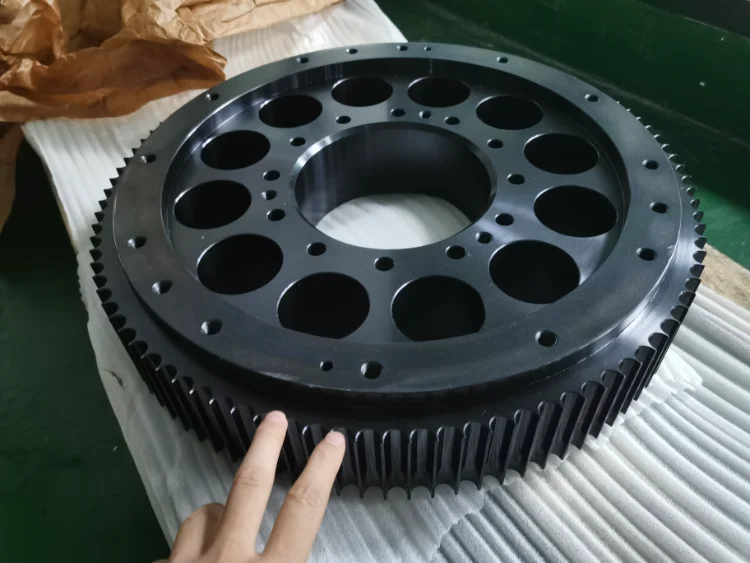
Which Custom Parts Are Commonly Made from S235?
Brackets and connecting plates: These are commonly cut from plate, bent, and drilled. Hole positions, bend dimensions, and mounting faces drive acceptance; the installation environment determines surface protection.
Machine frames and equipment bases: Welding forms the main structure, after which rail seats, motor mounts, and related holes can be machined from common datums. This separates welding distortion from final assembly accuracy.
Flanges and mounting pads: These can be cut to rough shape and finished by turning or milling. Specify the roughness and final dimensions of sealing faces and mating holes, along with any coating masks.
Agricultural and construction-equipment components: Check both the loads and exposure to mud, water, wear, and outdoor conditions. Areas prone to standing water or impacts should remain accessible for cleaning and coating repair.
How Can the Cost and Lead Time of S235 Parts Be Controlled?
Raw material is only one part of the total cost. Material utilization, welding hours, finish-machined area, surface treatment, inspection, and transport all affect the quotation.
- Apply tight tolerances only to functional features. Separate locating holes, mating faces, and assembly datums from general outer profiles.
- Match the process to the structure. Assess cutting, bending, and local machining for plate parts; assess welding followed by finish machining for large structures.
- Choose stock close to the finished size. Check available stock dimensions, stock tolerances, and machining allowance together to reduce material removal.
- Standardize hole sizes and common features. Reduce unnecessary special tooling and tool changes.
- Set surface treatment and documentation requirements before quoting. Post-coating dimensions, masking, first-article reports, and coating inspection all affect processing time.
The lead-time plan should cover material purchasing, cutting, forming or welding, any required heat treatment, finish machining, surface treatment, and final inspection. If a process is subcontracted, confirm its production slot as well.
How Should You Inspect S235 Parts and Select a Machining Supplier?
Evaluate a supplier against the finished deliverables, not just its machine list:
- Material: Confirm the complete grade, product standard, thickness, delivery condition, and material test certificate. Specify an EN 10204 3.1 certificate when the project requires one.
- Dimensions: Define inspection methods for assembly datums and critical features. For welded parts, focus on final dimensions after welding.
- Surface treatment: Confirm who performs it and how coating thickness at critical locations, masking, and appearance are assessed.
- Batch quality: Agree on first-article inspection, in-process checks, nonconforming-part handling, and the scope of the final report.
Once parts are in service, remove salt deposits and contamination as appropriate for the environment. Inspect scratches, edges, and areas where water collects; repair localized damage using the method specified for the original protection system.
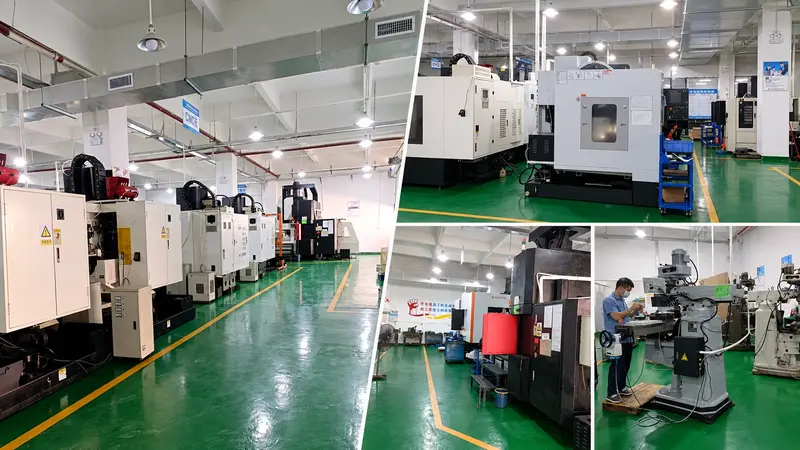
Weldo Machining offers multi-axis CNC machining, precision grinding, and wire electrical discharge machining, along with more than 50 post-processing options. Our inspection team checks critical dimensions and surface quality against the drawing. Send us your S235 part drawings, order quantity, operating environment, and acceptance requirements to receive a manufacturing proposal and quotation.
FAQ
Are E235 and S235 the Same Material?
No. E235 is commonly specified under product standards for precision steel tubes, while S235 is a structural steel grade. Check the applicable standard, product form, and delivery condition separately when ordering.
Can S235 Be Used for Shafts or Wear-Resistant Parts?
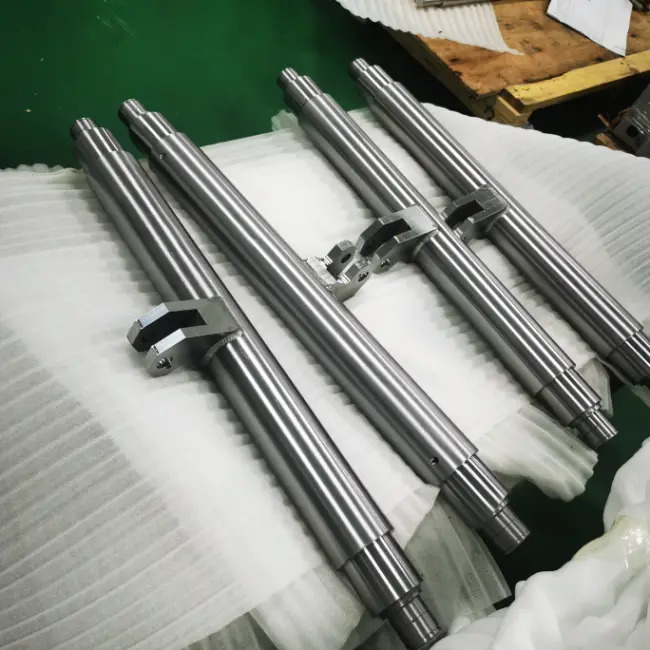
S235 can be used for lightly loaded connecting shafts or structural pins. For surfaces exposed to sustained sliding, high contact stress, or a specified high hardness after heat treatment, select a shaft steel or wear-resistant material matched to the application.
Can a Material Test Certificate Replace a Finished-Part Inspection Report?
No. A material test certificate traces the raw material’s chemical composition and specified properties. A finished-part report verifies dimensions, welding, surface treatment, and drawing requirements after manufacturing. The two documents cover different acceptance stages.
Conclusion
S235 is suitable for plate parts, brackets, and welded structures carrying general structural loads. Confirm the grade and stock form, plan machining and any necessary heat treatment around the part geometry, then specify corrosion protection and acceptance criteria for the service environment. This approach helps control assembly quality, cost, and lead time.