
When comparing 4340 vs 4140 steel, both materials stand out as widely used low-alloy steels for shafts, gears, fasteners, and transmission components.
However, they are not directly interchangeable. Section size, impact loads, fatigue life, and manufacturing cost all influence material selection.
In simple terms, 4140 steel offers a strong balance between performance and cost. In contrast, 4340 steel is better suited to large sections and components exposed to high impact loads or a high risk of failure.
This article compares their international standards, chemical compositions, properties, manufacturing processes, costs, and applications.
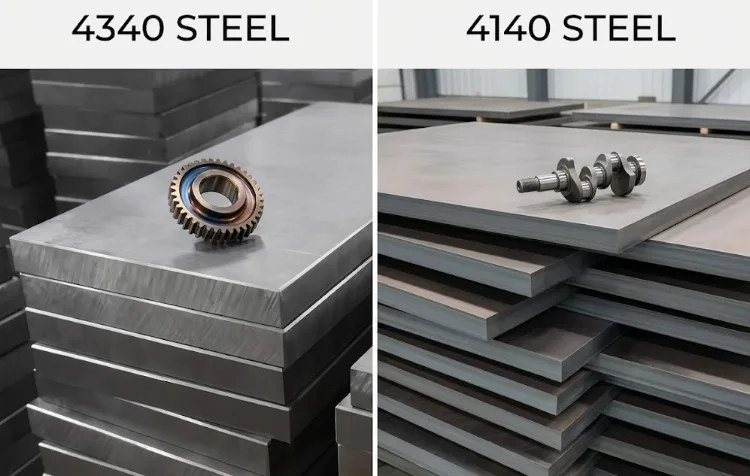
What Is 4140 Steel?
4140 steel is a medium-carbon chromium-molybdenum low-alloy steel. It offers good strength, toughness, and hardenability.
Quenched and tempered 4140 is suitable for shafts, gears, sprockets, bolts, and tooling components.
Its mature supply chain also helps reduce procurement costs.
It is a medium-hardenability steel. As section size increases, core hardness and strength become lower than at the surface.
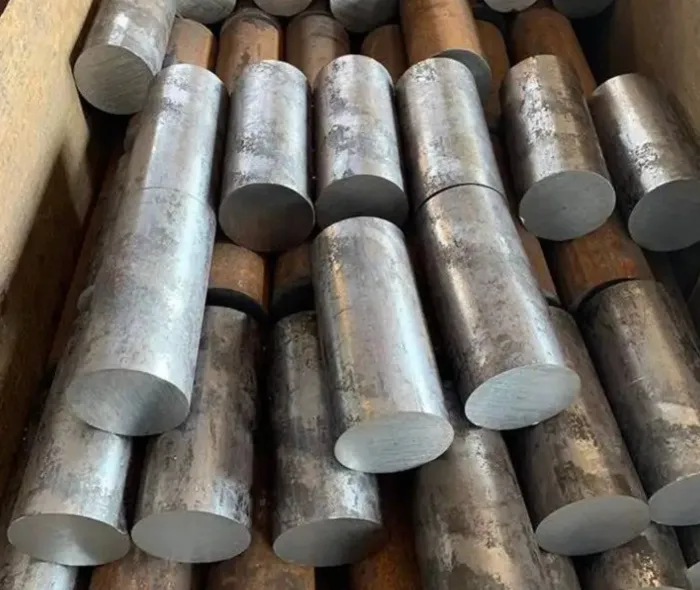
What Is 4340 Steel?
4340 steel is a medium-carbon nickel-chromium-molybdenum low-alloy steel. Nickel is the key compositional difference between 4340 and 4140.
4340 offers higher hardenability and toughness. Large-section components can also achieve more uniform core properties.
It is suitable for heavy-duty shafts, highly stressed gears, and aerospace transmission components.
Its higher material and quality-control requirements also increase costs.
International Standards for 4140 and 4340 Steel
4140 and 4340 belong to the SAE/AISI designation system. The grades identify composition types rather than fixed hardness or strength levels.
The product standard, material condition, and inspection requirements must also be specified when purchasing these materials.
SAE/AISI and UNS Designations
SAE 4140 identifies chromium-molybdenum alloy steel. SAE 4340 identifies nickel-chromium-molybdenum alloy steel.
| Material | UNS Designation |
|---|---|
| 4140 | G41400 |
| 4340 | G43400 |
UNS designations provide a unified means of identifying materials. They do not indicate that a material has received aerospace or military certification.
Common ASTM Standards
| ASTM Standard | Main Scope |
| ASTM A29/A29M | General requirements for hot-wrought carbon and alloy steel bars |
| ASTM A322 | Standard-grade alloy steel bars |
| ASTM A434/A434M | Quenched and tempered hot-wrought or cold-finished alloy steel bars |
ASTM standards are divided by product form and supply condition.
The purchase order must also specify the grade, dimensions, and heat-treatment condition.
Common AMS Aerospace Material Specifications
| Material | AMS Specification | Typical Scope |
| 4140 | AMS 6382 | Aircraft-quality bars, forgings, and rings |
| 4140 | AMS 6349 | Steel bars in the normalized condition |
| 4340 | AMS 6414 | Premium-quality bars, forgings, and mechanical tubing |
| 4340 | AMS 6415 | Aircraft-quality bars, forgings, and mechanical tubing |
Aerospace projects must also confirm the melting process, cleanliness, and nondestructive testing requirements.
The specification revision stated on the drawing has final authority.
A Standard Is Not the Same as Material Certification
A standard defines the material requirements. An MTC or MTR proves that a specific batch meets those requirements.
The certificate must include at least the following information:
- Material grade and applicable standard;
- Heat number and batch information;
- Actual chemical composition;
- Supply and heat-treatment condition;
- Hardness and mechanical properties;
- Inspection results and product dimensions.
Therefore, a purchase order cannot simply state “4140” or “4340.” Complete technical requirements are essential for establishing material traceability.
Chemical Composition Comparison of 4340 vs 4140 Steel
The following ranges refer to SAE J404 and ASTM A322. All values are percentages by mass.
| Element | 4140 Steel | 4340 Steel |
| Carbon (C) | 0.38%–0.43% | 0.38%–0.43% |
| Manganese (Mn) | 0.75%–1.00% | 0.60%–0.80% |
| Chromium (Cr) | 0.80%–1.10% | 0.70%–0.90% |
| Nickel (Ni) | —* | 1.65%–2.00% |
| Molybdenum (Mo) | 0.15%–0.25% | 0.20%–0.30% |
Note: *“—” means that nickel is not a specified alloying element in 4140. It does not mean that the nickel content is absolutely zero.
The table lists only the principal elements that distinguish the two steels. Silicon, phosphorus, and sulfur must still comply with the standard specified in the purchase order.
Key Differences in Chemical Composition
Both steels have the same carbon range. Carbon provides the foundation for hardness and strength after heat treatment.
4340 contains 1.65%–2.00% nickel. Nickel improves toughness, hardenability, and impact resistance at high strength levels.
Both steels contain chromium and molybdenum. Chromium improves hardenability and wear performance, while molybdenum improves tempering stability.
These alloying levels are insufficient to provide stainless-steel-grade corrosion resistance. Both materials require surface protection in humid environments.
Strength and Toughness
Strength determines a component’s ability to carry loads. Toughness determines its ability to absorb impact without fracturing.
Quenched and tempered 4140 offers high strength. It meets the load requirements of most industrial shafts, gears, and fasteners.
At the same strength level, 4340 retains greater toughness. It also withstands impact and cyclic loads better than 4140.
| Property | 4140 Steel | 4340 Steel |
| Strength level | High | Higher |
| Impact toughness | Good | Higher |
| Fatigue resistance | Good | Higher |
| Large-section performance | Moderate | Excellent |
As hardness increases, the strength of both materials rises while their toughness decreases.
When comparing mechanical data, the heat-treatment condition, hardness, section size, and specimen orientation must be consistent.
Hardenability and Section Size
Hardenability describes a steel’s ability to develop a hardened structure below the surface. It is different from maximum surface hardness.
4140 is a medium-hardenability steel. As the section grows, clear differences in microstructure and hardness develop between the surface and the core.
The nickel-chromium-molybdenum alloy system gives 4340 higher hardenability. The hardened structure can extend deeper into larger sections.
Under the same section size and quenching conditions, 4340 provides more uniform core properties.
| Component Condition | Material Consideration |
| Small to medium section | 4140 meets most industrial requirements |
| Large-diameter shaft | 4340 provides greater through-hardening depth |
| Thick-section forging | 4340 reduces the difference between surface and core properties |
| Strict core-property requirements | Verify using a heat-treatment test coupon or prolongation test specimen |
Section size, quenching medium, and target hardness must be evaluated together. Surface hardness cannot replace core-property data.
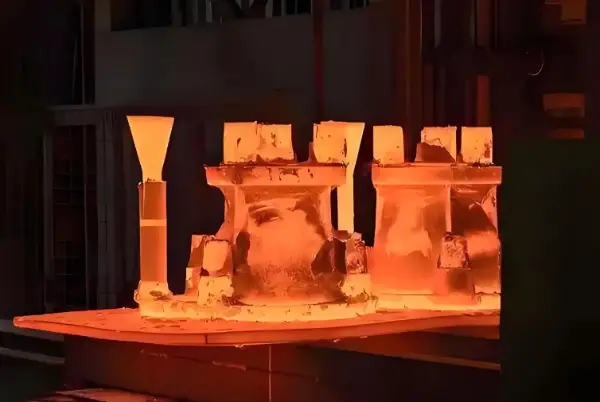
Heat Treatment and Hardness
The properties of 4140 and 4340 can both be adjusted through annealing, normalizing, quenching, and tempering.
Annealing lowers hardness and improves machinability. This condition is suitable for rough machining and complex contour machining.
Quenching increases strength and hardness. Tempering reduces brittleness and establishes a balance between strength and toughness.
Heat-Treatment Characteristics of Both Materials
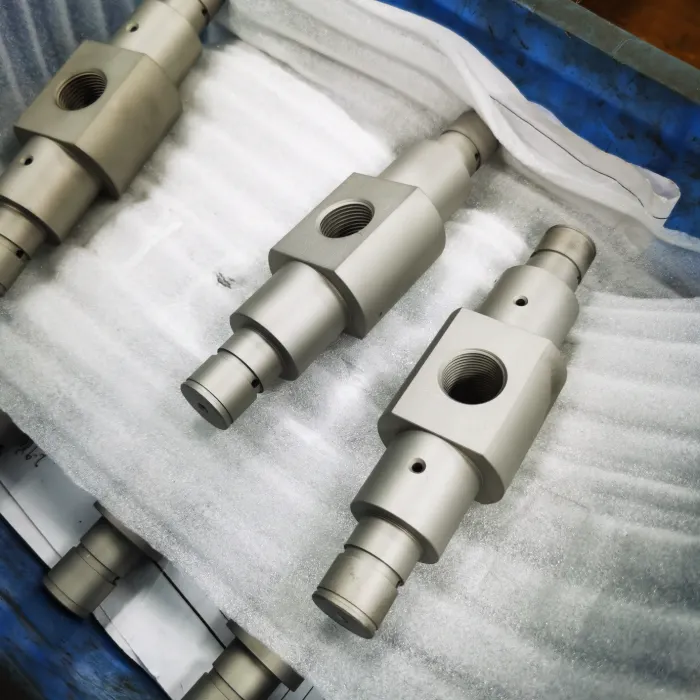
4140 is suitable for quenching and tempering, induction hardening, and nitriding. It covers the hardness requirements of most mechanical components.
4340 develops high strength and toughness through quenching and tempering. Its high hardenability ensures deep hardening in large sections.
Induction hardening and nitriding can both create a hardened surface layer. The tough core continues to carry impact and bending loads.
How Should Hardness Requirements Be Specified?
A drawing should not state only an HRC value. The heat-treatment condition, inspection location, and effective case depth must also be defined.
Large-section components should also have a specified core hardness. Safety-critical components require additional tensile, impact, and nondestructive tests.
Machinability and Manufacturing Cost
Supply hardness has a greater effect on machining efficiency than the grade difference. Annealed material is easier to machine than quenched and tempered material.
Annealed 4140 is suitable for turning, milling, drilling, and grinding. Its mature processing methods support efficient batch production.
Annealed 4340 is also suitable for conventional machining. As hardness increases, tool wear and cutting heat increase at the same time.
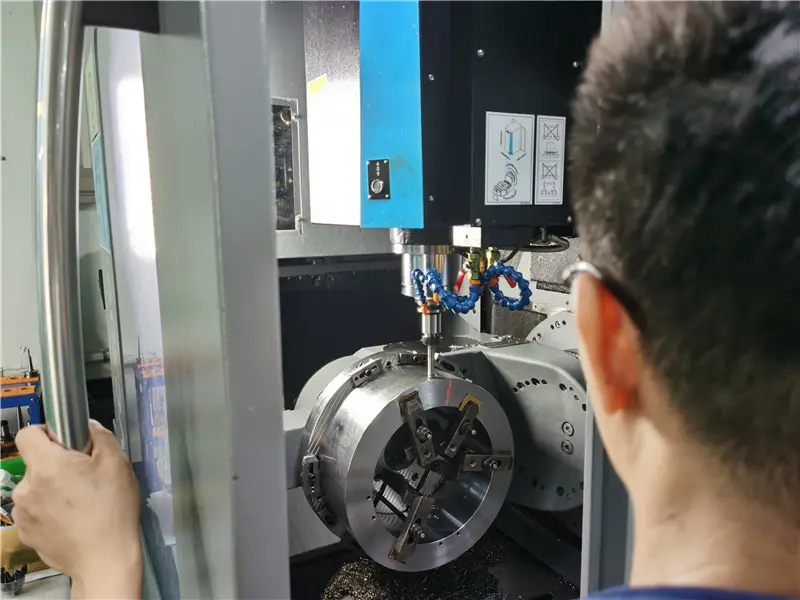
High-hardness 4340 components should be finished by grinding, hard turning, or electrical discharge machining.
Recommended Manufacturing Sequence
- Confirm the material standard and supply hardness;
- Perform rough machining and leave a finishing allowance;
- Relieve stress as required by the process;
- Complete quenching and tempering;
- Perform grinding or another finishing operation;
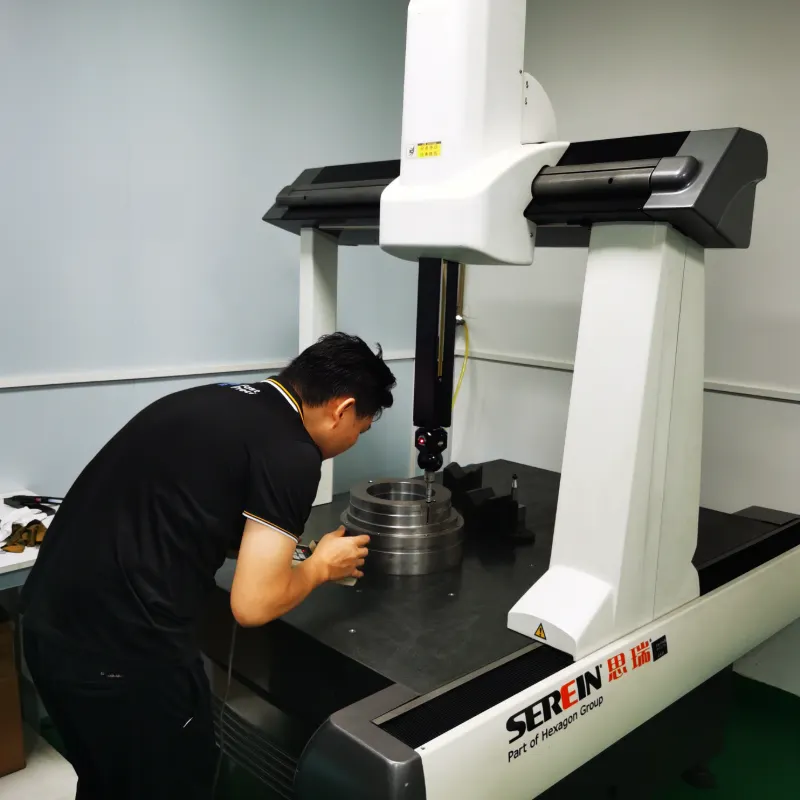
- Inspect hardness, dimensions, and surface quality.
This process sequence reduces the risk of heat-treatment distortion. It also avoids extensive machining in the high-hardness condition.
Cost Difference for Identical CNC-Machined Components
The following ranges are based on identical geometry, tolerances, quantities, heat treatment, and surface requirements.
For standard industrial quality, a finished 4340 CNC component costs 10%–30% more than the same component made from 4140.
| Component Type | Cost Increase for 4340 | Primary Cost Driver |
| Complex precision component | 5%–15% | CNC machining time accounts for a larger share of total cost |
| Standard shaft or gear | 10%–25% | Higher material and heat-treatment costs |
| Large-diameter component with a low material removal rate | 20%–35% | Raw material accounts for a larger share of total cost |
| Component made from aerospace-grade or VAR material | Quoted separately | Different certification and inspection requirements |
If a 4140 component costs USD 100, an identical 4340 component costs USD 110–130.
A complex precision component costs USD 105–115. A large-diameter component with a low material removal rate costs USD 120–135.
The above ranges do not apply to aerospace certification, special melting processes, or full-size testing.
Weldability
Neither 4140 nor 4340 is an easily welded low-carbon steel. Rapid cooling creates a hard and brittle microstructure in the heat-affected zone.
4140 is less difficult to weld than 4340. Preheating, low-hydrogen filler metal, and slow cooling control cold cracking.
4340 has higher hardenability. Its heat-affected zone requires stricter hydrogen control and temperature management.
The welding procedure should include the following requirements:
- Remove oil, rust, and moisture from the joint surfaces;
- Use dry, low-hydrogen filler metal;
- Follow the WPS requirements for preheat and interpass temperatures;
- Control heat input and cooling rate;
- Perform post-weld heat treatment as required by the design;
- Inspect the hardness of the weld and heat-affected zone.
Safety-critical 4340 components should favor integral forgings or mechanical connections. Repair welding requires renewed performance verification.
Material selection should be reconsidered for structures that require extensive welding. Low-carbon steel offers higher welding efficiency.
Fatigue and Wear Performance
Fatigue failure results from repeated loading. Wear resistance is controlled by hardness, lubrication, and contact pressure.
Quenched and tempered 4140 offers good fatigue performance. It is suitable for general-purpose shafts, gears, and power transmission components.
4340 retains greater toughness at high strength levels. It is better suited to components exposed to both impact and cyclic loads.
At the same hardness, the two steels have similar fundamental wear performance.
The core advantage of 4340 is fracture resistance rather than inherent wear resistance.
The following measures improve fatigue life:
- Reduce surface roughness;
- Increase transition radii;
- Prevent grinding burns and decarburization;
- Use shot peening, rolling, or surface hardening;
- Control inclusions and material cleanliness;
- Improve lubrication and corrosion protection.
Upgrading the material cannot compensate for sharp corners, tool marks, or incorrect surface treatment.
Typical Applications of 4140 and 4340 Steel
The applications of the two steels overlap. Component size, load level, and the consequences of failure determine the final grade.
| Application | 4140 | 4340 |
| Small to medium-diameter shaft | Preferred | Excess performance |
| General-purpose gear and sprocket | Preferred | Suitable |
| High-strength bolt | Preferred | Suitable for high-load service |
| Tooling and die component | Preferred | Suitable for high-load service |
| Large-diameter transmission shaft | Limited by section size | Preferred |
| Heavy-duty crankshaft and highly stressed gear | Limited by load level | Preferred |
| Aerospace landing gear and transmission component | Limited by specifications | Used in accordance with AMS specifications |
| High-impact drilling and energy component | Suitable for standard loads | Preferred for heavy-duty service |
4140 mainly serves general machinery, automotive, oilfield tool, and die-manufacturing applications.
4340 mainly serves aerospace, heavy-duty transmission, high-performance automotive, and high-load energy equipment applications.
Advantages and Limitations of 4140 and 4340 Steel
| Comparison Item | 4140 Steel | 4340 Steel |
| Core advantage | Balanced performance and lower cost | High toughness and deep hardening |
| Machining and availability | Mature processes and broad availability | More difficult to machine at high hardness |
| Section capability | Suitable for small to medium sections | Suitable for large sections |
| Welding control | Strict | More stringent |
| Fatigue and impact performance | Meets general requirements | Suitable for high-risk service conditions |
| Main limitation | Core properties are limited by section size | Higher material, heat-treatment, and inspection costs |
| Corrosion resistance | Requires surface protection | Requires surface protection |
The value of 4140 lies in its balance and economy. The value of 4340 lies in its high strength and toughness combined with large-section capability.
Using 4340 without a large-section or high-failure-risk requirement results in material overdesign.
How Should You Choose Between 4340 and 4140 Steel?
Material selection cannot rely only on tensile strength. Section size, load type, manufacturing conditions, and the consequences of failure must all be considered.
| Project Condition | Recommended Material | Reason for Selection |
| Small to medium-diameter shaft | 4140 | Sufficient strength and lower cost |
| General-purpose gear and sprocket | 4140 | Good balance of performance and machinability |
| Mass-produced mechanical component | 4140 | Stable supply and mature manufacturing system |
| Standard high-strength fastener | 4140 | Meets load requirements after quenching and tempering |
| Large-diameter shaft and thick-section forging | 4340 | Greater core-hardening capability |
| High-impact transmission component | 4340 | Retains greater toughness at high strength |
| High-cycle fatigue component | 4340 | Greater margin against fracture |
| Safety-critical aerospace component | 4340 | Meets high-cleanliness and traceability requirements |
| Structure requiring extensive welding | Reassess the material | Both materials require strict welding controls |
Select the Material in Four Steps
- Confirm the section size: Evaluate 4140 first for small to medium sections and 4340 first for large sections.
- Confirm the load type: Select 4140 for standard loads and 4340 for high-impact and high-cycle loads.
- Confirm manufacturing capabilities: Verify machining, heat treatment, inspection, and material-traceability capabilities.
- Calculate total cost: Include material, machining, heat treatment, inspection, and rework risk.
The final selection should be based on the drawing and technical specifications. A material grade alone cannot define component performance.
Conclusion
4140 is suitable for most small to medium-section mechanical components. It provides a good balance of strength, machinability, and cost.
4340 is suitable for large-section, high-impact, and safety-critical components. Its main advantages are toughness and deep-hardening capability.
The supply condition, heat treatment, hardness, inspection items, and material certificate must also be specified when purchasing either material.
Complete technical requirements shorten quotation time and prevent material overdesign and subsequent rework.
If you would like to learn more about these two materials, please click to visit (4340 steel, 4140 steel), or contact us for processing advice, or compare processing quotes.