
7075-T6 aluminum is a typical high-strength 7xxx series aluminum alloy, with zinc, magnesium, and copper as its main strengthening elements. Compared with common aluminum alloys such as 6061-T6 and 6063-T6, 7075-T6 places greater emphasis on strength, hardness, and load-bearing capacity, so it is commonly used in aerospace, automotive lightweighting, drones, racing cars, robotics, precision fixtures, and high-strength CNC machined parts.
For parts that need both lightweight performance and high load-bearing capacity, 7075-T6 aluminum is a very important material choice. This guide introduces the advantages, limitations, and material selection points of 7075-T6 aluminum from the perspectives of material properties, heat treatment conditions, processing methods, and application scenarios, helping engineers judge more accurately whether it is suitable for a specific project.
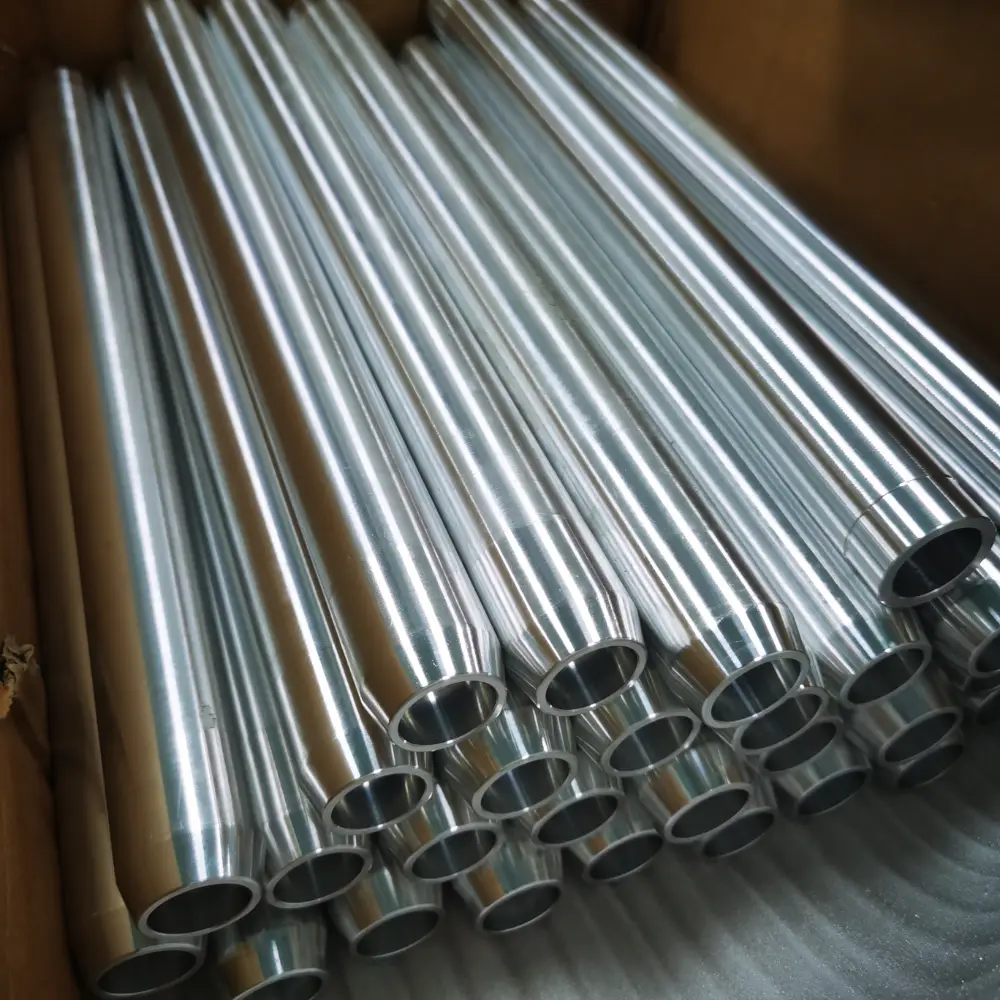
What Is 7075-T6 Aluminum?
7075-T6 aluminum is a very typical high-strength material in the 7xxx series and belongs to the Al-Zn-Mg-Cu aluminum alloy system. It uses zinc as the main strengthening element, while magnesium and copper work together with age hardening to give the material much higher strength and hardness than ordinary aluminum alloys.
Compared with general-purpose aluminum alloys such as 6061 and 6063, the advantage of 7075-T6 is not weldability or complex extrusion forming, but higher load-bearing capacity and a better strength-to-weight ratio. Therefore, it is more suitable for aerospace structural parts, high-strength connectors, precision fixtures, robotic components, racing parts, and other custom machined parts that require both lightweight design and strength.
What Does 7075 Mean?
“7075” represents the alloy grade. The 7xxx series usually refers to aluminum alloys that use zinc as the main alloying element. In 7075, zinc, magnesium, and copper work together to form strengthening phases, allowing the material to achieve very high yield strength and tensile strength after heat treatment.
In simple terms, 7075 aluminum is positioned as a high-strength structural aluminum alloy. It is not mainly used for ordinary decorative profiles like 6063, nor is it focused on corrosion resistance and sheet metal forming like 5052. Instead, it is better suited for parts that need to carry loads, maintain structural strength, and achieve lightweight design.
What Does T6 Mean?
“T6” means the material has undergone solution heat treatment and artificial aging. This heat treatment condition allows the strengthening phases in 7075 aluminum to work more effectively, giving the material higher strength and hardness.
However, the T6 condition also has some limitations. The corrosion resistance and stress corrosion cracking resistance of 7075-T6 are generally not as good as those of T73, T7351, and similar conditions. If a part is used for a long time in humid, salt spray, outdoor, or high-stress environments, material temper selection and surface protection should be considered in addition to strength.
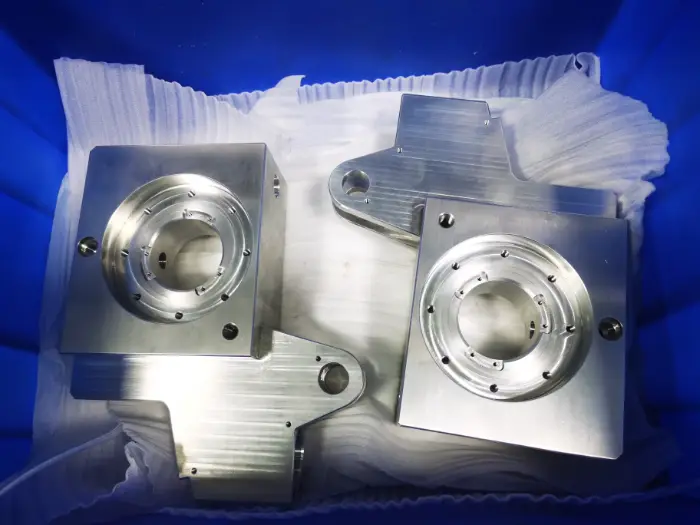
Chemical Composition of 7075-T6 Aluminum
7075-T6 aluminum achieves high strength and age hardening through elements such as zinc, magnesium, and copper. Its typical chemical composition is shown in the table below:
| Element | Typical Range | Function |
| Al | Balance | Base element that provides the foundation for lightweight performance |
| Zn | 5.1–6.1% | Main strengthening element that improves strength and age-hardening capability |
| Mg | 2.1–2.9% | Forms strengthening phases with zinc, improving strength and hardness |
| Cu | 1.2–2.0% | Increases strength but may reduce some corrosion resistance |
| Cr | 0.18–0.28% | Improves microstructural stability and helps resist stress corrosion cracking |
| Fe | ≤0.50% | Impurity element that usually needs to be controlled at a low level |
| Si | ≤0.40% | Impurity element; excessive content may affect performance stability |
| Mn | ≤0.30% | Present in small amounts and can affect microstructure and machining behavior |
| Ti | ≤0.20% | Can be used to refine grains and improve microstructural uniformity |
From a composition perspective, 7075-T6 aluminum is not an aluminum alloy whose main advantages are corrosion resistance or weldability. Instead, it is a typical high-strength structural aluminum alloy. It is suitable for parts that require high strength, lightweight performance, and good CNC machinability, but in corrosive environments, welded joints, or complex cold forming applications, the material temper and post-treatment methods need to be evaluated together.
Mechanical Properties of 7075-T6 Aluminum
The mechanical properties of 7075-T6 aluminum are mainly reflected in strength, hardness, ductility, and fatigue performance. Common parameters are shown in the table below:
| Property | Typical Value / Range | Function |
| Tensile Strength | Approx. 540–570 MPa | Determines the material’s ability to resist tensile fracture |
| Yield Strength | Approx. 480–505 MPa | Determines the material’s ability to resist permanent deformation |
| Elongation | Approx. 5–11% | Reflects material ductility and forming capability |
| Hardness | Approx. 150 HB | Affects surface indentation resistance, wear resistance, and machining stability |
| Elastic Modulus | Approx. 71–72 GPa | Reflects material stiffness and elastic deformation level |
| Fatigue Strength | Relatively high | Affects service life under cyclic loading |
Tensile Strength
The tensile strength of 7075-T6 aluminum is very high among aluminum alloys, allowing parts to maintain structural stability and integrity under relatively high tensile loads. This parameter is very important for high-strength connectors, aerospace structural parts, load-bearing brackets, fixtures, and high-load CNC parts.
Yield Strength
Yield strength is one of the most important performance advantages of 7075-T6 aluminum. A higher yield strength means the part is less likely to undergo permanent deformation after being loaded, making it suitable for mounting bases, connection blocks, support parts, drone structural parts, lightweight racing components, and other parts that need to maintain dimensional stability.
Elongation
The elongation of 7075-T6 aluminum is at a moderate-to-low level, and its ductility is not as good as that of aluminum alloys such as 6061 and 5052. This means that although it has high strength, its cold bending, deep drawing, and complex forming capabilities are limited. For parts that require large deformation, 7075-T6 is not the best choice; however, for CNC machining, structural plates, connectors, and high-strength machined parts, this level of ductility can usually meet application needs.
Hardness
The hardness of 7075-T6 aluminum is higher than that of most general-purpose aluminum alloys, helping improve surface resistance to indentation and basic wear resistance. Higher hardness also helps maintain the stability of holes, edges, and mating surfaces. If a part requires higher surface wear resistance, surface treatments such as hard anodizing can be used.
Elastic Modulus
The elastic modulus of 7075-T6 aluminum is typical for aluminum alloys and is significantly lower than that of steel. This means that although it has very high strength, its stiffness is still not as high as steel. For long-span, thin-walled, or heavily loaded parts, deformation should be controlled by increasing wall thickness, optimizing the cross-section, adding ribs, and improving the load path.
Fatigue Strength
7075-T6 aluminum has good fatigue performance, so it is commonly used in aerospace, drones, racing cars, and structural parts subjected to cyclic loading. However, fatigue life depends not only on the material itself, but also on surface roughness, sharp corners, tool marks, hole-edge quality, stress concentration, and surface treatment. For fatigue-sensitive parts, fillet transitions should be used as much as possible, sharp edges should be avoided, and the machined surface quality should be controlled.
Aerospace Grade 7075 Aluminum
Aerospace grade 7075 aluminum is not a completely new aluminum alloy grade. Instead, it refers to material with higher requirements for quality control, performance consistency, inspection standards, and batch traceability. The following is a simple comparison between aerospace-grade and general-purpose 7075 aluminum:
| Item | Aerospace Grade 7075 | Commercial Grade 7075 |
| Quality Control | Stricter control | Mainly follows standard commercial supply requirements |
| Traceability | Usually requires complete batch traceability | May not be complete |
| Mechanical Consistency | Higher performance consistency | Batch-to-batch differences may be more noticeable |
| Inspection | Greater focus on internal defects and performance verification | Mostly based on routine inspection |
| Cost | Higher cost | Relatively lower cost |
| Typical Applications | Aerospace structural parts, critical connectors, high-strength load-bearing parts | Fixtures, molds, mechanical components, and ordinary high-strength parts |
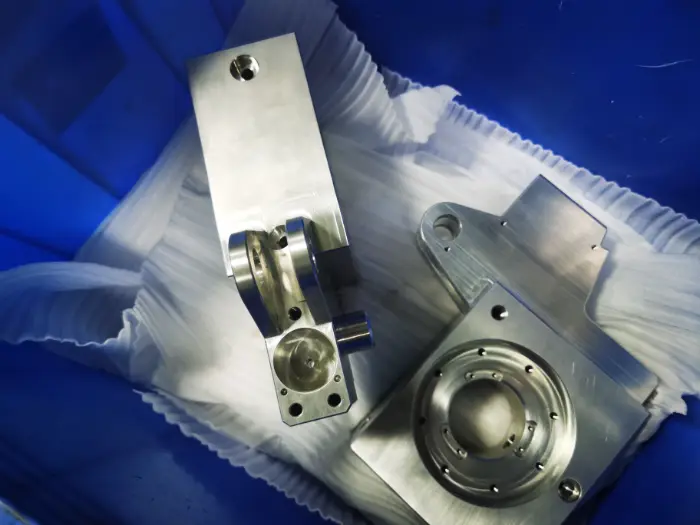
Thermal and Electrical Properties
7075-T6 aluminum not only has high strength, but also has a certain level of thermal and electrical conductivity.
Thermal Properties
Common thermal properties are shown below:
| Property | Typical Value | Function |
| Thermal Conductivity | Approx. 130 W/m·K | Affects the material’s ability to conduct heat |
| Thermal Expansion | Approx. 23.5 × 10⁻⁶ /K | Affects dimensional stability under temperature changes |
| Specific Heat | Approx. 960 J/kg·K | Affects the material’s response during heating and cooling |
Thermal Conductivity and Thermal Expansion are the more important thermal properties to consider. 7075-T6 aluminum can meet the basic heat dissipation needs of ordinary structural parts and mechanical components, but it is not the first choice for high-efficiency heat dissipation materials. For applications such as heat sinks and thermal base plates, aluminum materials more suitable for thermal conduction are usually evaluated first, such as 6061 aluminum. For precision assemblies or parts used under large temperature differences, thermal expansion should be considered because it may affect hole positions, fit clearances, and flatness.
Electrical Properties
7075-T6 aluminum has a certain level of electrical conductivity, but it is not a high-conductivity aluminum alloy. Common electrical properties are shown below:
| Property | Typical Value | Function |
| Electrical Conductivity | Approx. 30–35% IACS | Indicates the material’s ability to conduct electric current |
| Electrical Resistivity | Higher than pure aluminum | Indicates the degree to which the material resists current flow |
7075-T6 aluminum can conduct electricity, but its conductivity is significantly lower than that of pure aluminum and dedicated high-conductivity aluminum alloys. Therefore, it is not the preferred choice for busbars, electrical terminals, or highly conductive components.
In practical applications, 7075-T6 is more suitable for structural parts that require strength, lightweight design, and machining stability. If a part also requires high electrical conductivity or high heat dissipation, 6061, 1050, 1060, copper, or other more suitable materials should usually be evaluated.
Corrosion Resistance of 7075-T6 Aluminum
7075-T6 aluminum has a certain level of corrosion resistance, but because it contains relatively high proportions of zinc, magnesium, and copper, surface protection is still required in humid, salt-spray, or outdoor environments. Common protection methods are shown below:
| Surface Protection | Main Function | Typical Use |
| Anodizing | Improves basic corrosion resistance and appearance stability | General CNC parts, appearance parts, structural parts |
| Hard Anodizing | Improves surface hardness, wear resistance, and protection | High-wear parts, fixtures, sliding mating parts |
| Chemical Conversion Coating | Forms a thin protective film while retaining a certain level of conductivity | Aerospace parts, electronic structural parts, pretreatment before painting |
| Painting | Provides color, appearance, and environmental protection | Outdoor structural parts, equipment housings, assembled parts |
| Powder Coating | Provides a thicker coating and stronger protection | Outdoor parts, mechanical structural parts, decorative structural parts |
7075-T6 is also relatively sensitive to stress corrosion, especially when tensile stress and corrosive media act together for a long time. If parts are used in aerospace structures, long-term load-bearing components, or corrosion-sensitive environments, tempers such as 7075-T73 or 7075-T7351 can be considered. Their strength is slightly lower than T6, but their stress corrosion resistance is better.
Heat Treatment Conditions of 7075 Aluminum
Different tempers affect the strength, ductility, dimensional stability, and stress corrosion resistance of 7075 aluminum. Common tempers are shown below:
| Temper | Main Feature | Typical Use |
| 7075-O | Annealed condition, lower strength, better ductility and formability | Bent/formed parts and parts for subsequent heat treatment |
| 7075-T6 | High strength and high hardness; a common high-strength condition | High-strength CNC parts, aerospace structural parts, fixtures, and connectors |
| 7075-T651 | Stress-relieved based on T6, with better dimensional stability | Thick plates, precision machined parts, and parts with large material removal |
| 7075-T73 | Strength lower than T6, but better stress corrosion resistance | Long-term load-bearing parts and corrosion-sensitive parts |
| 7075-T7351 | Balances stress corrosion resistance and residual stress control | Aerospace thick plates, critical structural parts, precision load-bearing parts |
| 7075-T76 | A compromise between strength and corrosion resistance | Aerospace structural parts and parts that require a balance between strength and corrosion resistance |
7075-T6 vs 7075-T651
7075-T6 has high strength and is suitable for general high-strength parts. 7075-T651 is stress relieved by stretching on the basis of T6, making it more suitable for thick plates, precision CNC machined parts, and parts with large material removal. For parts that require strict deformation control, T651 is usually more stable than T6.
7075-T6 vs 7075-T73
7075-T6 emphasizes strength and hardness, while 7075-T73 emphasizes stress corrosion resistance. If parts are used for a long time in humid, salt-spray, or high-stress environments, T73 may be more suitable than T6, although its strength is slightly lower.
How to Choose the Right Temper
If the project prioritizes high strength, 7075-T6 can be selected;
If the part requires precision machining and dimensional stability, 7075-T651 is recommended;
If the part places more emphasis on stress corrosion resistance and long-term service reliability, 7075-T73 or 7075-T7351 can be evaluated.
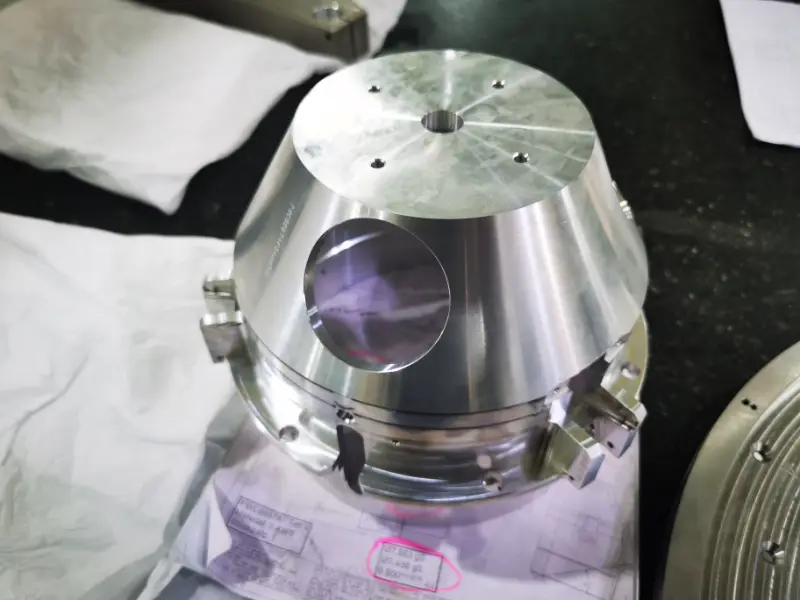
Common Processing Methods for 7075-T6 Aluminum
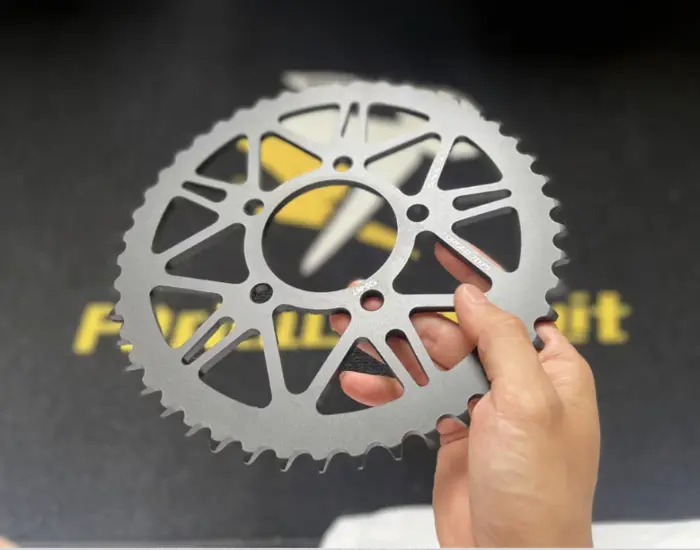
7075-T6 aluminum has high strength and good machinability. It is commonly used for CNC machining, forging, and some high-strength aluminum profile extrusion. Different processing methods are suitable for different part shapes and performance requirements.
CNC Machining
7075-T6 aluminum is highly suitable for CNC machining and can be processed by milling, turning, drilling, tapping, boring, reaming, and thread milling. It offers good cutting performance and can be used to machine complex contours, high-precision hole positions, lightweight pocket structures, and thin-walled parts. Therefore, it is commonly used for high-strength custom parts and precision mechanical components.
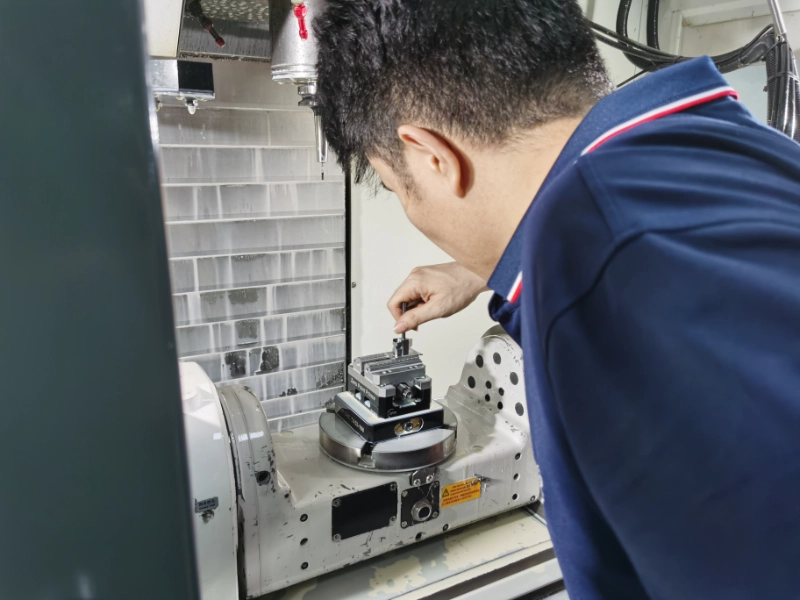
During machining, attention should be paid to workpiece clamping stability, tool sharpness, chip evacuation, and machining sequence. For thin-walled parts, large flat parts, or parts with large material removal, residual stress release and clamping deformation should be carefully controlled.
Forging
7075 aluminum can be used for forging high-strength structural parts. Forging can improve metal flow lines, material density, and load-bearing capacity, making it suitable for parts with high requirements for strength, reliability, and fatigue performance.
Common forging applications include aerospace connectors, load-bearing brackets, high-strength mechanical structural parts, and critical load-bearing components. After forging, heat treatment and CNC finishing are usually still required to meet final dimensional, hole-position, and surface-quality requirements.
Aluminum Extrusion
7075 aluminum can be used for extruded profiles, but because of its high strength and high forming resistance, its processing difficulty is usually higher than that of ordinary aluminum profiles. It is more suitable for high-strength frames, guide rails, supports, and other structural parts with relatively simple sections and higher load-bearing requirements. If the profile section is too complex, the wall thickness is too thin, or the dimensional tolerance requirements are very strict, die design and extrusion feasibility need to be evaluated in advance.
Other Processing Methods
In addition to CNC machining, forging, and aluminum extrusion, 7075-T6 aluminum can also be processed with other auxiliary methods according to the part structure.
For example, wire EDM is suitable for machining high-precision contours, narrow slots, sharp corners, and areas that conventional tools cannot easily reach;
laser cutting, waterjet cutting, and sawing are commonly used for cutting plates or blocks to size;
grinding, polishing, deburring, and tapping are used to improve dimensional accuracy, surface quality, and assembly stability.
For high-precision or fatigue-sensitive parts, burrs, tool marks, sharp edges, and surface scratches should also be carefully controlled after machining.
Common Shapes and Stock Forms of 7075-T6 Aluminum
Common stock forms of 7075-T6 aluminum include plates, bars, tubes, profiles, forgings, and blocks. Different forms are suitable for different processing methods, and material selection should consider part size, structural strength, machining allowance, and deformation control requirements.
Plate / Sheet: 7075-T6 plate and sheet are commonly used for aerospace structural parts, fixture plates, mounting plates, lightweight panels, and CNC machined parts. For thick plates or parts with large material removal, machining allowance, clamping method, and deformation control should be carefully considered.
Round Bar / Square Bar: Round bars and square bars are suitable for turning, milling, and drilling, and are commonly used for shafts, pins, sleeves, connectors, fixture blocks, sliders, and custom mechanical parts.
Tube and Extrusion Profile: Tubes and extruded profiles are suitable for lightweight frames, supports, guide rails, and continuous-section structures. Because 7075-T6 has high strength and high deformation resistance, profile section design usually needs to balance strength, extrusion feasibility, and subsequent machining allowance.
Forging: 7075 forgings offer better material density and load-bearing reliability, and are commonly used for high-strength connectors, aerospace parts, load-bearing brackets, and critical mechanical structural parts.
Block: 7075-T6 blocks are suitable for complex CNC material-removal machining and can be used for mounting bases, mold parts, fixture parts, high-strength structural blocks, and custom mechanical components.
Common Applications of 7075-T6 Aluminum
Aerospace Components: 7075-T6 aluminum is commonly used for aerospace structural parts, connectors, supports, frame components, and high-strength load-bearing parts. Its high strength-to-weight ratio helps reduce overall weight while maintaining structural strength.
Automotive and Racing Parts: In automotive lightweighting and racing applications, 7075-T6 can be used for suspension components, connection blocks, brackets, mounting bases, and high-strength custom parts. It is suitable for scenarios that require strength, weight reduction, and machining accuracy.
Drone and Robotics Parts: Drone and robotics parts usually require lightweight design, high rigidity, and stable assembly. 7075-T6 can be used for arms, frames, joint connectors, mounting plates, clamping structures, and precision motion components.
Fixtures and Tooling: 7075-T6 aluminum is commonly used for high-strength fixtures, locating blocks, jig plates, tooling fixtures, and inspection fixtures. It is suitable for parts that need to withstand higher clamping force and repeated assembly.
Industrial Machinery Parts: In industrial equipment, 7075-T6 can be used for high-strength brackets, sliders, connection plates, transmission components, mounting bases, and custom mechanical structural parts. It is suitable for applications that require high strength, low weight, and precision machining.
Sports and Consumer Products: 7075-T6 is also used for high-end sports equipment, outdoor gear, precision accessories, and high-strength lightweight consumer products. In these applications, its value mainly lies in strength, durability, and lightweight design.
Design Considerations for 7075-T6 Aluminum Parts
Based on Weldo Machining engineers’ experience in DFM review and actual machining, 7075-T6 aluminum part design should focus on the following five points:
Wall Thickness: Wall thickness should be kept as uniform as possible. Avoid locally thin areas, sudden thickness changes, or large hollowed-out sections, otherwise thin-walled parts, long strip parts, and large flat parts are more likely to deform during machining.
Fillets, Edges and Burrs: Reasonable fillets are recommended at internal corners, steps, hole edges, and load-transition areas to reduce stress concentration and improve tool accessibility. Drawings can specify deburring, chamfering, or edge break requirements to prevent sharp edges and burrs from affecting assembly, safety, and surface quality.
Hole and Thread Design: Enough material thickness should be retained around holes, counterbores, and threaded areas to avoid edge distances that are too small or threads that are too deep. For parts that are repeatedly assembled and disassembled, threaded inserts can be considered.
Pocket and Lightweight Design: Weight-reduction slots and pocket structures should be as symmetrical as possible to avoid large one-sided material removal. Deep slots, thin walls, and large cavities should be evaluated during the DFM stage to reduce deformation risk.
Surface Treatment: If parts require anodizing, hard anodizing, painting, or coating, coating thickness, hole-size changes, and assembly clearance should be considered in advance. Precision holes and mating surfaces can be masked or post-machined as needed.
Conclusion
7075-T6 aluminum is an engineering aluminum alloy with high strength, high hardness, and excellent suitability for precision CNC machining. It is commonly used for aerospace structural parts, drone parts, racing components, robotics parts, fixtures, connectors, and high-strength custom machined parts. For projects that need to balance lightweight design, load-bearing capacity, and dimensional accuracy, 7075-T6 is a material worth considering.
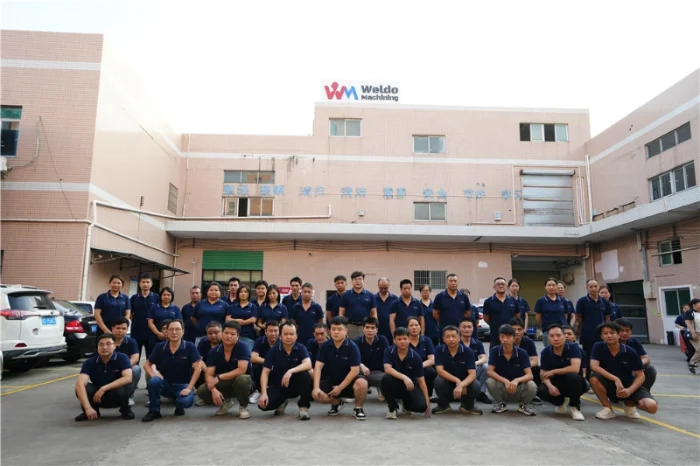
However, material properties are only one part of project success. Part structure, processing method, and surface treatment also affect final quality. If you are developing 7075-T6 aluminum CNC parts, Weldo Machining can provide DFM optimization and transparent quotations based on your drawings or samples to help your project proceed more reliably.
FAQ About 7075-T6 Aluminum
Is 7075-T6 aluminum good for CNC machining?
7075-T6 aluminum is highly suitable for CNC machining. It has good cutting stability and is suitable for machining complex contours, precision holes, threads, mounting surfaces, and lightweight structures. However, thin-walled parts and parts with large material removal require careful deformation control.
How to reduce machining deformation in 7075-T6 aluminum?
7075-T6 aluminum is prone to deformation during the machining of thick plates, parts with large material removal, thin-walled parts, and long strip parts due to residual stress release or improper clamping. The risk can be reduced by selecting a more stable material condition, using symmetrical material removal, layered machining, flip-over machining, and multiple light cuts.
At the same time, stable fixtures, soft jaws, support blocks, or vacuum fixtures should be used to avoid excessive clamping. Leaving appropriate allowance after roughing, followed by semi-finishing and finishing, helps control final dimensional stability and flatness.
Does 7075-T6 aluminum rust?
7075-T6 aluminum does not rust like steel, but oxidation, pitting, or localized corrosion may still occur in humid, salt-spray, or corrosive environments. Therefore, surface protection such as anodizing, hard anodizing, painting, or coating is usually required for outdoor or high-humidity use.
Can 7075-T6 aluminum be welded?
7075-T6 aluminum is generally not recommended for critical welded structures. Welding may reduce local strength, increase the risk of cracking, and cause unstable performance. Therefore, bolted connections, riveting, threaded connections, or other mechanical fastening methods are more commonly used.