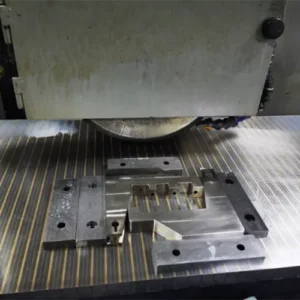

Choosing the right carbon steel CNC machining manufacturer requires more than comparing quotations. Material grade, machining accuracy, equipment capabilities, heat treatment, surface finishing, and quality documentation all affect the final quality of the parts. Long shafts, thin-walled parts, hardened components, and complex geometries place particularly high demands on fixturing, tooling, grinding, and inspection capabilities.
This article presents the Top 7 Carbon Steel CNC Machining Manufacturers, covering digital manufacturing platforms, direct machining factories, and contract manufacturers. Buyers can compare them based on order volume, lead time, material range, quality requirements, and preferred communication model.
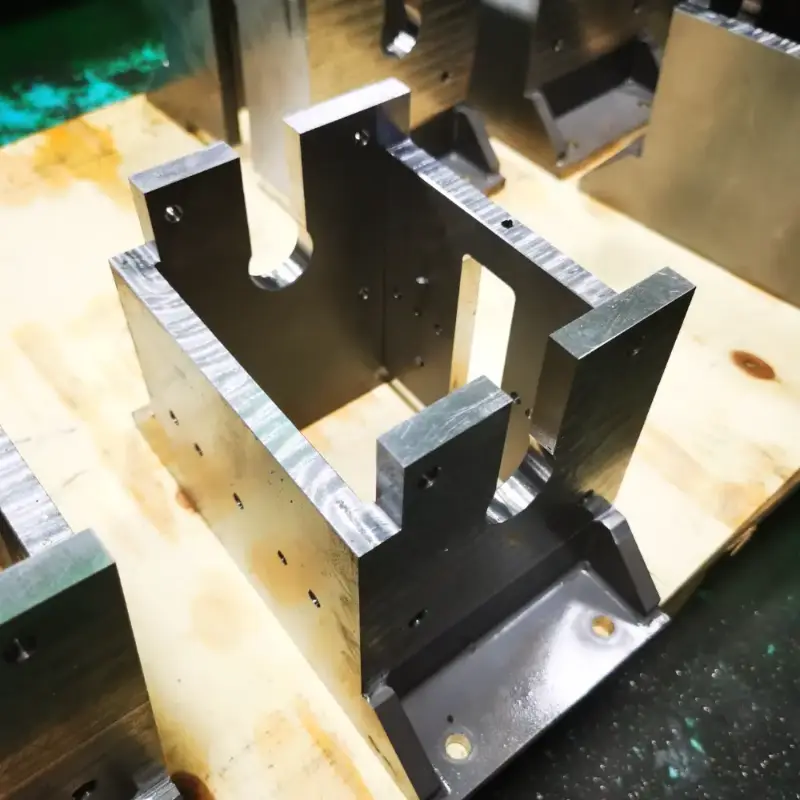
Quick Comparison of Top 7 Carbon Steel CNC Machining Manufacturers
| Company | Service Model | Main Strength |
| Xometry | Digital manufacturing platform | Instant quoting and a large manufacturing network |
| Protolabs / Protolabs Network | In-house factories and manufacturing network | Rapid production and automated DFM |
| Weldo Machining | Direct precision machining factory | Multi-process coordination and direct engineering communication |
| Fictiv | Managed digital manufacturing platform | Supplier management and quality tracking |
| PCBWay | Online manufacturing platform | Low order threshold and broad process coverage |
| RapidDirect | Manufacturing facilities and online platform | Wide range of material and post-processing options |
| Zetwerk | Managed contract manufacturer | Integrated manufacturing, inventory, and logistics |
1. Xometry
Company Profile: Xometry is a digital manufacturing platform rather than a single carbon steel CNC machining manufacturer. After customers upload CAD files, they can review pricing, lead times, and preliminary manufacturability feedback, and the platform matches each order with appropriate manufacturing resources.
Carbon Steel Machining: Xometry supports CNC milling, turning, and subsequent surface finishing for carbon steel. Common grades listed on its website include 1018, A36, and 1215. Orders can also include supporting processes such as carburizing, nickel plating, and powder coating when required.
Quality and Production: Xometry lists quality certifications including ISO 9001, ISO 13485, IATF 16949, and AS9100D. Customers can also add CMM inspection, first article inspection, formal dimensional reports, and material certifications, but these requirements must be specified during quotation or ordering.
Strengths and Limitations: Instant quoting and a large manufacturing network make Xometry convenient for rapid price comparisons, especially for projects with complete drawings and relatively standard requirements. However, because orders may be completed by different manufacturing resources, buyers placing repeat orders over the long term should confirm whether the production location and machining resources can remain consistent.

2. Protolabs / Protolabs Network
Company Profile: Protolabs combines automated in-house factories with the Protolabs Network. Its in-house factories mainly handle parts with tight lead times and relatively standard requirements, while the manufacturing network extends the available materials, part sizes, processes, and order quantities.
Carbon Steel Machining: Protolabs supports CNC milling, turning, and batch machining for low-carbon steel and mild steel. Its website does not provide a consolidated list of all available carbon steel grades. Projects involving special grades, large parts, or heat-treatment requirements generally need to be confirmed separately through the Protolabs Network.
Quality and Production: Protolabs provides CNC milling, turning, and production machining, and it can also support projects as they progress from prototypes to batch orders. Automated DFM can quickly identify thin walls, deep cavities, and difficult-to-machine features, but material certifications, formal inspection reports, and special quality requirements must still be confirmed during the quotation stage.
Strengths and Limitations: Protolabs stands out for lead time and standardized processes, making it appropriate for design validation, functional prototypes, and urgent parts. Its publicly listed standard carbon steel selection is relatively limited, so projects involving 1045, high-carbon steel, or finish machining after heat treatment require a separate quotation.
3. Weldo Machining
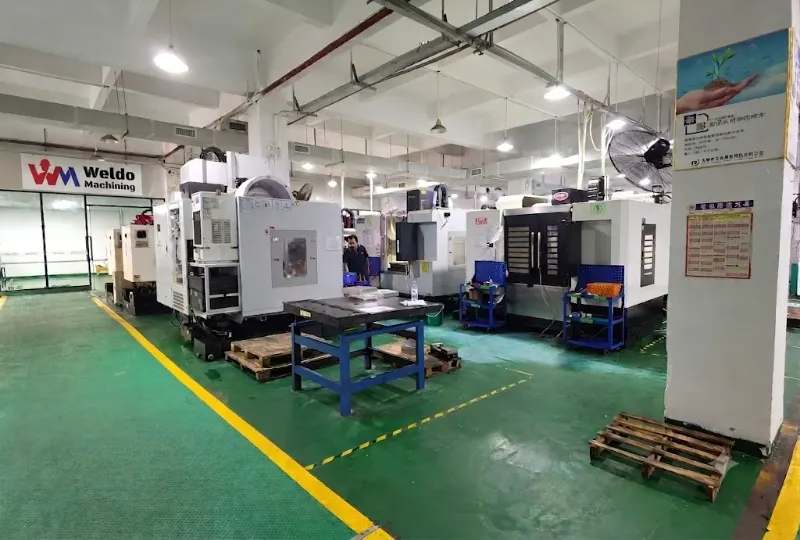
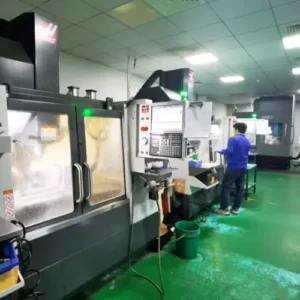
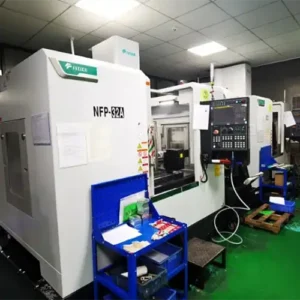
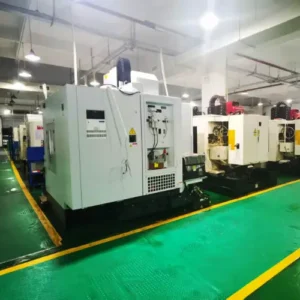
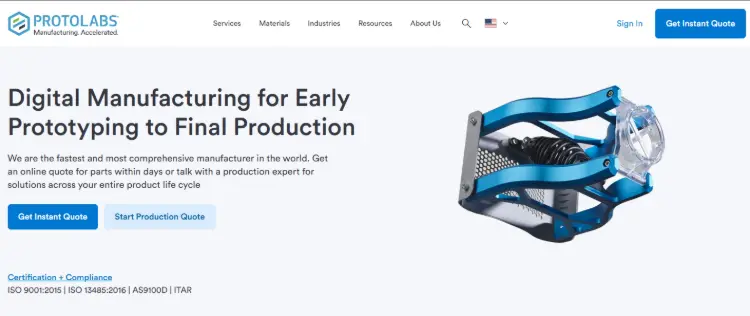
Company Profile: Weldo Machining was founded in 2012 and is a one-stop precision machining manufacturer that accepts orders directly. Customers can communicate directly with the engineering and production teams. The company operates more than 100 CNC machines and can handle prototypes, low-volume orders, and ongoing production runs.
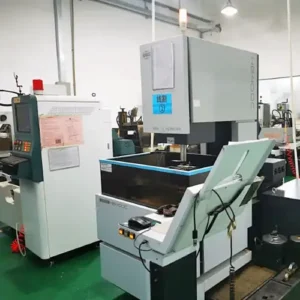
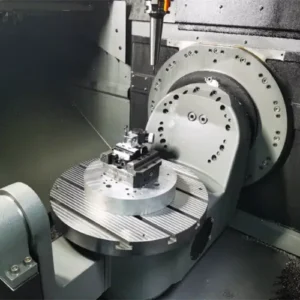
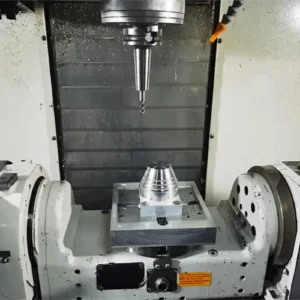
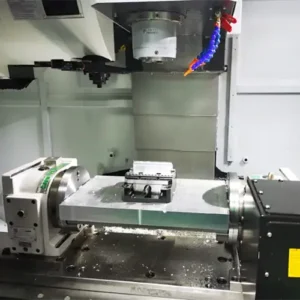
Materials and Machining: Weldo machines common low-carbon, medium-carbon, and high-carbon steels, including 1018,1020,q235 and SK95. The company can also process special steels such as tool steel and mold steel, as well as nickel-based high-performance alloys such as Hastelloy. Its processes include 3-axis through 5-axis CNC milling, turning, precision grinding, and wire EDM. It can also coordinate heat treatment, surface finishing, and final inspection, providing one-stop service from raw material to finished part.
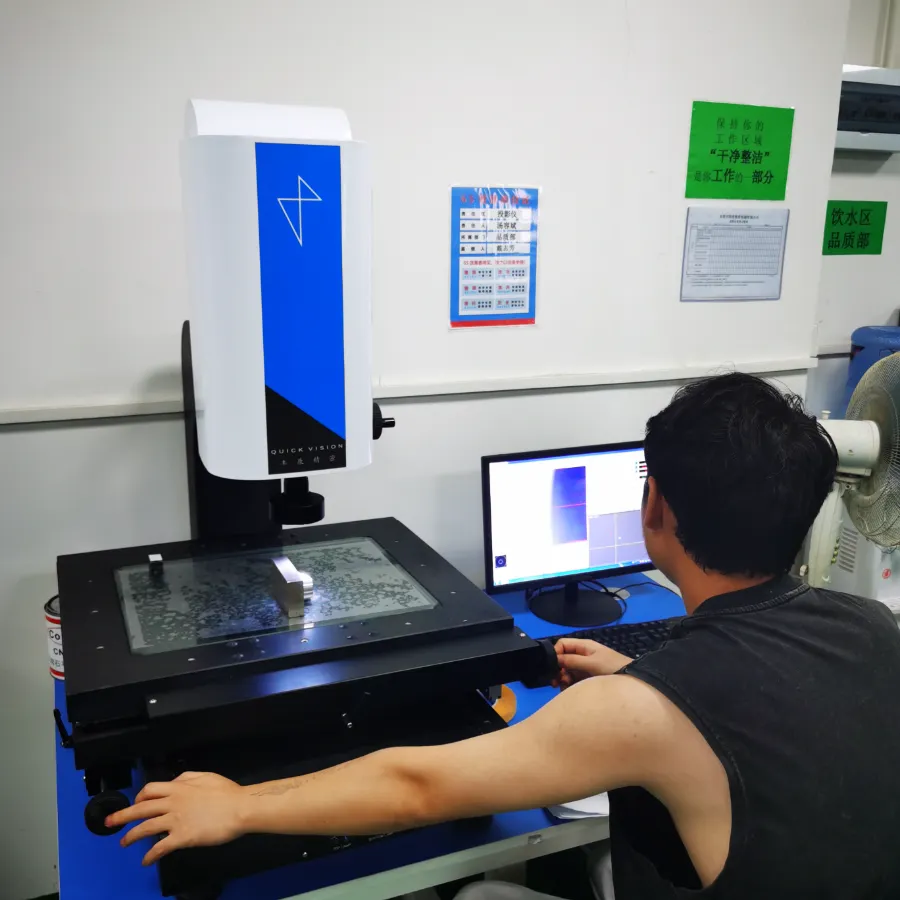
Quality and Production: The company operates an ISO 9001:2015 quality management system and is equipped with more than 20 types of inspection equipment, including CMMs, height gauges, micrometers, and profile projectors. Standard tolerances are approximately ±0.05 mm, while some critical features can be held to ±0.002 mm. Actual achievable tolerance still depends on material hardness, part size, geometry, and inspection method.
Strengths and Limitations: Weldo provides relatively direct engineering communication, while milling, turning, grinding, EDM, heat treatment, and surface finishing can be coordinated under one project, reducing the need for buyers to manage multiple suppliers. However, the company does not use an automated instant-pricing model; customers must first provide drawings, material, hardness, quantity, and post-processing requirements.
4. Fictiv
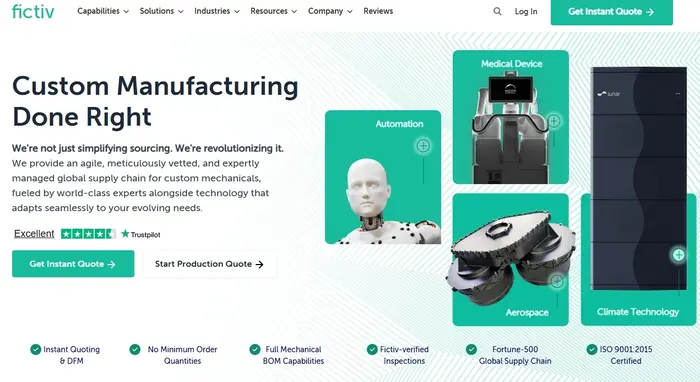
Company Profile: Fictiv is a managed digital manufacturing platform that arranges production through a vetted manufacturing network. In addition to matching customers with suppliers, the platform participates in production tracking, supplier management, and quality control.
Carbon Steel Machining: Fictiv supports CNC milling, turning, and a variety of corrosion-resistant surface finishes for carbon steel. Common grades listed publicly include 1018, A36, 1045, 12L14, and 1215. Black oxide, nickel plating, zinc plating, and powder coating can also be selected after machining.
Quality and Production: The website states that CNC-milled and turned parts can be delivered in as little as approximately seven days. When drawings are provided, dimensional tolerances for some features can be as tight as ±0.005 mm. However, this minimum tolerance does not mean that every carbon steel part can meet it.
Strengths and Limitations: Fictiv can simplify purchasing for customers who need cross-regional sourcing, progress tracking, and unified quality management. However, the actual equipment, capacity, and pricing depend on the partner factory assigned to the project. Material certifications, heat-treatment records, and dedicated production resources should be confirmed in advance.
5. PCBWay
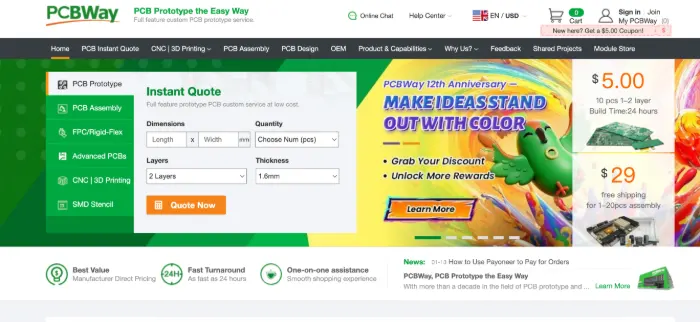
Company Profile: PCBWay first became known in the market for PCB manufacturing and later expanded into CNC machining, sheet metal fabrication, 3D printing, and injection molding. Customers can select materials, quantities, and processes online, and the ordering threshold is relatively low for prototype and low-volume projects.
Carbon Steel Machining: PCBWay supports carbon steel CNC milling, turning, and related post-processing. Common grades listed on its website include 1018, 1045, and A36. The applicable material standard, heat-treatment condition, and surface finishing requirements must be specified when the order is placed.
Quality and Production: PCBWay follows more of an online purchasing model and can also arrange different manufacturing processes on the same platform. If a project requires CMM inspection, formal dimensional reports, material certifications, or heat-treatment records, each item should be verified before the order is confirmed.
Strengths and Limitations: Its online configuration process is convenient and is relatively well suited to budget-conscious prototype and low-volume projects. However, the website’s classification of 1045 under “mild steel” is not rigorous, because 1045 is normally considered a medium-carbon steel. The drawing should therefore specify the material grade, standard, and delivery condition.
6. RapidDirect
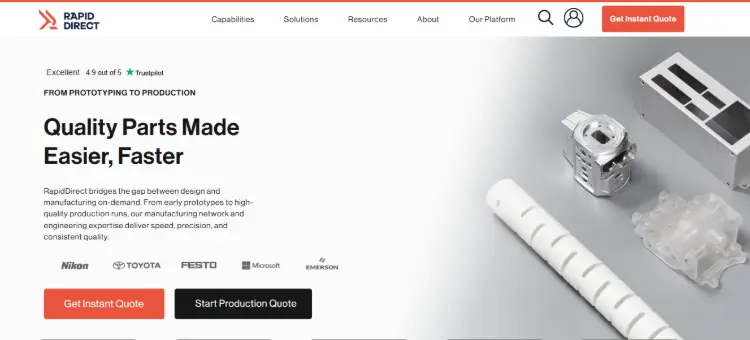
Company Profile: RapidDirect combines manufacturing resources with an online quotation platform. Its services cover CNC machining, EDM, sheet metal fabrication, injection molding, and surface finishing. Orders can scale from single prototypes to low-volume and mass production.
Carbon Steel Machining: RapidDirect supports CNC milling, turning, EDM, and complex-feature machining for carbon steel. Common grades listed on its website include 1018, 1020, 1025, 1045, 1215, A36, and ST52. After machining, it can also arrange electroplating, powder coating, and other corrosion-protection treatments.
Quality and Production: RapidDirect publishes a reference lead time of less than ten days for steel parts, although the actual time still depends on material sourcing, quantity, tolerances, and post-processing. Projects involving heat treatment, full dimensional reports, or special packaging should follow the formal production schedule.
Strengths and Limitations: RapidDirect offers a relatively wide range of material and post-processing options, making it convenient to manage several processes within one project. However, its “Carbon Steel” list also includes 4130, 4140, 4340, and 5140, which are generally classified as low-alloy steels. Buyers should therefore specify the exact grade, material standard, and material certification.
7. Zetwerk
Company Profile: Zetwerk is an integrated contract manufacturing and supply chain management company. In addition to CNC machining, it can coordinate forging, casting, assembly, packaging, inventory, and logistics, with a stronger focus on long-term, high-volume manufacturing partnerships.
Carbon Steel Machining: Zetwerk can perform CNC turning, milling, and subsequent finish machining on carbon steel bar stock, forgings, and castings, but its website does not provide a consolidated list of all common carbon steel grades. The actual grade, material standard, heat-treatment condition, and heat/lot traceability requirements must be confirmed for each project.
Quality and Production: Zetwerk publicly lists quality tools including FMEA, APQP, SPC, MSA, and PPAP, and provides support for systems such as ISO 9001 and IATF 16949. Raw material sourcing, special processes, inventory management, and JIT delivery can also be incorporated into the same supply chain.
Strengths and Limitations: If a project includes forged or cast blanks, CNC finish machining, and downstream logistics, Zetwerk can reduce the buyer’s workload in coordinating multiple suppliers. However, it is not primarily aimed at simple one-off rapid prototypes, and its website does not provide a consolidated list of all carbon steel grades. The actual factory and material source require further confirmation.
How to Evaluate a Reliable Carbon Steel Machining Supplier
When evaluating a carbon steel machining company, buyers should focus on material and machining capabilities, precision and quality control, supporting processes, and lead time and capacity. These four factors directly determine part quality, purchasing risk, and project progress.
1. Assess Material and Machining Capabilities
Confirm that the company can machine the specified carbon steel grade, material standard, and heat-treatment condition, and that it provides the required processes, such as turning, multi-axis milling, grinding, or EDM. For complex geometries, thin-walled parts, long shafts, and components machined after heat treatment, buyers should also assess whether the manufacturer has relevant production experience.
2. Verify Precision and Quality Control
Do not rely only on the manufacturer’s advertised minimum tolerance. Confirm whether that tolerance applies to the actual material, dimensions, and part geometry. A reliable manufacturer should perform incoming, first article, in-process, and final inspections, and should be able to provide CMM reports, material certifications, and heat-treatment records when required by the project.
3. Review Secondary Process Support
Confirm whether the manufacturer can coordinate supporting processes such as quenching and tempering, induction hardening, carburizing, black oxide, zinc plating, nickel plating, and powder coating. Comprehensive process integration can reduce transportation, dimensional coordination, and quality-accountability risks between multiple suppliers.
4. Confirm Lead Time and Production Capacity
Lead time should include material sourcing, CNC machining, heat treatment, surface finishing, inspection, packaging, and transportation, rather than only machine cutting time. For batch orders, buyers should also evaluate equipment loading, monthly capacity, repeat-production capability, and the mechanism for handling urgent orders.
Common Carbon Steel Grades Used by CNC Manufacturers
Different grades vary significantly in strength, machinability, weldability, and heat-treatment capability. Buyers should select the material according to part loading, wear, accuracy, and production quantity, and require the manufacturer to source it in accordance with the standard specified on the drawing.
1. 1018 Low-Carbon Steel
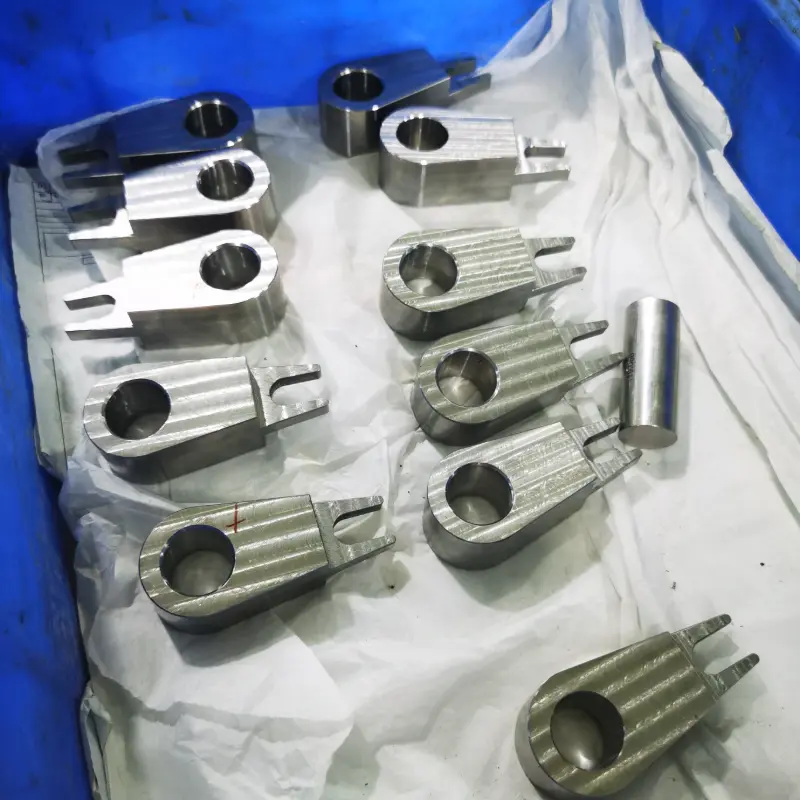
1018 offers good weldability, formability, and material supply stability, and it is commonly used for shafts, pins, bushings, brackets, and general mechanical parts. Its relatively high ductility can produce continuous stringy chips and built-up edge during machining, so the manufacturer must properly control cutting-edge geometry, feed, and chip evacuation.
2. A36 Structural Steel
A36 is relatively inexpensive and is commonly used for equipment baseplates, brackets, frames, and welded structural components. Because the mill scale, flatness, and dimensional consistency of hot-rolled material can vary, the blank condition should be inspected before machining and an appropriate machining allowance should be reserved.
3. 1045 Medium-Carbon Steel
1045 provides higher strength, hardness, and wear resistance than 1018, making it useful for drive shafts, gears, pins, and load-bearing parts. It can be quenched and tempered or induction hardened, but increasing hardness accelerates tool wear. High-precision parts generally require a process combining rough machining, heat treatment, and finish machining.
4. 1215 Free-Machining Steel
1215 provides good chip-breaking performance and machined surface quality, making it suitable for automatic turning of studs, fittings, pins, and high-volume shaft-type parts. Its weldability and transverse toughness are relatively limited, so it is more appropriate for parts that prioritize cutting efficiency and do not require welding or resistance to severe impact.
Key Challenges for a Carbon Steel Machining Manufacturer
The difficulty of machining carbon steel varies with carbon content, material condition, part geometry, and heat-treatment requirements. A professional manufacturer must control chips, tool wear, fixturing deformation, and corrosion risk at the same time to consistently meet drawing requirements.
1. Chip Control and Surface Finish
Low-carbon steels such as 1018 have relatively high ductility and tend to form long chips and built-up edge during machining, affecting chip evacuation, tool life, and surface quality. The manufacturer must select suitable chipbreaker geometry, cutting-edge geometry, feed rate, and cutting fluid for each operation to prevent chips from wrapping around the workpiece or tool.
2. Tool Wear and Cutting Heat
As carbon content and hardness increase, cutting forces, machining heat, and tool wear generally increase. When machining 1045 or hardened carbon steel, the manufacturer should select carbide, ceramic, or CBN tools according to actual hardness and properly control cutting speed and depth per pass.
3. Deformation, Fixturing, and Dimensional Stability
Long shafts, thin-walled parts, and heat-treated components can bend or change dimension because of residual stress and clamping force. Proper fixtures establish consistent machining datums, support weak areas, and control clamping force, thereby reducing vibration, displacement, and clamping deformation. High-precision projects should also use staged rough machining, heat treatment, and finish machining.
4. Corrosion and Surface Protection
Unprotected carbon steel oxidizes and rusts easily in humid environments, so parts must be cleaned promptly, coated with rust-preventive oil, and packaged with moisture protection after machining. When selecting black oxide, zinc plating, nickel plating, or powder coating, the effect of coating thickness on hole diameters, threads, and mating surfaces should also be considered in advance.
Factors Affecting Carbon Steel CNC Machining Costs
The manufacturing cost of carbon steel parts depends not only on raw material prices, but also on material hardness, part geometry, production quantity, tolerances, inspection, and post-processing. Manufacturer quotations should be compared on the basis of the complete manufacturing process and the final delivered condition.
1. Material Grade and Condition
1018, 1045, and 1215 differ in material price, hardness, chip-breaking performance, and heat-treatment requirements. A more specialized grade, a smaller purchase quantity, or higher material hardness generally increases the cost of raw material, tooling, and machining time.
2. Part Complexity, Fixturing, and Quantity
Deep holes, thin walls, complex surfaces, and features in multiple orientations increase programming difficulty, the number of setups, and machine occupancy time. Although dedicated fixtures create an upfront cost, they can improve repeat-positioning efficiency, shorten machining cycles, and reduce unit cost in batch production.
3. Tolerance and Inspection Requirements
The tighter the tolerance and the higher the geometric accuracy requirement, the more time the manufacturer must invest in finish machining, equipment setup, and in-process inspection. Full-dimensional CMM inspection, first article reports, material traceability, and batch statistical documentation also increase quality-control costs.
4. Heat Treatment and Surface Finishing
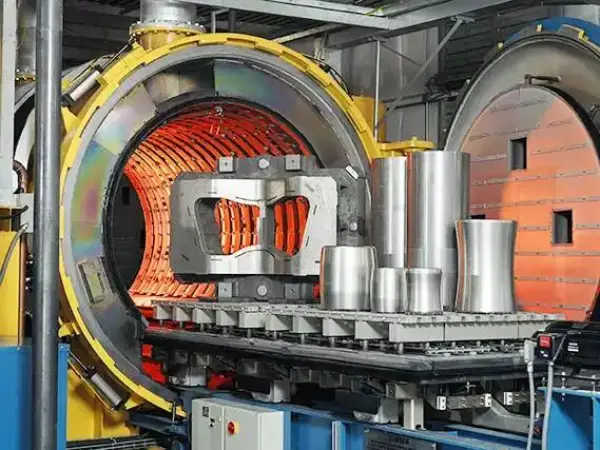
Quenching and tempering, carburizing, induction hardening, black oxide, and electroplating all add production steps, transportation, and inspection costs. If deformation occurs after heat treatment, grinding, straightening, or secondary finish machining may also be required. Post-processing requirements and final dimensions must therefore be evaluated together during quotation.
Applications of CNC-Machined Carbon Steel Parts
Carbon steel combines strength, wear resistance, machinability, and cost advantages, so carbon steel CNC machining manufacturers widely serve the automotive, industrial equipment, construction machinery, and energy systems sectors.
1. Automotive and Transportation
Carbon steels such as 1018 and 1045 are commonly used for drive shafts, pins, bushings, hubs, and fasteners. Parts subjected to torque, friction, or impact can also be quenched and tempered, carburized, or induction hardened to improve strength and surface wear resistance.
2. Industrial Machinery
Gears, sprockets, guide rails, connecting shafts, mounting bases, and locating pins in industrial equipment are often made of carbon steel. These parts generally require turning, milling, grinding, and heat treatment to work together to ensure assembly accuracy and long-term operating stability.
3. Construction and Heavy Equipment
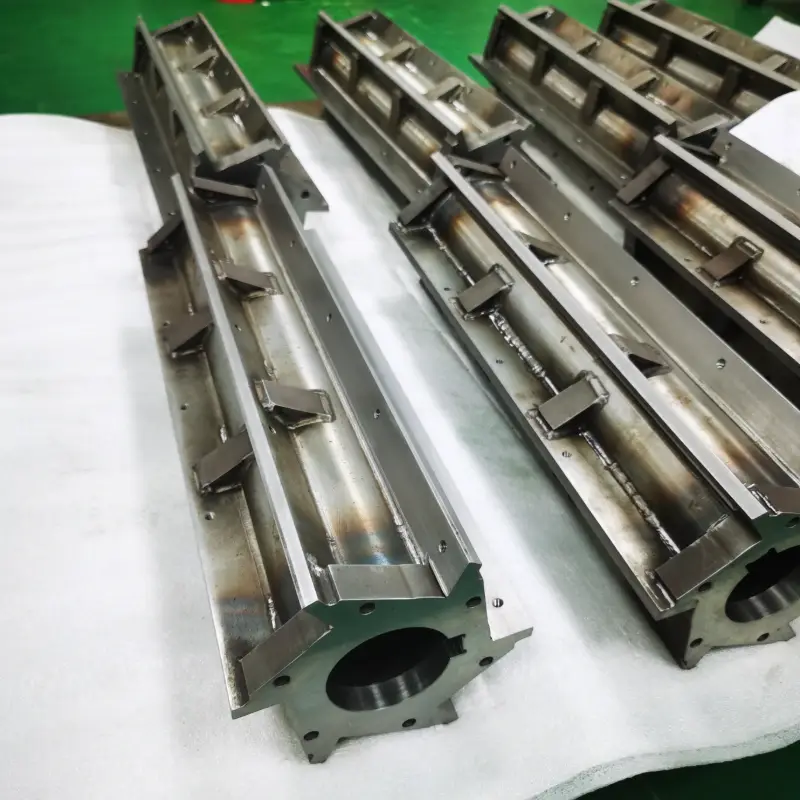
A36 and 1045 can be used for brackets, baseplates, pins, connectors, and hydraulic equipment components. Machining companies must focus on controlling allowance on large blanks, welding distortion, datum locations, and critical hole accuracy to meet heavy-duty operating requirements.
4. Energy and Fluid Systems
Carbon steel is also used to manufacture valve bodies, flanges, fittings, pump shafts, and pipeline connections. In addition to dimensional accuracy, suitable heat treatment and corrosion-resistant surface finishing should be selected according to the medium, pressure, and operating environment.
FAQ
Is Carbon Steel Easy to CNC Machine?
The machining difficulty of carbon steel depends on its carbon content, hardness, and material condition. 1215 breaks chips effectively and is suitable for high-speed production turning; 1018 tends to produce long chips; and the greater strength and hardness of 1045 place stricter demands on tooling, machine rigidity, and cutting parameters.
Which Carbon Steel Is Best for CNC Machining?
No single carbon steel is suitable for every part. 1018 works well for general shafts, pins, and welded parts; 1215 is appropriate for high-volume turned parts where machining efficiency is the priority; 1045 is used for drivetrain components that require higher strength, hardness, and wear resistance; and A36 is more appropriate for general structural components.
Can Hardened Carbon Steel Be CNC Machined?
Hardened carbon steel can be CNC machined, but carbide, ceramic, or CBN tools must be selected according to actual hardness. Precision grinding is also generally required for high-accuracy holes, journals, and mating surfaces to control dimensions, roundness, and surface roughness.
What Information Should Be Included in a Carbon Steel CNC Quote?
Quotation materials should include 2D drawings, a 3D model, material grade, applicable standard, delivery condition, hardness, quantity, tolerances, heat treatment, surface finishing, and inspection requirements. The more complete the information, the more accurately the manufacturer can evaluate the process, cost, and lead time.
Conclusion
When selecting a carbon steel CNC machining manufacturer, buyers should comprehensively evaluate material grades, machining capabilities, precision control, supporting processes, and actual delivery capabilities. Xometry, Protolabs, and Fictiv are more appropriate for digital sourcing and rapid price comparison; Zetwerk focuses on high-volume supply chain integration; and direct machining factories such as Weldo Machining make it easier to discuss machining datums, fixtures, heat-treatment deformation, and multi-process coordination.
Buyers should select the appropriate manufacturing model according to part geometry, production quantity, and quality-documentation requirements rather than comparing only the lowest price. The clearer the drawing, material standard, hardness, heat treatment, and inspection requirements, the more accurate the manufacturer’s machining plan, cost, and lead time will generally be.If your want know more details or get a transparent quote,you can contact with us.