1018 steel is a common American low-carbon steel with a nominal carbon content of about 0.18%. It offers good ductility, weldability, cold formability, and stable machining performance. Because the material is widely available and relatively cost-effective, it is commonly used for shafts, pins, brackets, fixtures, fasteners, and general CNC machined parts.
When selecting this material, understanding 1018 steel properties helps engineers determine whether a part can meet requirements for strength, dimensional stability, wear resistance, and surface protection. This article introduces the main characteristics and application value of 1018 steel from multiple perspectives.
What Is 1018 Steel?
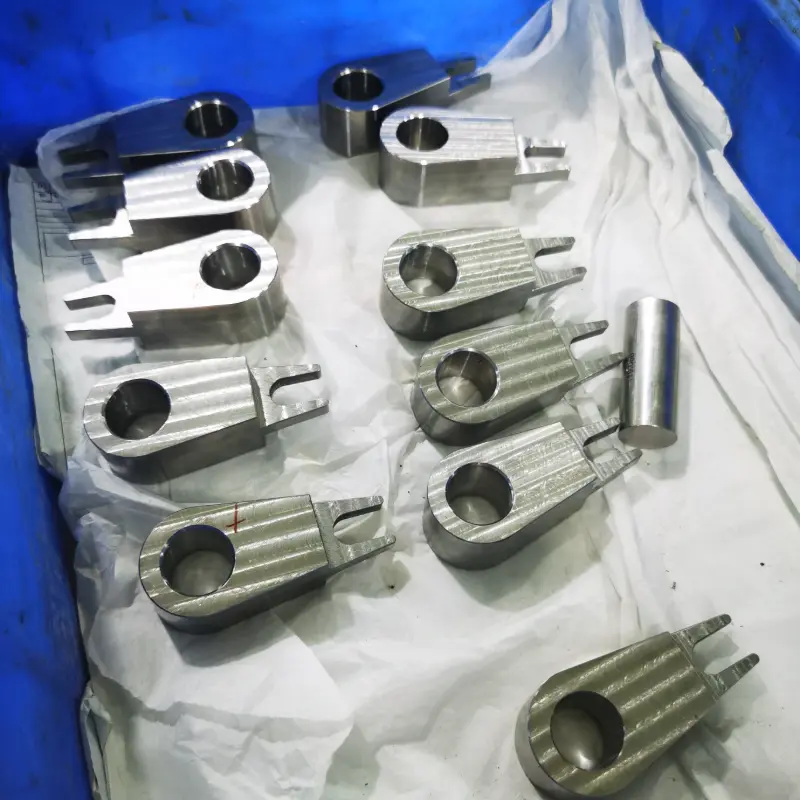
1018 steel is a low-carbon steel in the AISI / SAE carbon steel system, and it is also commonly classified as mild steel. The “10” indicates the plain carbon steel series, while the “18” indicates a nominal average carbon content of about 0.18%. Because of its low carbon content, 1018 steel usually provides good ductility, weldability, cold formability, and machinability.
Compared with some ordinary low-carbon steels, 1018 steel has a relatively higher manganese content, which helps improve strength and a certain degree of hardenability. As a result, it is suitable for machining general mechanical parts and can also obtain higher surface hardness through surface hardening treatments. In simple terms, 1018 steel is not known for extremely high strength, but for stable performance, easy machining, reasonable cost, and broad suitability for general mechanical parts and precision machined components.
1018 steel properties
Chemical Composition of 1018 Steel
The performance foundation of 1018 steel mainly comes from its low carbon content and relatively higher manganese content. Low carbon helps the material maintain good ductility, weldability, and cold formability, while manganese helps improve strength, machining stability, and a certain degree of hardenability. Its typical chemical composition is shown in the table below:
| Element | Typical Range | Function |
| C | 0.15–0.20% | Provides basic strength while maintaining good ductility, weldability, and cold formability |
| Mn | 0.60–0.90% | Improves strength and helps enhance hardenability and machining stability to a certain degree |
| P | ≤0.040% | Exists in small amounts and usually needs to be controlled at a low level |
| S | ≤0.050% | Exists in small amounts and usually needs to be controlled at a low level |
| Fe | Balance | Base element that forms the main matrix of 1018 steel |
In terms of composition, 1018 steel is neither a high-alloy steel nor a high-carbon steel. Its advantages lie in simple composition, stable processing behavior, moderate cost, and the ability to improve surface hardness and wear resistance through carburizing or carbonitriding.
How Is 1018 Steel Made?
The production of 1018 steel can be understood simply as obtaining an iron-based material first, then adjusting the carbon and manganese content, and finally forming the material into different shapes through rolling or cold working. In actual production, the iron source may come from hot metal smelted from iron ore or from recycled scrap steel. Depending on the steelmaking method, coke, limestone, or other refining materials may also be used to help remove impurities and make the molten steel cleaner.
After the composition of the molten steel becomes stable, suitable amounts of carbon and manganese are added or adjusted so that it meets the composition range of 1018 steel. The molten steel is then cast into billets or slabs and hot rolled into steel plate, round bar, square bar, or bar stock. If the part requires better dimensional accuracy and surface quality, further cold drawing, cold rolling, straightening, peeling, grinding, or polishing can be performed to produce cold-drawn steel bar, 1018 cold rolled steel, or 1018 cold finished steel.
Mechanical Properties of 1018 Steel
The mechanical properties of 1018 steel are characterized by moderate strength, good ductility, and relatively low hardness. It is suitable for general mechanical parts, shafts, pins, brackets, fixtures, connectors, and fasteners. It is not a high-strength steel, but it provides stable overall performance among low-carbon steels.
| Property | Typical Range | What It Means |
| Tensile Strength | 410–450 MPa or above | The material’s ability to resist fracture under tensile loading |
| Yield Strength | About 270 MPa or above | The stress level a material can withstand before permanent deformation begins |
| Elongation | 24% or above | The material’s ability to undergo plastic deformation after stretching |
| Reduction of Area | 50% or above | The material’s ability to locally neck and deform before fracture |
| Hardness | Usually below 197 HB before heat treatment | A reflection of the material’s resistance to indentation, wear, and cutting |
Tensile Strength
The tensile strength of 1018 steel usually refers to ultimate tensile strength, which is the maximum tensile stress the material can withstand before breaking. Its strength is in a stable medium range among low-carbon steels, making it suitable for general shafts, pins, brackets, connecting blocks, mounting seats, and light- to medium-load mechanical parts. If a part must withstand high impact, high torque, or long-term fatigue loading, higher-strength steels such as 1045 or 4140 are usually more suitable.
Yield Strength
Yield strength determines whether a part is likely to undergo permanent deformation after being loaded. 1018 steel is suitable for fixtures, connecting plates, support blocks, base plates, and equipment mounting parts that require basic load-bearing capacity and dimensional stability. If a part has a large span, concentrated stress, or long-term loading, structural stiffness and deformation resistance can be improved not only by switching to a higher-strength material, but also by adding ribs, optimizing wall thickness, and improving the load path.
Elongation
Good elongation indicates that 1018 steel has good ductility and forming adaptability. This makes it suitable for cold drawing, cold heading, bending, pressing, riveting, and screw forming, as well as for screws, rivets, small fasteners, and mechanical parts that need a certain degree of deformation absorption.
Reduction of Area
Reduction of area reflects the material’s local deformation and ductility before fracture. The performance of 1018 steel in this respect helps improve the toughness of parts and their resistance to sudden fracture, making it suitable for pins, connectors, fasteners, and assembled load-bearing parts. For components that need to reduce the risk of brittle fracture, this parameter is more meaningful than simply looking at strength.
Hardness
1018 steel has low hardness in the untreated condition, so cutting resistance is relatively low, and it is suitable for CNC milling, turning, drilling, tapping, and thread machining. However, this also means its base wear resistance is limited. If a part is used for self-tapping screws, wear-resistant pins, light-duty toothed components, or local bearing surfaces, carburizing or carbonitriding is usually needed to improve surface hardness and wear resistance.
Physical Properties of 1018 Steel
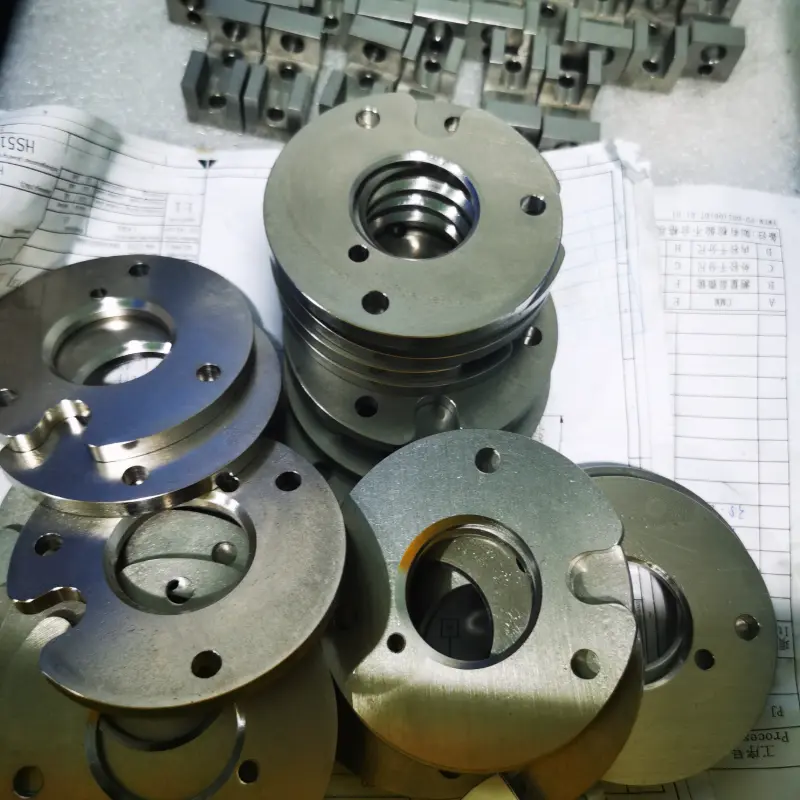
The physical properties of 1018 steel mainly affect part weight, stiffness, and high-temperature processing adaptability.
| Property | Typical Value | What It Means |
| Density | About 7.87 g/cm³ | Indicates the weight of the material per unit volume |
| Young’s Modulus | About 200 GPa | Indicates the material’s stiffness level and resistance to elastic deformation |
| Poisson’s Ratio | About 0.29 | Indicates the relationship between transverse deformation and longitudinal deformation during tension or compression |
| Melting Range | About 1425–1540°C | Indicates the approximate temperature range in which the material changes from solid to liquid |
Density
The density of 1018 steel is typical of carbon steels, and it is significantly heavier than aluminum alloy at the same volume. Therefore, it is not suitable for extreme lightweight parts, but it is suitable for components that require a certain weight, stiffness, and structural stability, such as bases, brackets, fixtures, connecting blocks, and general mechanical load-bearing parts.
Young’s Modulus
Young’s modulus reflects material stiffness. The elastic modulus of 1018 steel is close to that of ordinary carbon steel, which means it is not prone to obvious elastic deformation under load. It is suitable for shafts, mounting seats, support parts, fixtures, and mechanical components that need to maintain stable shape.
Poisson’s Ratio
Poisson’s ratio is mainly used in structural design and deformation analysis under load. For ordinary CNC machined parts, this parameter usually does not directly determine material selection, but it can serve as an engineering calculation reference when analyzing the deformation of shafts, brackets, connectors, or compressed structural parts.
Melting Range
The melting range of 1018 steel is relatively high and can meet the needs of common welding, hot working, and heat treatment. For everyday machining applications, this parameter is not the most important selection factor, but it helps explain the material’s basic adaptability during high-temperature processing and heat treatment.
Thermal Properties of 1018 Steel
The thermal properties of 1018 steel mainly affect dimensional stability during heating, cooling, welding, heat treatment, and service in environments with temperature changes.
| Property | Typical Value | What It Means |
| Thermal Conductivity | About 50 W/m·K | Indicates the material’s ability to conduct heat |
| Specific Heat | About 486 J/kg·K | Indicates the amount of heat required to raise the temperature of the material by one unit |
| Thermal Expansion | About 11.7 × 10⁻⁶ /K | Indicates how much the material expands as temperature increases |
Thermal Conductivity
The thermal conductivity of 1018 steel is at the level of ordinary carbon steel and can meet general heat dissipation and heat transfer needs for mechanical parts. However, if the main function of the part is efficient heat dissipation, such as a heat sink, thermal mounting base, or electronic thermal management component, aluminum alloy, copper, or brass is usually more suitable than 1018 steel.
Specific Heat
Specific heat affects the speed of temperature change during heating and cooling. For welding, heat treatment, preheating, or localized heating processes, this parameter helps explain how 1018 steel absorbs heat and cools down, thereby reducing thermal deformation, uneven microstructure, or dimensional variation.
Thermal Expansion
1018 steel undergoes a certain amount of thermal expansion as temperature changes. For ordinary brackets, fixtures, and mechanical structures, this effect is usually controllable. However, for long shafts, large plates, precision assemblies, or work environments with large temperature differences, the effect of thermal expansion on hole positions, fit clearance, and flatness should be considered.
Electrical Conductivity of 1018 Steel
1018 steel has a certain level of electrical conductivity, but its conductivity is far lower than that of copper, brass, and aluminum alloy. Therefore, it is more suitable as a structural material than as a high-conductivity functional material.
| Property | Typical Value | What It Means |
| Electrical Conductivity | About 6–7 MS/m | Indicates the material’s ability to conduct electric current |
| IACS Conductivity | About 10–12% IACS | Indicates the relative conductivity level when copper is used as the standard |
| Electrical Resistivity | About 0.14–0.16 μΩ·m | Indicates the material’s resistance to electric current flow |
Electrical Conductivity
1018 steel can conduct electricity, but its conductivity is not high. If the part is only used as an ordinary metal structural part, bracket, housing, fixture, or mechanical connector, this level of conductivity is usually sufficient. However, if the part needs to provide efficient electrical conduction, grounding current flow, or electrical connection, copper, brass, or aluminum alloy is usually more suitable.
IACS Conductivity
IACS is a commonly used reference standard for measuring metal conductivity, with pure copper typically treated as 100% IACS. The conductivity level of 1018 steel is only a small fraction of copper, so it is not preferred for conductive terminals, busbars, or high-current transmission parts.
Electrical Resistivity
The higher the electrical resistivity, the more the material resists current flow. The resistivity of 1018 steel is significantly higher than that of copper and aluminum, which means it is more likely to generate resistance losses when current passes through it. This has little effect on mechanical parts, but it should be used carefully in electrical design.
Corrosion Resistance of 1018 Steel
The corrosion resistance of 1018 steel is relatively limited, and it is prone to rust when used bare in humid, salt-spray, or outdoor environments. Therefore, it is more suitable for dry indoor environments or mechanical parts with surface protection.
Dry Indoor Use
In dry indoor environments, 1018 steel can meet the use requirements of most ordinary mechanical parts, such as fixtures, brackets, connecting blocks, mounting plates, and internal equipment structures. As long as the storage and service environment is not continuously humid, basic rust protection is usually sufficient.
Humid or Outdoor Use
If parts are exposed to humid air, rainwater, or outdoor environments, the surface of 1018 steel is prone to oxidation and rust. For these applications, black oxide, zinc plating, painting, powder coating, or rust-preventive oil is usually needed to extend service life.
Salt Spray and Corrosive Conditions
In salt-spray, marine, or chemically corrosive environments, the corrosion resistance of 1018 steel is clearly insufficient. If parts are in long-term contact with salt water, acids, alkalis, or corrosive gases, stainless steel, nickel plating, special coatings, or materials more suitable for corrosive environments should be considered first.
Machinability of 1018 Steel
1018 steel has good machinability and is suitable for conventional CNC milling, turning, drilling, tapping, grinding, and EDM. Its hardness is not high, and cutting resistance is relatively manageable, so it is usually easier to machine than stainless steel, hardened steel, and high-strength alloy steel.
Cutting Behavior
1018 steel is generally stable during cutting, and tool wear is usually lower than that of stainless steel and hardened alloy steel. However, because it is a low-carbon steel with good toughness, burrs, long chips, built-up edge, or surface tearing may occur during machining, especially in drilling, tapping, slotting, and thin-edge areas.
Tooling and Parameters
When machining 1018 steel, sharp carbide tools or suitable coated tools can be used together with stable coolant and reasonable feed rates. For hole machining and thread machining, chip evacuation, tap drill size, tapping lubrication, and tool wear should be carefully controlled. For high-precision surfaces or fitting dimensions, grinding can be used to improve dimensional accuracy and surface consistency.
Grinding and EDM
When 1018 steel parts require higher dimensional accuracy, flatness, or surface roughness, grinding can be used as a finishing or batch surface treatment method. It can remove excess material, correct dimensions, and improve flatness, and it is also suitable for batch deburring of part edges, improving surface finish, and ensuring the stability of mating surfaces. It is commonly used for shafts, spacers, mating surfaces, mounting plates, and precision flat parts.
For narrow slots, sharp corners, deep fine features, or areas that are difficult to machine with conventional cutting tools, EDM / electrical discharge machining can be used. However, EDM is usually less efficient, so it is more suitable for special structures or local precision features rather than large-volume material removal.
Typical Machined Parts
Because of its good machinability and moderate cost, 1018 steel is commonly used for CNC machined shafts, pins, brackets, connecting blocks, fixtures, sleeves, spacers, mounting plates, threaded parts, and general custom mechanical components. If the part requires a more wear-resistant surface, carburizing, carbonitriding, black oxide, zinc plating, or nickel plating can be added after machining.
Heat Treatment Options for 1018 Steel
Because 1018 steel has a low carbon content, heat treatment is usually not focused on achieving very high hardness throughout the part. Instead, it is mainly used to improve microstructural stability, reduce internal stress, and enhance later machining or forming performance.
- Annealing: Annealing can reduce hardness and improve ductility and machinability. It is suitable for parts that will undergo later cold forming, CNC machining, or stress reduction.
- Normalizing: Normalizing can refine the microstructure and improve property uniformity. It is commonly used to improve the microstructural condition and dimensional stability of hot-rolled materials.
- Stress Relieving: Stress relieving can reduce residual stress after machining, welding, or cold working. It is suitable for long shafts, large flat parts, welded parts, and precision machined components.
- Tempering: Tempering is usually used to reduce brittleness after heat treatment and improve toughness and service stability. For 1018 steel, tempering is more often used together with a specific heat treatment process, rather than as a main method for increasing hardness on its own.
For ordinary CNC machined parts, 1018 steel can usually be machined in the annealed, normalized, hot-rolled, or cold-finished condition. If the part has high dimensional stability requirements, stress relieving can be considered based on machining allowance, welding conditions, and part structure to reduce the risk of later deformation.
Surface Finishing Options for 1018 Steel
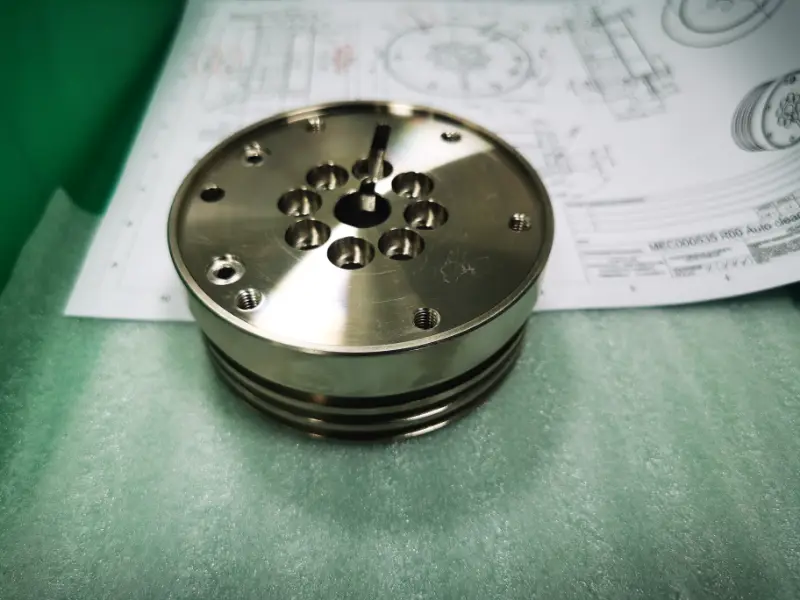
Because 1018 steel has weak corrosion resistance and is prone to rust when used bare, surface finishing is often needed after machining. Different finishing methods can improve rust resistance, appearance, wear resistance, or assembly stability, and the final choice should depend on the service environment and part function.
| Finish | Function |
| Black Oxide | Provides basic rust resistance and a black appearance, suitable for fixtures, tool parts, and indoor mechanical parts |
| Zinc Plating | Improves corrosion resistance and is commonly used for screws, bolts, connectors, and general fasteners |
| Nickel Plating | Improves corrosion resistance, wear resistance, and surface appearance, suitable for precision parts and decorative mechanical components |
| Phosphating | Improves rust resistance and coating adhesion, commonly used for parts requiring lubrication or later painting |
| Painting / Powder Coating | Provides color, corrosion protection, and appearance protection, suitable for brackets, housings, mounting plates, and outdoor structural parts |
| Rust-Preventive Oil | Provides short-term rust protection, suitable for transportation, inventory storage, and temporary protection |
| Carburizing / Carbonitriding | Improves surface hardness and wear resistance, suitable for self-tapping screws, wear-resistant pins, light-duty toothed parts, and local bearing surfaces |
For ordinary indoor mechanical parts, black oxide, rust-preventive oil, or phosphating is usually sufficient. If the part is used in humid, outdoor, or salt-spray environments, zinc plating, nickel plating, painting, or powder coating is more suitable. For 1018 steel parts that need to withstand friction and wear, carburizing or carbonitriding should be considered to obtain a harder surface layer while retaining core toughness.
Common Applications of 1018 Steel
1018 steel is commonly used for ordinary mechanical parts that require a balance of strength, machinability, cost, and post-processing adaptability. It is not a high-strength wear-resistant steel, but it is widely used in light- to medium-load structural, connecting, locating, and machined parts.
- Shafts and Pins: 1018 steel can be used for general shafts, locating pins, connecting pins, guide pins, and light- to medium-load rotating parts. For shaft and pin parts that require higher wear resistance, surface hardening or plating can be added after machining.
- Fasteners and Screws: 1018 steel can be used for screws, bolts, rivets, small fasteners, and connectors. For self-tapping screws or fasteners that require higher surface hardness, carburizing, carbonitriding, or zinc plating is usually applied as post-processing.
- Brackets and Fixtures: Because 1018 steel offers moderate cost, good stiffness, and easy CNC machining, it is commonly used for brackets, fixtures, mounting seats, connecting plates, base plates, and equipment fixing parts.
- Bushings and Spacers: 1018 steel is also suitable for sleeves, spacers, blocks, and simple fitting parts. If the part requires better surface finish or dimensional consistency, cold-finished bar stock can be selected, or grinding can be performed after machining.
- Gears and Racks: In light-duty transmission applications, 1018 steel can be used for gears, racks, and toothed parts. However, if the part needs to withstand high loads, impact, or long-term wear, surface hardening is usually required, or higher-strength materials such as 1045 or 4140 should be used instead.
- Custom CNC Machined Parts: 1018 steel is also commonly used for custom mechanical parts, such as connecting blocks, flanges, mounting plates, support blocks, equipment components, and prototype machined parts. Its advantages are material availability, stable machining performance, and flexible post-processing options.
Advantages and Limitations of 1018 Steel
The value of 1018 steel lies in its balanced performance. It does not pursue extremely high strength like alloy steel, nor does it focus on corrosion resistance like stainless steel. Instead, it is more suitable for ordinary mechanical parts that require stable machining, controlled cost, and flexible post-processing.
Advantages
- Good Machinability: 1018 steel has good cutting performance and is suitable for CNC machining. It can be used for prototypes, small batches, and mass production.
- Good Weldability: Because of its low carbon content, 1018 steel has good weldability and is suitable for brackets, frames, connecting plates, and general welded structural parts.
- Good Cold Formability: 1018 steel has good ductility and can be used for cold drawing, cold heading, bending, pressing, and screw forming, making it suitable for fasteners and cold-formed parts.
- Cost-Effective Material: Compared with stainless steel, tool steel, and high-strength alloy steel, the material cost and machining cost of 1018 steel are usually easier to control.
- Flexible Finishing Options: It can be combined with black oxide, zinc plating, nickel plating, phosphating, painting, rust-preventive oil, carburizing, or carbonitriding to meet different requirements for rust resistance, appearance, or wear resistance.
Limitations
- Limited Corrosion Resistance: 1018 steel itself has weak corrosion resistance and is prone to rust in humid, outdoor, or salt-spray environments. It usually requires black oxide, zinc plating, nickel plating, painting, or rust-preventive oil for surface protection.
- Low Base Hardness: In the untreated condition, its hardness is not high, so it is not suitable for direct use on high-wear surfaces. If the part requires higher wear resistance, carburizing, carbonitriding, or other surface hardening treatments are usually needed.
- Not for High-Strength Applications: 1018 steel is not suitable for high impact, high torque, heavy load, or long-term fatigue loading conditions. For these applications, 1045, 4140, or other alloy steels are usually more appropriate.
1018 Steel vs Other Common Steels
Comparing 1018 steel with other common steels makes it easier to understand its material positioning. The advantages of 1018 steel lie in machinability, weldability, and cost balance. However, if a part places greater emphasis on high strength, wear resistance, or heavy-load performance, another steel may be required.
| Material Comparison | Main Difference |
| 1018 Steel vs A36 Steel | A36 is more commonly used for structural steel plates, welded frames, building structures, and general support parts. 1018 has more clearly controlled composition and better machining consistency, making it more suitable for shafts, pins, fixtures, screws, and precision machined parts. |
| 1018 Steel vs 1022 Steel | 1022 has a slightly higher carbon content and is commonly used for self-tapping screws, self-drilling screws, and fasteners that require surface hardening. 1018 is more suitable for general machined parts, pins, brackets, and light- to medium-load mechanical parts. |
| 1018 Steel vs 1045 Steel | 1045 is a medium-carbon steel with higher strength, hardness, and wear resistance, but its machinability and weldability are not as good as those of 1018. For high-load shafts, gears, or parts requiring quenching and tempering, 1045 is usually more suitable. |
| 1018 Steel vs 4140 Steel | 4140 is a chromium-molybdenum alloy steel with significantly better strength, hardenability, fatigue performance, and wear resistance than 1018. However, its material cost and machining difficulty are also higher, making it suitable for high-strength shafts, connectors, gears, and heavy-duty mechanical parts. |
How to Choose 1018 Steel for Your Parts
When choosing 1018 steel, the key is not only to see whether it is a low-carbon steel, but also to determine whether its properties match the part’s service conditions, manufacturing method, and post-processing requirements. For general mechanical parts, shafts, pins, brackets, fixtures, and connectors, 1018 steel is usually a balanced choice in terms of cost and machinability.
- For General Machined Parts: If the part is mainly used for locating, connecting, supporting, or general mechanical assembly, 1018 steel can usually meet basic strength and machining requirements.
- For Precision Shafts and Pins: If the part has high requirements for dimensional accuracy, straightness, and surface quality, 1018 cold finished steel or cold-drawn bar stock can be preferred to reduce machining allowance and improve consistency.
- For Wear-Resistant Surfaces: If the part requires higher surface hardness, such as a self-tapping screw, wear-resistant pin, or light-duty toothed part, carburizing or carbonitriding can be considered.
- For Corrosion Protection: If the part is used in a humid, outdoor, or rust-prone environment, black oxide, zinc plating, nickel plating, phosphating, painting, or rust-preventive oil should be used as surface treatment.
- For High-Load Applications: If the part needs to withstand high impact, high torque, or long-term fatigue loading, 1018 steel may not be the best choice, and 1045, 4140, or other higher-strength steels should be evaluated.
Common Forms and Supply Conditions of 1018 Steel
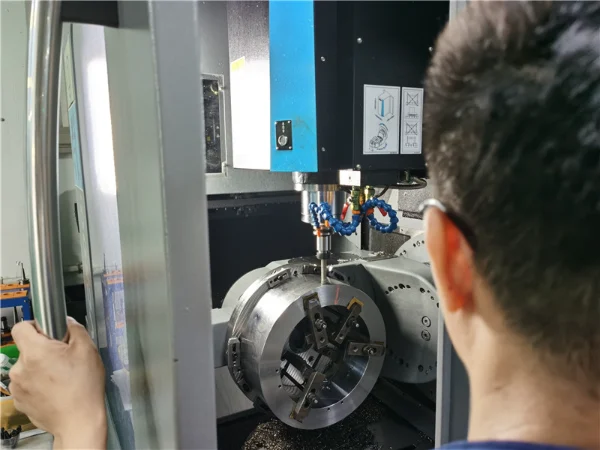
1018 steel can be supplied in different forms, such as bar stock, plate, flat stock, or wire, depending on the part shape and manufacturing method.
- Hot-Rolled Bar and Plate: Hot-rolled bars and plates are suitable for brackets, base plates, connectors, and general mechanical structural parts, with relatively low cost. Their surface quality and dimensional accuracy are usually not as good as cold-finished materials, so more machining allowance may be required in later processing.
- Cold-Finished Bar Stock: Cold-finished bar stock is commonly available as round bar, square bar, and flat bar. It can be processed by cold drawing, peeling, grinding, or polishing to improve dimensional accuracy, straightness, and surface quality. It is suitable for shafts, pins, sleeves, spacers, and precision CNC machined parts.
- 1018 Cold Rolled Steel / Flat Stock: 1018 cold rolled steel is more suitable for sheet, plate, or flat parts, such as mounting plates, connecting plates, and light structural components. Compared with hot-rolled plate, it usually offers better thickness control and surface quality.
- Wire Rod and Cold Heading Wire: 1018 steel can also be supplied as wire, wire rod, or cold heading wire, and is often used for screws, rivets, pins, and small fasteners. For parts requiring higher surface hardness, carburizing or carbonitriding can be applied after forming.
Conclusion
1018 steel is a balanced, easy-to-machine, and relatively cost-effective American low-carbon steel. It offers good machinability, weldability, and cold formability, making it suitable for shafts, pins, brackets, fixtures, connectors, fasteners, and general CNC machined parts. By selecting the right material condition, heat treatment, and surface finishing process, 1018 steel can also meet different requirements for dimensional accuracy, surface hardness, rust resistance, and batch stability.
In actual projects, whether to choose 1018 steel should be evaluated based on the part structure, load requirements, machining method, wear resistance needs, and service environment. Weldo Machining can provide DFM analysis, CNC machining solution evaluation, surface finishing recommendations, and custom machining quotes based on your 1018 steel part drawings, helping you quickly confirm the right material condition, manufacturing route, and production cost.