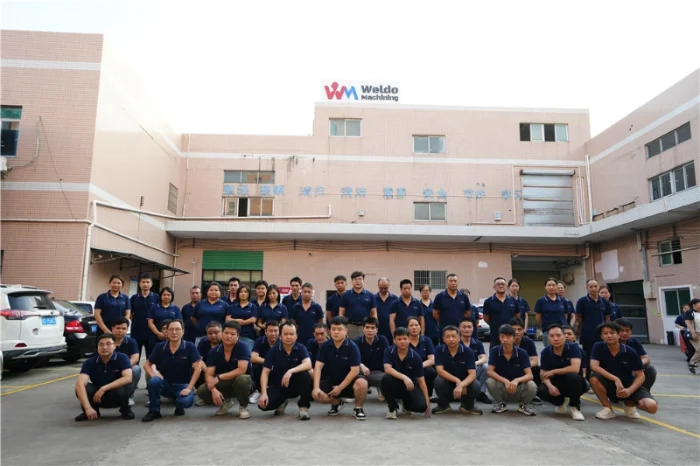
Beryllium bronze is a copper-based alloy with beryllium as the main alloying element. It has high strength, hardness, and elastic limit, low elastic hysteresis, and good elastic stability. It also provides fatigue resistance, corrosion resistance, non-magnetic properties, high thermal and electrical conductivity, and does not generate sparks when subjected to impact or cutting. The appearance color of beryllium bronze may vary depending on its heat treatment condition and surface treatment, typically appearing golden yellow, light yellow, or silvery white. In addition, it has strong resistance to both cold and hot pressure processing and offers excellent overall performance.
Because of these advantages, Beryllium Bronze Machining is widely used to produce precision parts that require strength, conductivity, wear resistance, and stable performance in demanding applications.
Below is a comprehensive overview of beryllium bronze material.

How Is Beryllium Bronze Made?
Beryllium bronze is produced by melting high-purity copper with beryllium and small amounts of alloying elements under vacuum or inert gas protection, then casting and hot working the alloy to improve its structure. It undergoes solution treatment, rapid quenching, and aging at around 300–350°C to enhance strength, hardness, elasticity, and conductivity. Finally, surface treatment and quality testing are performed to ensure it meets application requirements.
Beryllium bronze composition
To help you better understand the material composition of beryllium bronze, the following table summarizes its main chemical components and corresponding content ranges.Part of information from Researchgate
| Element | Content(%) |
| Beryllium(Be) | ≈ 1.7-2.5 |
| Lead(Pb) | ≈ 0.2-0.6 |
| Silicon(Si) | ≈ 0.2 |
| Aluminum(Al) | ≈ 0.2 |
| Cobalt(Co) | ≈ 0.2 |
| Copper(Cu) | Remaining amount |
Beryllium Bronze Material Properties
Beryllium bronze has good corrosion resistance, thermal conductivity, electrical conductivity, non-magnetic properties, excellent processability, easy machinability and castability, and strong metal fatigue resistance.
Role of Beryllium in the Alloy
The addition of beryllium helps improve machinability and material ductility. It also refines the grain structure, which can increase tensile strength and elongation. In combination with other metal elements, beryllium can influence the distribution of strengthening phases and indirectly optimize the overall performance of the alloy. It also improves the heat resistance and corrosion resistance of the material.
Mechanical Properties of Beryllium Bronze
The mechanical properties of beryllium bronze vary depending on alloy grade, heat treatment condition, cold working ratio, and aging process. In general, beryllium bronze combines high strength, high hardness, good elasticity, fatigue resistance, wear resistance, and good electrical and thermal conductivity. Therefore, it is widely used in precision elastic components, electronic connectors, mold parts, aerospace components, and wear-resistant structural parts.
Tensile Strength
In the annealed condition, the tensile strength of beryllium bronze is generally 400–600 MPa. It has good ductility and is suitable for stamping, bending, drawing, rolling, and other forming processes. It is commonly used for spring strips, connector blanks, thin-wall stamped parts, and precision electronic component blanks.
After age hardening, the tensile strength can increase to 1000–1500 MPa. Its load-bearing capacity and fracture resistance are significantly improved, making it suitable for high-strength springs, relay spring contacts, electronic connectors, pins and sockets, aerospace elastic components, and fatigue-resistant structural parts.
Yield Strength
In the annealed condition, the yield strength is about 200–400 MPa, making the material easy to plastically deform. It is suitable for bending, blanking, deep drawing, and complex shape forming.
In the age-hardened condition, the yield strength is usually 800–1200 MPa. The material is less likely to produce permanent deformation under load, making it suitable for spring contacts, conductive spring strips, connector terminals, precision switches, and clamping plates that require good elastic recovery and dimensional stability.
Elongation
In the annealed condition, the elongation is generally 20%–60%, providing good ductility and toughness. It is suitable for multi-step stamping, bending, curling, and deep drawing.
In the age-hardened condition, the elongation is usually 1%–20%. Strength and hardness are increased, but ductility decreases. This condition is more suitable for parts that have already been formed and mainly require elasticity, conductivity, or wear resistance, such as spring strips, contact parts, sliders, fixture components, and high-strength conductive parts.
Hardness
In the annealed condition, the hardness is about 90–144 HV, which makes cutting, stamping, and forming easier. It also helps reduce tool wear and improve machining efficiency.
In the age-hardened condition, the hardness can reach 216–446 HV, approximately equivalent to HRC 36–45. It offers good wear resistance, indentation resistance, and surface deformation resistance. It is commonly used for mold inserts, wear-resistant bushings, sleeves, sliders, fixtures, and stamping die parts.
Elastic Modulus
The longitudinal elastic modulus of beryllium bronze is about 128 GPa, and the transverse elastic modulus is about 49 GPa. It has good elastic recovery and high dimensional stability, making it suitable for micro springs, conductive spring strips, relay contacts, sensor elastic structures, and precision measuring instrument components.
Fatigue Strength
Beryllium bronze has excellent fatigue resistance and is suitable for long-term repeated bending, vibration, or contact loads. Typical applications include electronic connectors, switch contacts, spring strips, relay spring contacts, automotive electrical terminals, aerospace plugs, and elastic components for precision instruments.
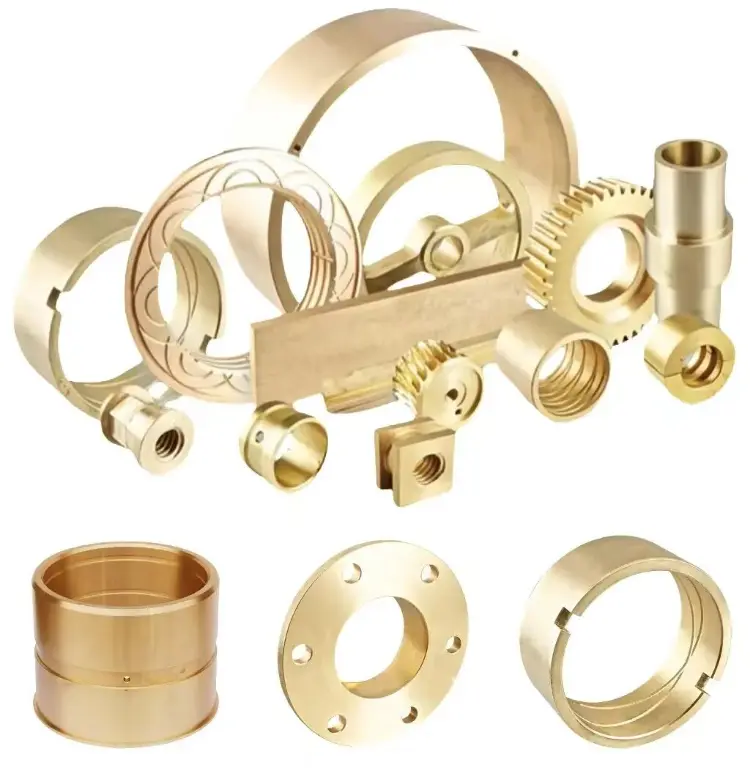
Heat Treatment For Beryllium Bronze Machining
Common heat treatment processes for beryllium bronze include solution treatment, aging treatment, stress relief annealing, and intermediate softening annealing. The specific process should be determined according to the alloy grade, thickness, product structure, and performance requirements.
Solution Treatment
Solution treatment is used to dissolve beryllium into the copper matrix, forming a supersaturated solid solution for subsequent age hardening. It also helps improve material ductility.
The commonly used temperature is 780–820°C. For elastic components, the temperature can be controlled at 760–780°C. The holding time is usually estimated at 1 hour per 25 mm of thickness.
After solution treatment, water quenching is generally required. For thin parts, the transfer time should not exceed 3 seconds, while for standard parts, it should not exceed 5 seconds.
Aging Treatment
Aging treatment is used to improve the hardness, strength, and elastic limit of beryllium bronze.
For high-strength beryllium bronze with a beryllium content above 1.7%, the common aging temperature is 300–330°C, with a holding time of 1–3 hours.
For high-conductivity beryllium copper alloys with a beryllium content below 0.5%, the common aging temperature is 450–480°C, with a holding time of 1–3 hours.
For parts with strict deformation control requirements, two-stage or multi-stage aging can be used.
Stress Relief Annealing
Stress relief annealing is used to remove residual stress caused by cutting, cold forming, straightening, and sizing, reducing the risk of deformation in later processes.
The commonly used temperature is 150–200°C, with a holding time of 1–1.5 hours.
Intermediate Softening Annealing
Intermediate softening annealing is used to reduce cold work hardening and restore material ductility, making subsequent processing easier.
The commonly used temperature is 540–560°C, with a holding time of 2–4 hours. Insufficient annealing or excessive grain growth should be avoided.
Process Notes
During the heat treatment of beryllium bronze, key factors such as furnace temperature, holding time, quenching speed, and loading method must be carefully controlled.
For thin-walled parts, spring parts, and complex-shaped components, deformation control should be considered. If necessary, setting fixtures, proper hanging methods, or staged aging should be used.
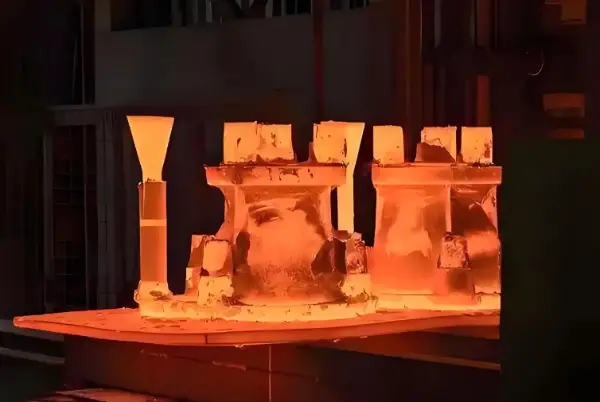
The shape and common accessories of beryllium bronze
Plates
Beryllium bronze plates are a common supply form, with thicknesses typically ranging from 0.03 mm to several tens of millimeters. Width and length can be customized as required. With high strength, good elasticity, stable electrical conductivity, and corrosion resistance, they are widely used for precision mold components, non-sparking tools, electronic heat sinks, shielding covers, conductive spring plates, and structural support parts.
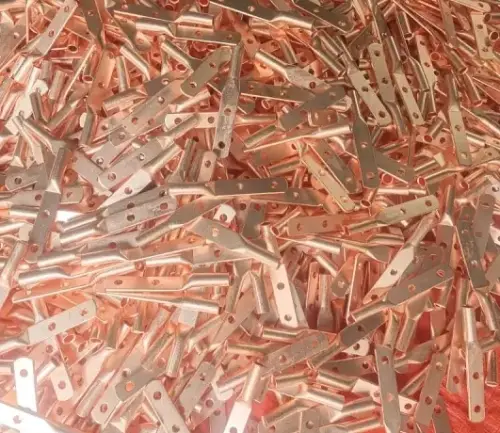
Rods
Beryllium bronze rods include round, square, hexagonal, and other forms, with sizes ranging from a few millimeters to several hundred millimeters. After solution treatment and aging, they offer higher hardness, wear resistance, and fatigue resistance. They are commonly processed into bearings, gears, bushings, injection mold inserts, die-casting punches, welding electrodes, and high-strength mechanical parts.
Wires
Beryllium bronze wires generally range from 0.05 mm to several millimeters in diameter and feature good elasticity, conductivity, and fatigue resistance. They are often used to manufacture precision springs, connectors, switch contacts, relay spring plates, antennas, electronic terminals, and other components requiring stable conductivity, elastic recovery, and long service life.
Tubes
Beryllium bronze tubes include seamless and welded types, with outer diameter, wall thickness, and length customizable for different operating conditions. Thanks to their corrosion resistance, thermal conductivity, and mechanical strength, they are commonly used in fluid transmission, heat exchangers, sensor housings, precision instrument parts, and structural components for high-pressure or high-temperature environments.
Strips
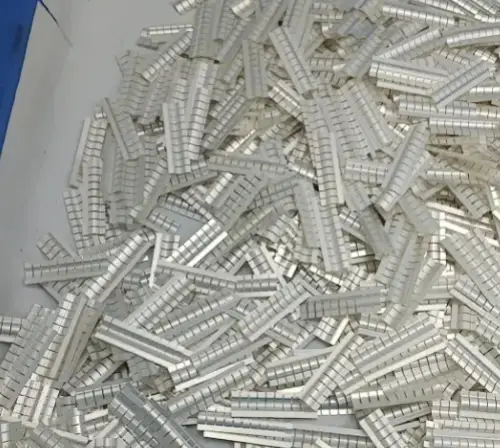
Beryllium bronze strips are usually thin, with thicknesses generally ranging from 0.03 mm to 1 mm, and can be supplied in continuous coils. With good elasticity, conductivity, formability, and fatigue resistance, they are widely used for flexible circuits, shielding materials, precision connectors, electronic spring plates, switch components, relay springs, and elastic parts in instruments.
Custom-Shaped Parts
Beryllium bronze custom-shaped parts are produced according to drawings, samples, or specific working conditions. They can be made through casting, forging, stamping, precision machining, CNC machining, and other processes. Typical applications include special mold inserts, customized mechanical parts, conductive components, wear-resistant sliders, elastic elements, and aerospace structural parts.
What is the elastic modulus of beryllium copper before and after heat treatment?
Before heat treatment / solution-treated condition:
The elastic modulus is about 128 GPa. At this stage, the material is in a supersaturated solid-solution state, with relatively low strength, but the elastic modulus is already basically determined.
After heat treatment / age-hardened condition:
The elastic modulus increases slightly, generally reaching about 131 GPa. Aging treatment forms strengthening precipitates, improving strength and elastic performance, while the elastic modulus also increases slightly.
Can beryllium bronze be welded?
Resistance welding
Resistance welding is suitable for high-strength beryllium bronze alloys, such as C17200 and C17500. Because beryllium bronze has relatively high electrical resistivity, heat is concentrated during resistance welding, the heat-affected zone is small, and good weld quality can be achieved. In most cases, no additional post-weld heat treatment is required.
Welding current, time, and pressure must be controlled to avoid overheating, which may change alloy properties or cause surface oxidation.
Brazing
Brazing is a commonly used welding method for beryllium bronze, especially for thin-wall or complex-shaped parts. Suitable filler metals, such as silver-based or copper-based brazing alloys, and proper flux should be selected to ensure good wetting on the beryllium bronze surface.
Before brazing, the surface must be thoroughly cleaned to remove oxide films. Acid pickling or mechanical polishing is commonly used to ensure brazing quality.
Laser welding
Laser welding provides concentrated energy and high precision, making it suitable for beryllium bronze sheets or precision components. It can reduce the heat-affected zone and help maintain alloy properties.
Laser power, pulse frequency, and other parameters should be adjusted according to alloy thickness and welding requirements.
What to do if beryllium bronze blackens from nitrogen leakage during heat treatment?
If beryllium bronze turns black during heat treatment because of nitrogen leakage, the following measures can be taken:
Surface cleaning
Mechanical cleaning:
Use fine sandpaper, a wire brush, or a flap wheel to gently polish the blackened surface and remove oxides and contaminants. Avoid excessive grinding that may damage the base material.
Acid pickling:
If the blackening is severe, dilute hydrochloric acid or sulfuric acid solution can be used for pickling. The pickling time depends on the degree of blackening, usually 1–5 minutes. After pickling, rinse thoroughly with clean water and neutralize any remaining acid.
Re-heat treatment
If the blackening has not affected the internal material properties, solution treatment or aging treatment can be performed again. Ensure normal nitrogen protection during heat treatment to prevent further oxidation.
The solution treatment temperature is usually 760–780°C, and the aging temperature is generally 300–325°C, depending on the specific beryllium bronze grade.
Surface protection
After treatment, anti-rust oil, clear coating, or passivation can be applied to the beryllium bronze surface to form a protective film and prevent re-oxidation.
Notes
If the blackening is severe and accompanied by beryllium loss, overheating, or burning defects, material performance may be affected. In this case, the part should be evaluated for repairability, and replacement may be required.
Protective equipment must be worn during treatment to avoid skin or respiratory contact with acid solution or grinding dust.
How to reduce deformation during beryllium bronze heat treatment
1. Control of Material Condition and Blanking Direction
The hardness, elastic condition, and rolling direction of the material before heat treatment directly affect deformation after aging. Materials with stable hardness and consistent temper should be selected whenever possible. For parts with both transverse and longitudinal bends, the layout should take the rolling direction into account. If necessary, 45-degree blanking can be used to reduce stress concentration and balance bending deformation.
2. Control of Forming Residual Stress
Residual stress generated during stamping, bending, sizing, leveling, and machining is one of the main causes of heat treatment deformation. Excessive correction, local heavy pressing, or forced shaping should be avoided, because these internal stresses may be released during aging treatment, resulting in warping, twisting, angle changes, or dimensional drift in beryllium copper alloy parts.
3. Control of Furnace Loading and Fixtures
For parts with strict requirements on flatness, angle, or opening size, the use of heat treatment setting fixtures should be evaluated. During furnace loading, stacking pressure and uneven heating should be avoided. Depending on the part structure, flat placement, support, hanging, or string hanging can be selected to ensure uniform heating and stable stress distribution, thereby reducing the risk of deformation.
Can beryllium bronze be cold extruded?
Beryllium bronze can be cold extruded under certain conditions, but it depends on the specific grade, material condition, and process requirements. The details are as follows:
Soft beryllium bronze can be cold extruded
Solution-treated soft beryllium bronze, such as C17000 and C17200, has good ductility and formability, making it suitable for cold extrusion. In this condition, the material has a supersaturated solid-solution structure with fine and uniform grains, allowing it to withstand a certain amount of cold deformation without cracking or defects.
Half-hard beryllium bronze can be cold extruded with limits
Half-hard beryllium bronze, such as 1/4H and 1/2H tempers, has undergone some cold work hardening, so its ductility is reduced. However, it can still be cold extruded with a small deformation amount. Extrusion force and deformation speed should be carefully controlled to avoid cracking or performance loss.
Hard and age-hardened beryllium bronze is not suitable for cold extrusion
Hard beryllium bronze, such as H or HT temper, or age-hardened beryllium bronze has high strength and hardness but much lower ductility. During cold extrusion, it is prone to cracking, fractures, or dimensional accuracy problems. Cold extrusion is generally not recommended. If forming is required, hot extrusion or hot forming is usually preferred.
How to reduce tool breakage when milling or drilling beryllium bronze
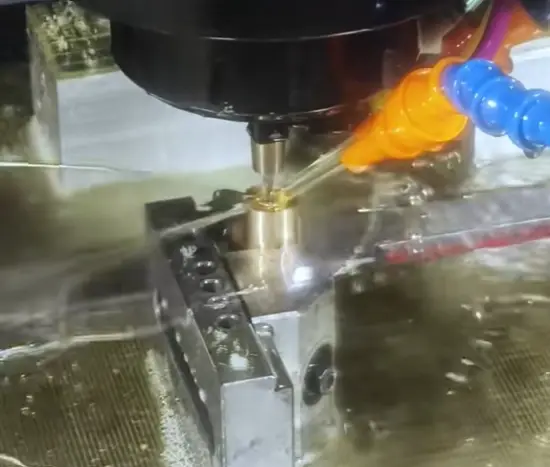
Beryllium copper is different from ordinary bronze. The spindle speed generally has little effect on the cutting tool, but the feed rate must be slow and stable. Otherwise, whether milling, turning, or drilling, problems can occur very easily. If the drilling feed is too fast, the drill bit may suddenly snap with a loud crack. During turning, if the feed rate is too high and the depth of cut is too large, minor cases may cause tool damage, while serious cases may cause the beryllium bronze workpiece to come loose from the fixture, creating a safety hazard.
For cutting tools and drill bits, carbide tools are more durable. During cutting, single-edge cutting is recommended. The cutting edge or drill bit can be ground with one side higher and the other side lower, which helps remove excess material from beryllium copper more smoothly during turning or drilling. Therefore, our engineers at Weldo Machining often use carbide flat drills to machine beryllium bronze parts.
How to maintain the rebound performance of beryllium bronze shrapnel ?
Material Selection and Composition Control
To maintain high elasticity over the long term, it is essential to ensure that the material used for the beryllium copper contact spring has high purity, stable composition, and a uniform microstructure. When selecting materials, priority should be given to standard-compliant beryllium copper grades, while the content of key elements such as beryllium and nickel should be strictly controlled. Reducing impurities and segregation helps build a solid foundation for stable performance in later stages.
Heat Treatment Process Optimization
Heat treatment is a key factor affecting the elasticity and strength of beryllium copper spring contacts. Solution treatment helps obtain a uniform supersaturated solid solution, while proper aging treatment promotes sufficient precipitation of strengthening phases, thereby improving hardness, resilience, and long-term stability. Inappropriate control of temperature or holding time may negatively affect the final elastic performance.
Processing and Stress Control
During the forming process, beryllium copper spring strips should be processed through multiple passes with small deformation in each step, so as to avoid stress concentration, cracking, or permanent deformation caused by excessive one-time forming. After processing, low-temperature annealing can be used to relieve residual stress. At the same time, optimizing mold design helps reduce local damage to precision spring components caused by sharp corners or small bending radii.
Surface Treatment and Environmental Protection
To extend service life, conductive spring contacts can be treated with surface finishes such as gold plating or nickel plating according to application requirements. These treatments improve corrosion resistance, electrical conductivity, and surface stability, while reducing the effects of oxidation on elasticity and contact performance. In addition, long-term exposure to high temperature, high humidity, or corrosive environments should be avoided to reduce the risk of material degradation.
Use and Maintenance
In practical applications, beryllium copper spring contacts should be protected from overloading, excessive compression, and frequent impact to ensure that working stress remains within a reasonable range. Regular inspection is also necessary to check for issues such as loss of elasticity, deformation, or cracks. Once abnormalities are found, timely maintenance or replacement is necessary to ensure long-term stable operation.
Is beryllium bronze carcinogenic?
Beryllium bronze itself is not directly carcinogenic, but under certain conditions, it may present a cancer risk. The details are as follows:
Very low risk during normal use
Beryllium bronze is a copper alloy mainly composed of copper, beryllium, and other elements. During normal use, such as in mechanical parts or electronic components, as long as beryllium dust, fumes, or inhalable particles are not generated, contact with beryllium bronze does not directly cause cancer.
Potential risk during machining or wear
During the machining of beryllium bronze, such as cutting, grinding, or welding, or during wear in use, beryllium-containing dust, fumes, or fine particles may be produced. If these substances are inhaled, they may cause beryllium poisoning or increase the risk of cancer. The International Agency for Research on Cancer, or IARC, classifies beryllium and its compounds as Group 1 carcinogens, but this classification mainly applies to inhalable beryllium compounds, not beryllium bronze itself.
Beryllium bronze vs phosphor bronze vs bronze
Beryllium bronze offers high strength, high elasticity, and good electrical conductivity. After heat treatment, its yield strength can reach 500–1200 MPa, with electrical conductivity of about 15%–20%. It can maintain a stress retention rate of over 85% at 150°C, making it suitable for high-stress, high-frequency mating, signal transmission, power connection, and explosion-proof safety applications. However, beryllium bronze is expensive, costing about 8–10 times as much as phosphor bronze. It also requires solution treatment and age hardening, and beryllium dust may pose health risks, so strict protection is needed during production and processing.
Phosphor bronze provides a good balance of elasticity, wear resistance, corrosion resistance, and machinability. Its yield strength is about 350–550 MPa, its elastic modulus is around 110 GPa, and its electrical conductivity is about 15%–25%, making it suitable for springs, general connectors, and wear-resistant parts in mass production. However, phosphor bronze can generate heat under high-current conditions, shows obvious stress relaxation above 125°C, and has lower strength and hardness limits than beryllium bronze, so it is not ideal for high-current, high-temperature, or extremely high-stress applications.
Bronze usually refers to tin bronze. It has good casting performance, with a melting point of about 800–950°C and good fluidity, making it suitable for casting complex parts. It also offers good wear resistance, anti-friction properties, and general corrosion resistance, and is commonly used for bearings, gears, marine parts, and chemical-industry components. However, tin bronze has relatively poor elasticity, electrical conductivity usually below 10%, and yield strength generally below 300 MPa, with weak fatigue resistance, so it is not suitable for applications requiring high elasticity or high electrical conductivity.
For high elasticity, high conductivity, and high reliability, such as military, aerospace, and high-frequency connector applications, beryllium bronze is preferred.
For a balance of elasticity, wear resistance, and cost in general connectors, springs, and wear-resistant parts, phosphor bronze is more suitable.
For casting performance, wear resistance, and low cost in bearings, gears, and cast parts, bronze, namely tin bronze, is usually the better choice.
In conclusion
Beryllium bronze is a high-performance copper alloy known for its strength, hardness, conductivity, wear resistance, corrosion resistance, and non-sparking properties. With proper heat treatment and careful machining control, it can be used to produce reliable precision parts for electronics, molds, aerospace components, springs, connectors, and wear-resistant applications.
For custom beryllium bronze parts with stable quality and precise tolerances, contact Weldo Machining to discuss your project and get a professional machining solution.