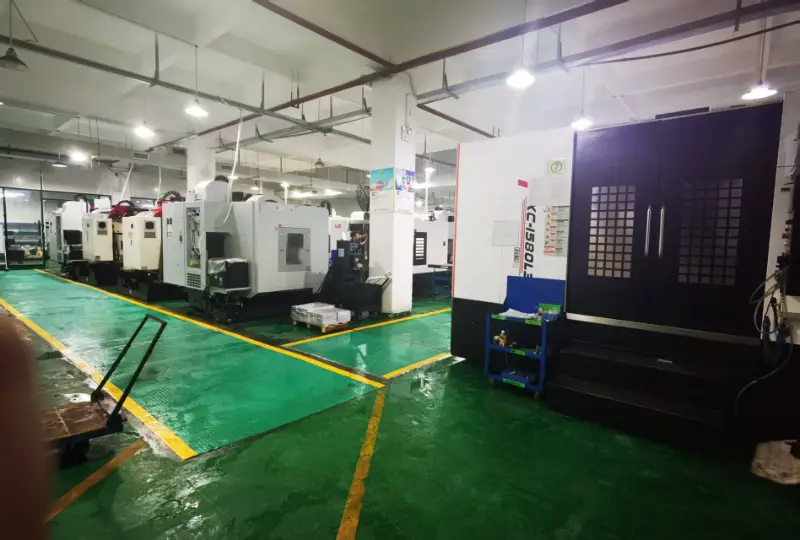
Het belangrijkste verschil tussen 1018-staal versus A36-staal beperkt zich niet tot sterkte. Deze materialen worden op verschillende manieren gedefinieerd en voldoen aan verschillende eisen voor de productie van onderdelen.
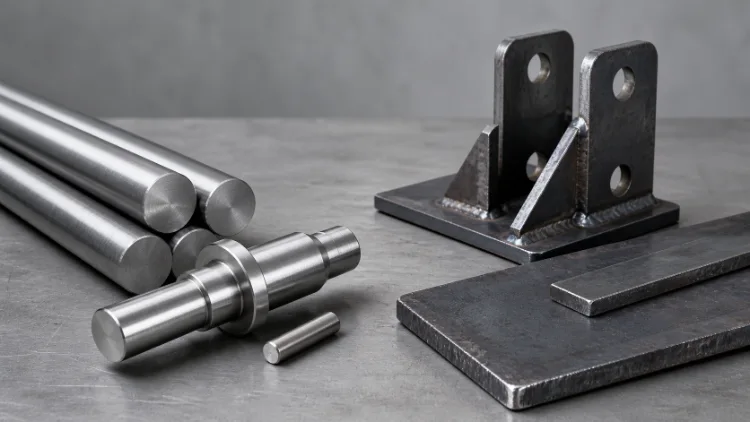
1018 is een koolstofarme staalsoort die wordt gekenmerkt door zijn chemische samenstelling. Het is geschikt voor assen, pennen, hulzen, rollen en op maat gemaakte bevestigingsmiddelen. A36 is een specificatie voor constructiestaal. Het is geschikt voor grondplaten, beugels, frames en grote gelaste constructies.
Inkoopingenieurs moeten de materiaalkwaliteit, de voorraadvorm, de bewerkingsnauwkeurigheid, de lasvereisten, de gebruiksomgeving en de totale productiekosten met elkaar vergelijken.
Wat zijn 1018- en A36-staal?
Staal 1018
1018 bevat een gereguleerd gehalte aan koolstof en mangaan. Het biedt een goede bewerkbaarheid, lasbaarheid, koudvervormbaarheid en eigenschappen voor oppervlakteharding.
Veelvoorkomende vormen van gewone aandelen zijn onder meer:
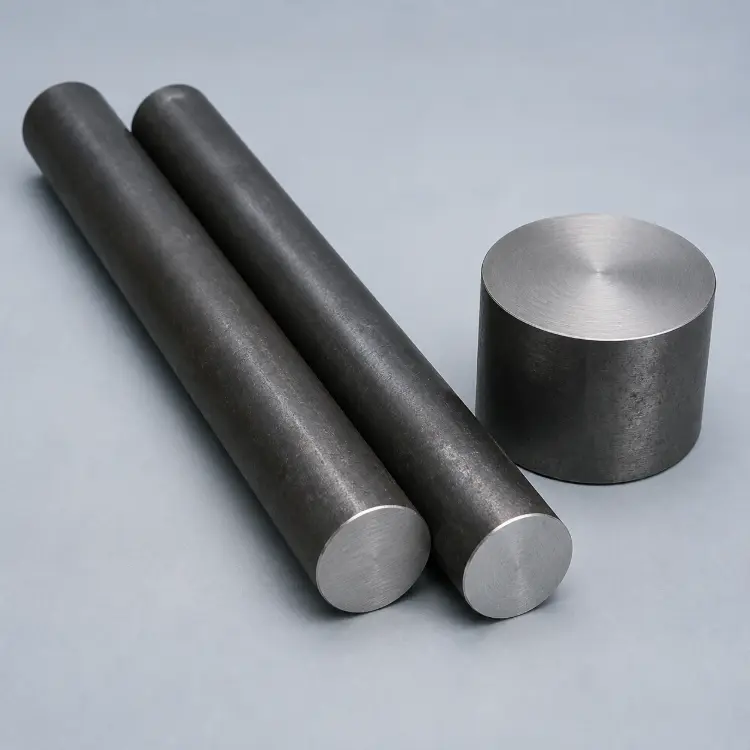
- Warmgewalste ronde staaf
- Koudgetrokken ronde staaf
- Zeskantige staaf
- Vierkante staaf
- Nauwkeurig geslepen staaf
Koudgetrokken 1018 biedt een betere rechtheid, oppervlaktekwaliteit en maatvastheid. Het is geschikt voor CNC-draaien, buitendiameterslijpen en serieproductie. Nucor stelt dat koudafwerkingsprocessen de afmetingen, rechtheid, oppervlaktegesteldheid en sterkte van de staven verbeteren.
A36-staal
A36 is een ASTM-norm voor constructiestaal. Deze norm heeft betrekking op platen, staven en profielen die worden gebruikt in gelaste, geboute en geklonken constructies.
A36 bepaalt voornamelijk de minimale vloeigrens, treksterkte en rek. De eisen aan de chemische samenstelling variëren afhankelijk van de productvorm en de materiaaldikte. ASTM A36/A36M schrijft een warmteanalyse en trektests voor om het materiaal goed te keuren.
A36 wordt vaak gebruikt voor:
- Basisplaten voor apparatuur
- Bevestigingsplaten
- Machinebeugels
- Gelaste frames
- Versterkingsplaten
- Onderdelen voor industriële platforms
Belangrijkste verschillen in chemische samenstelling
| Element | SAE/AISI 1018 | ASTM A36 | Gevolgen voor onderdelen |
|---|---|---|---|
| Koolstof | 0.15–0.20% | ≤0,25–0,29% | Heeft invloed op de sterkte, de lasbaarheid en de eigenschappen bij het oppervlakteharden |
| Mangaan | 0.60–0.90% | Afhankelijk van de productvorm | Verhoogt de sterkte en verbetert de verwerkingsprestaties |
| Fosfor | ≤0,040% | ≤0,030–0,040% | Heeft invloed op de taaiheid en de laskwaliteit |
| Zwavel | ≤0,050% | ≤0,030–0,050% | Heeft invloed op de bewerkbaarheid en de transversale taaiheid |
| Silicium | Wordt niet als primair legeringselement beschouwd | ≤0,401 TP3T voor bepaalde producten | Wordt gebruikt voor deoxidatie en beïnvloedt de lasprestaties |
| Koper | Geen primaire vereiste | ≥0,201 TP3T wanneer koperhoudend staal is voorgeschreven | Verbetert de weerstand tegen atmosferische corrosie |
1018 heeft duidelijker omschreven bereiken voor de chemische samenstelling. Dit draagt bij aan consistente resultaten bij verspaning en oppervlakteharding. De samenstelling ervan wordt gecontroleerd volgens materiaaleisen zoals SAE J403.
A36 is geen staalsoort met een vaste samenstelling. De daadwerkelijke chemische samenstelling van de smelt moet worden gecontroleerd aan de hand van het materiaaltestrapport, op basis van de productvorm en -dikte.
Belangrijkste verschillen in mechanische eigenschappen
De 1018-waarden in de tabel zijn typische waarden voor koudgetrokken staafmateriaal. De A36-waarden zijn specificatie-eisen. Deze waarden hebben een verschillende betekenis en mogen niet worden beschouwd als gelijkwaardige gegarandeerde eigenschappen.
| Onroerend goed | 1018 Koudgetrokken, standaard | ASTM A36-eis |
|---|---|---|
| Treksterkte | 552–621 MPa | 400–550 MPa |
| Vloeigrens | 483–552 MPa | ≥250 MPa |
| Rek in 2 inch. | 15–20% | ≥20–23% |
| Brinell-hardheid | 160–190 HB | Geen verplichting tot het dragen van een uniform |
| Toestand van het oppervlak | Glad, koudgewerkt oppervlak | Afhankelijk van de productvorm |
| Maatcontrole | Geschikt voor de precisiebewerking van staven | Geeft geen toleranties voor afgewerkte onderdelen weer |
De typische waarden voor koudgetrokken 1018 zijn gebaseerd op gegevens die door Eaton Steel zijn gepubliceerd.
Koudgetrokken 1018 heeft een hogere vloeigrens en hardheid. Het is geschikt voor precisie-asonderdelen. A36 voldoet aan vastgestelde eisen inzake structurele sterkte en is geschikt voor gelaste, dragende onderdelen.
Voor warmgewalst 1018-staal mogen geen eigenschappen van koudgetrokken staal worden gehanteerd. Voor onderdelen die worden blootgesteld aan lage temperaturen, stootbelasting of vermoeidheidsbelasting gelden bovendien bijbehorende testvereisten.
Vergelijking van lasprestaties
Zowel de 1018 als de A36 zijn geschikt voor conventionele lasprocessen, maar hun belangrijkste toepassingen verschillen.
1018 wordt voornamelijk gebruikt voor machinaal bewerkte assemblages met plaatselijk gelaste onderdelen. Door het lassen veranderen de microstructuur en de restspanning van de koudgetrokken delen. De precisiematen moeten na het lassen worden bijgewerkt.
Bij het lassen van 1018-onderdelen moet rekening worden gehouden met de volgende factoren:
- Warmte-inbreng bij het lassen
- Bevestiging en vervorming
- Rechten na het lassen
- Laatste verspanings- of slijpspeling
A36 is geschikt voor constructies die voornamelijk door lassen tot stand komen. Bij grote frames en grondplaten is het van belang dat de lasvolgorde, de referentiepunten en de krimpvervorming goed worden beheerst.
Bij het lassen van A36-onderdelen moet rekening worden gehouden met de volgende factoren:
- Symmetrische lasvolgorde
- Vereisten voor het voorverwarmen van dikke platen
- Interpass-temperatuur
- Spanningsvermindering na het lassen
- Afwerking van de bevestigingsvlakken
De vereisten voor het voorverwarmen moeten worden bepaald op basis van de materiaaldikte, het koolstofequivalent, de beperkingen van de verbinding en de WPS.
Opties voor warmtebehandeling en oppervlakteafwerking
1018 Warmtebehandeling
1018 heeft een laag koolstofgehalte en wordt niet gebruikt voor doorharding. Het is geschikt voor oppervlakteharding.
- Carbureringsproces: Verhoogt de oppervlaktehardheid en slijtvastheid.
- Carbonitreren: Geschikt voor kleine assen, pennen en bevestigingsmiddelen.
- Gloeien: Vermindert de hardheid en verbetert de vervormbaarheid en bewerkbaarheid.
- Normaliseren: Verfijnt de microstructuur en zorgt voor een betere consistentie van de eigenschappen.
- Stressverlichtend: Vermindert restspanningen als gevolg van koudvervorming, lassen en machinale bewerking.
Door het carboneren veranderen de afmetingen van het werkstuk. Op precisieoppervlakken moet een slijpspeling worden aangehouden.
A36 Warmtebehandeling
A36 wordt niet gebruikt voor conventionele, geharde slijtdelen. De warmtebehandeling ervan zorgt vooral voor een betere maatvastheid.
- Stressverlichtend: Vermindert restspanningen als gevolg van lassen en grove bewerking.
- Normaliseren: Verbetert de uniformiteit van de microstructuur.
- Gloeien: Vermindert de hardheid en verbetert de verdere vervormbaarheid.
Vergelijking van oppervlakteafwerkingen
| Oppervlakteafwerking | 1018 aanvragen | A36 Toepassingen |
|---|---|---|
| Zwart oxide | Assen, pennen, hulzen en bevestigingsmiddelen | Kleine hulpstukken voor gebruik binnenshuis |
| Verzinken | Bouten en verbindingsstukken | Beugels en verbindingsplaten |
| Chemisch nikkel | Precisieonderdelen en componenten waarvoor een gelijkmatige beplating vereist is | Lokale precisieoppervlakken |
| Fosfaatcoating | Glijdende onderdelen en grondlagen | Breng grondlagen aan op gelaste constructies |
| Poedercoating | Behuizingen en ondersteunende onderdelen | Frames, basisplaten en beschermkappen |
| Thermisch verzinken | Niet geschikt voor kleine precisieonderdelen | Grote buitenconstructies |
Bij zwartoxideren is extra roestwerende olie nodig. Bij thermisch verzinken moeten de laagdikte en de thermische vervorming worden beoordeeld.
Overwegingen bij de verspaning
Verspanen 1018
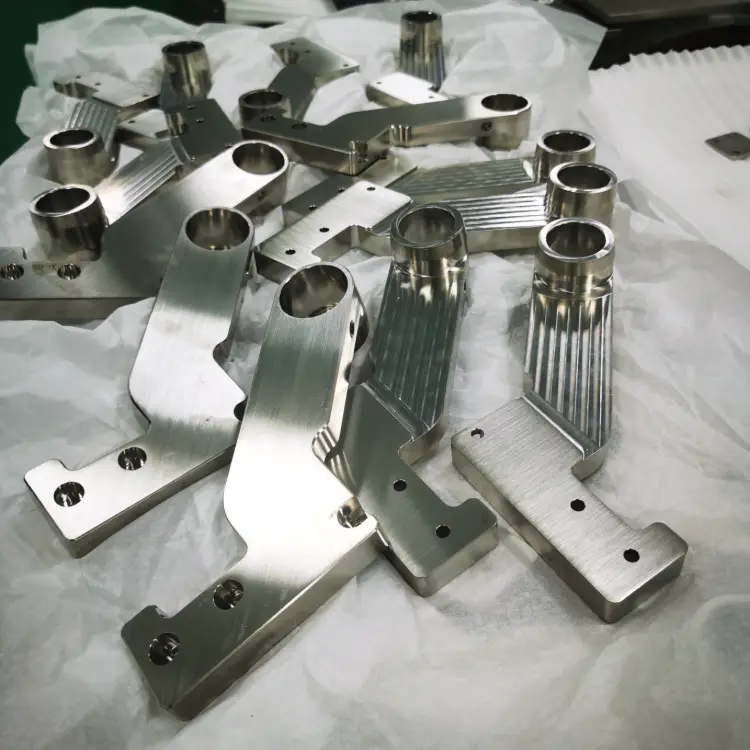
Koudgetrokken 1018 is geschikt voor CNC-draaien en serieproductie. Het vermindert de ruwbewerkingstolerantie, maar dankzij de taaiheid ontstaan er doorlopende spanen.
Tijdens de bewerking moet op de volgende factoren worden gelet:
- Scherpte van het gereedschap
- Spanenbreuk
- Snijtemperatuur
- Klemkracht van de spanklem
- Doorbuiging van de lange as
- Ontspanning van restspanningen
Zeer nauwkeurige asonderdelen kan worden gevolgd door een proces van grofdraaien, spanningsvermindering, halfafwerkingsdraaien, oppervlakteharding en eindslijpen.
Verspanen van A36
De walshuid op warmgewalst A36-staal versnelt de slijtage van het gereedschap. Het oppervlak moet worden gereinigd en er moeten betrouwbare referentiepunten worden vastgesteld voordat met de bewerking wordt begonnen.
Grote platen mogen niet aan één kant intensief worden bewerkt. Het materiaal moet afwisselend aan beide kanten worden verwijderd om kromtrekken te voorkomen.
Bij vlam- en plasmasneden is er sprake van een door warmte beïnvloede zone. Voor precisieprofielen is extra bewerkingsruimte nodig.
Toepassingen en serviceomgevingen
| Onderdeel of toepassing | Aanbevolen materiaal | Reden voor selectie |
|---|---|---|
| Precisieassen | 1018 | Geschikt voor draaien, slijpen en maatcontrole |
| Pinnen en deuvels | 1018 | Zorgt voor nauwkeurige pasvormtoleranties |
| Bussen en afstandhouders | 1018 | Geschikt voor het in serie draaien en galvaniseren |
| Op maat gemaakte bevestigingsmiddelen | 1018 | Geschikt voor draadbewerking en oppervlakteharding |
| Rollen en geleidingsonderdelen | 1018 | Geschikt voor het slijpen van buitendiameters en slijtagebehandeling |
| Machinevoetplaten | A36 | Stabiele levering van platen en goede lasbaarheid |
| Gelaste frames | A36 | Geschikt voor grote dragende constructies |
| Bevestigingsbeugels | A36 | Gemakkelijk te snijden, te buigen en te lassen |
| Steunplaten | A36 | Geschikt voor constructieve versterking |
| Apparatuurplatforms | A36 | Geschikt voor grote industriële assemblages |
1018 is geschikt voor precisiefunctionele onderdelen. A36 is geschikt voor structurele functionele onderdelen.
In vochtige omgevingen en buitenomgevingen is corrosiebescherming noodzakelijk. Voor constructies die bij lage temperaturen worden gebruikt, gelden bovendien specifieke temperaturen voor de slagproef en een minimum aan geabsorbeerde energie.
Verschillen in onderhoud
Bij het onderhoud van 1018 onderdelen ligt de nadruk op slijtage, smering en de staat van de coating.
De volgende onderdelen moeten regelmatig worden gecontroleerd:
- Montagediameters
- Glijvlakken
- Geharde lagen
- Integriteit van de coating
- Smeertoestand
Bij het onderhoud van A36-constructies ligt de nadruk op lasnaden, coatings en algemene vervormingen.
De volgende onderdelen moeten regelmatig worden gecontroleerd:
- Lasbarsten
- Loszittende bouten
- Defect aan de coating
- Lokale corrosie
- Vervorming van het montageoppervlak
Beschadigde beschermlagen moeten onmiddellijk worden hersteld. De oorzaak van lasbarsten moet worden vastgesteld voordat een goedgekeurde herstelprocedure wordt uitgevoerd.
Vergelijkbare cijfers
Noch 1018, noch A36 heeft een één-op-één Europese tegenhanger die op elke producttoestand van toepassing is.
| Amerikaans materiaal | Veel vergeleken Europese kwaliteitsklasse | Hoofdpunt |
|---|---|---|
| ASTM A36 | EN S235JR | Vergelijkbaar structureel gebruik, maar niet direct gelijkwaardig |
| SAE/AISI 1018 | EN C15E, C16E en soortgelijke koolstofarme staalsoorten | De samenstelling, de toestand en de eigenschappen moeten worden vergeleken |
De volgende punten moeten worden gecontroleerd voordat er materiaal wordt vervangen:
- Chemische samenstelling
- Mechanische eigenschappen
- Productvorm
- Leveringsvoorwaarden
- Maattoleranties
- Eisen inzake impact
- Materiaalcertificaten
Vergelijkbare kwaliteiten kunnen niet zomaar worden vervangen. Bij wezenlijke wijzigingen is schriftelijke toestemming van de ontwerper vereist.
Hoe moet een inkoopingenieur een keuze maken?
Inkoopingenieurs moeten eerst vaststellen of het onderdeel een functionele precisieonderdeel of een constructieonderdeel is.
Kies 1018 onder de volgende voorwaarden:
- Het materiaal bestaat uit ronde staven of zeshoekige staven
- CNC-draaien of -slijpen is het belangrijkste proces
- Op de tekening staan de montagediameters en de concentriciteit aangegeven
- Het onderdeel moet oppervlaktehard worden gemaakt
- Het product is een as, pen, huls of bevestigingsmiddel
Kies A36 onder de volgende voorwaarden:
- Het materiaal bestaat uit plaatstaal, platstaal of constructieprofielen
- Snijden, buigen en lassen zijn de belangrijkste bewerkingen
- Het product draagt voornamelijk constructieve belastingen
- De met hoge precisie bewerkte oppervlakken beslaan slechts plaatselijke gebieden
- Het product is een basisplaat, beugel of frame
Bij de aankoopbeslissing mag niet alleen naar de materiaalprijzen worden gekeken. Er moet ook rekening worden gehouden met de kosten voor verspaning, lassen, spanningsvermindering, warmtebehandeling, oppervlakteafwerking, keuring en levering.
In de offerteaanvraag moet het volgende worden vermeld:
- Materiaalkwaliteit en norm
- Warmgewalst, koudgetrokken of precisiegeslepen
- Voorraadformulier
- Kritische toleranties
- Lassen en warmtebehandeling
- Oppervlakteafwerking
- MTR en warmtenummer
- Inspectiedocumenten
- Aantal en levertijd
Hoe kiest u een betrouwbare partner voor verspaningswerkzaamheden?
Een betrouwbare partner op het gebied van verspanende bewerking bekijkt de tekening alvorens de materiaaleigenschappen en de productiemethode vast te stellen.
Voor 1018-onderdelen dient de leverancier de toestand van de staaf, de toeslag voor warmtebehandeling en de slijpvolgorde te bevestigen. Voor A36-onderdelen dient de leverancier de vlakheid van de plaat, de lasvervorming en de vereisten inzake spanningsverlichting te beoordelen.
Inkoopmedewerkers dienen te controleren of de leverancier het volgende kan leveren:
- Overzicht van materiaal en normen
- MTR en traceerbaarheid van warmtecijfers
- CNC-bewerking en lascoördinatie
- Beheersing van vervorming door warmtebehandeling
- Coördinatie van de oppervlakteafwerking
- Controle van het eerste exemplaar en maatcontrole
- Duidelijke informatie over het proces en de doorlooptijd
Om te controleren of 1018 of A36 geschikt is voor een specifiek onderdeel, kunt u de tekening, de hoeveelheid en de gebruiksvereisten doorgeven aan Weldo Machining voor bewerkingsadvies en een offerte.
Definitief besluit
1018 is geschikt voor precisieassen, pennen, hulzen, rollen en op maat gemaakte bevestigingsmiddelen.
A36 is geschikt voor grondplaten, beugels, frames en grote gelaste constructies.
Wanneer een onderdeel zowel een gelaste constructie als precisiepassingsvlakken bevat, moet het materiaal worden gekozen op basis van de primaire dragende functie ervan. Voer na het lassen spanningsverlichting en nabewerking uit.
De materiaalkwaliteit, de leveringsvoorwaarden en het productieproces moeten gezamenlijk worden vastgesteld. Deze factoren hebben een directe invloed op de prestaties van het onderdeel, de bewerkingskosten en de leveringsbetrouwbaarheid.