
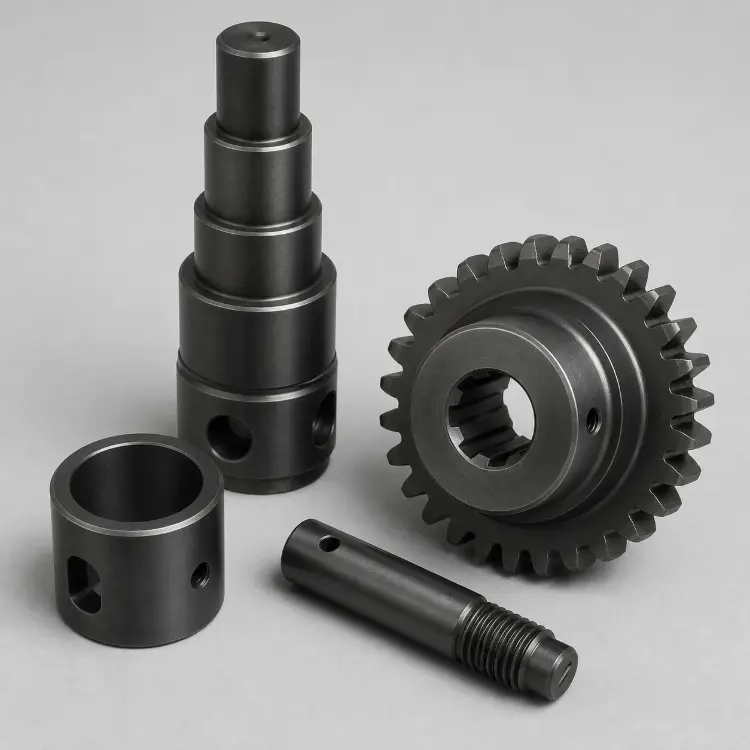
Nitreren wordt vaak toegepast bij tandwielen, assen, matrijzen en hydraulische onderdelen. Het verhoogt de oppervlaktehardheid, slijtvastheid en vermoeidheidssterkte, terwijl de sterkte en taaiheid van de kern behouden blijven.
Voor afnemers van op maat gemaakte onderdelen is het niet voldoende om op een tekening alleen “nitreren” te vermelden. De materiaaltoestand, de oppervlaktehardheid, de hardheidsdiepte van de nitreerlaag, de samengestelde laag en de maattoleranties zijn allemaal van invloed op het eindresultaat. Deze eisen zijn ook rechtstreeks bepalend voor de kosten en de doorlooptijd.
Deze handleiding behandelt het proces, de materialen, de kosten en de kwaliteitscontroles die bij het nitreren komen kijken. Het helpt inkoopteams bij het opstellen van duidelijke eisen voor genitreerde onderdelen.
Wat is nitreren?
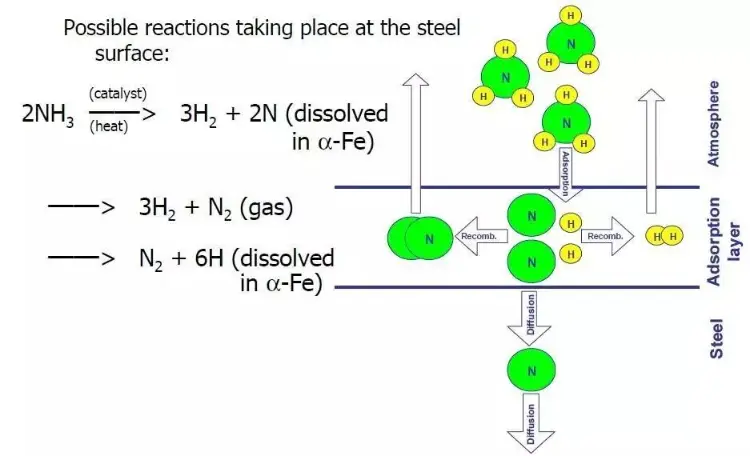
Nitreren is een thermochemisch proces voor het verharden van oppervlakken. Het werkstuk wordt verwarmd in een omgeving die actieve stikstof bevat. Stikstofatomen worden door het metaaloppervlak opgenomen en diffunderen geleidelijk in het materiaal.
De nitreertemperatuur blijft onder de Ac₁-temperatuur van het staal. Het staal ondergaat geen volledige austenitisatie en afkoelen is na de behandeling niet nodig.
Nitreren zorgt vooral voor verbetering op het gebied van:
- Oppervlaktehardheid en slijtvastheid
- Weerstand tegen schuren en vastlopen
- Prestaties op het gebied van contactmoeheid en buigmoeheid
- Oppervlaktestabiliteit bij verhoogde temperaturen
- Corrosiebestendigheid in specifieke omgevingen
Bij nitreren wordt het oppervlak gehard, en niet de gehele dwarsdoorsnede. De microstructuur van de kern blijft bepalend voor het totale draagvermogen. De toestand na het eerdere afschrikken en ontlaten en de hardheid van de kern zijn daarom even belangrijk.
Wat is het verschil tussen nitreren en nitrocarbureren?
Bij conventioneel nitreren wordt voornamelijk stikstof in het metaaloppervlak gediffundeerd. Bij nitrocarbureren worden tegelijkertijd stikstof en een kleine hoeveelheid koolstof in het metaal ingebracht.
De term “zacht nitreren” verwijst doorgaans naar ferritisch nitrocarbureren. “Zacht” betekent niet dat het behandelde oppervlak een lage hardheid heeft.
Bij nitrocarbureren is de cyclus korter en ontstaat er een minder diepe geharde laag. Deze methode is geschikt voor koolstofstaal, laaggelegeerd staal en onderdelen die worden blootgesteld aan lichte of matige belastingen.
Conventioneel nitreren is beter geschikt voor staalsoorten die aluminium, chroom, molybdeen of vanadium bevatten. Hiermee kan een diepere diffusiezone en een gelijkmatige oppervlaktehardheid worden verkregen.
Waarom is nitreren belangrijk voor op maat gemaakte onderdelen?
Op maat gemaakte onderdelen moeten vaak voldoen aan strenge eisen op het gebied van afmetingen, toleranties en oppervlakte-eigenschappen. Door nitreren worden de werkoppervlakken gehard zonder dat het gehele onderdeel door en door wordt gehard. Deze methode is geschikt voor precisieonderdelen die al vrijwel hun definitieve afmetingen hebben.
Door nitreren kunnen de eigenschappen van het oppervlak en de kern ook afzonderlijk worden geregeld. De buitenste laag is bestand tegen slijtage, schuurplekken en contactmoeheid. De kern blijft bestand tegen stoot-, buig- en torsiebelastingen.
Het resultaat van het nitreren hangt nauw samen met de voorafgaande bewerkingsstappen. De materiaalkeuze, het afschrikken en ontlaten, het spanningsverlichten, de maatcompensatie en het fijnslijpen moeten als één procesroute worden gepland.
Wanneer de bewerking en het nitreren niet goed op elkaar zijn afgestemd, kunnen de volgende problemen optreden:
- De temperatuur bij het ezen is lager dan de temperatuur bij het nitreren
- De afmetingen overschrijden de montagetoleranties na het nitreren
- Door overmatig slijpen na het nitreren wordt te veel van de geharde laag verwijderd
- De gemaskeerde gebieden komen niet overeen met de functionele oppervlakken
- De verantwoordelijkheid is onduidelijk tussen de machinewerkplaats en warmtebehandeling leverancier
Nitreren moet daarom al in de ontwerpfase en bij het aanvragen van offertes in het productieplan worden opgenomen. Het mag niet worden beschouwd als een ongeplande extra bewerking nadat de verspaningsbewerkingen zijn voltooid.
Hoe ontstaat een genitreerde hardlaag?
Actieve stikstof wordt eerst door het metaaloppervlak geadsorbeerd en dringt vervolgens door in de ijzermatrix. Naarmate de stikstofconcentratie toeneemt, reageert de stikstof met ijzer en legeringselementen, waardoor nitriden ontstaan.
Aluminium, chroom, molybdeen en vanadium zijn elementen die effectief nitriden vormen. De fijne nitriden die door deze elementen worden gevormd, beperken de plastische vervorming en verhogen de oppervlaktehardheid.
Stikstofdiffusie zorgt bovendien voor een resterende drukspanning in het oppervlak. Deze spanning remt het ontstaan van vermoeidheidsscheuren af en verlengt de levensduur bij cyclische belasting.
Een genitreerd oppervlak bestaat doorgaans uit een samengestelde laag en een diffusiezone.
Samengestelde laag
De samengestelde laag bevindt zich op het buitenste oppervlak van het onderdeel. Deze laag wordt ook wel de witte laag genoemd. Veelvoorkomende structuren zijn onder meer γ′-Fe₄N, ε-Fe₂–₃N of een mengsel van beide fasen.
Deze laag is vooral van invloed op de slijtvastheid, het wrijvingsgedrag, de weerstand tegen vastlopen en de corrosiebestendigheid.
Een dikkere compoundlaag is niet altijd beter. Een te dikke witte laag is brozer en zal bij een botsing of hoge contactbelastingen eerder barsten.
Diffusiezone
De diffusiezone bevindt zich onder de samengestelde laag. Deze bestaat uit stikstof in vaste oplossing en fijne legeringsnitriden.
De diffusiezone zorgt voor een hardheidsgradiënt en ondersteunt de buitenste legeringslaag. Bij tandwielen, krukassen en spindels heeft de diffusiediepte een directe invloed op het draagvermogen en de vermoeidheidsweerstand.
Wat zijn de belangrijkste soorten nitreren?
| Proces | Typische temperatuur | Fietskenmerken | Belangrijkste toepassingen |
|---|---|---|---|
| Gasnitreren | 480–580 °C | Van enkele uren tot enkele tientallen uren | Tandwielen, assen, krukassen, schroeven |
| Plasmanitreren | 350–580 °C | Afhankelijk van het materiaal en de diepte van de behuizing | Precisieonderdelen, matrijzen, gereedschappen |
| Nitrocarbureren met gas | 560–590 °C | Meestal 1–4 uur | Onderdelen van koolstofstaal en laaggelegeerd staal |
| Nitrocarbureren in een zoutbad | 540–590 °C | Snelle opwarming en korte cycli | Slijtdelen en auto-onderdelen die in grote hoeveelheden worden geproduceerd |
| Oxidatie na nitreren | Uitgevoerd na het nitreren | Voegt een oxidatiefase toe | Zwarte slijt- en corrosiebestendige onderdelen |
De waarden in deze tabel dienen als uitgangspunt voor de voorlopige proceskeuze. De productieparameters moeten worden vastgesteld op basis van het materiaal, de tekening en de goedkeuringsnorm.
Gasnitreren
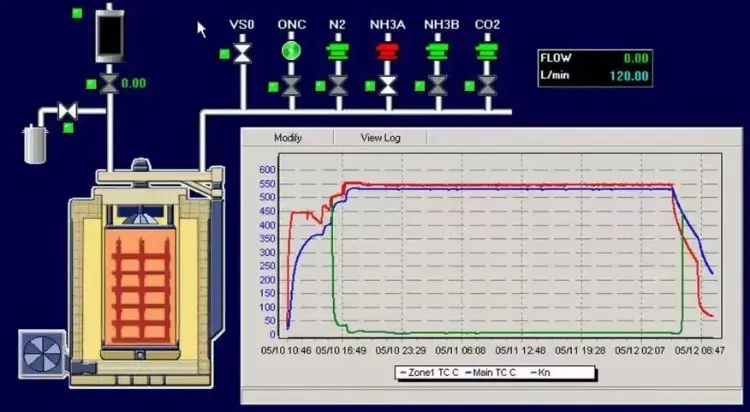
Bij gasnitrideren wordt gebruikgemaakt van een stikstofhoudende atmosfeer om actieve stikstof aan het staaloppervlak te genereren. Met moderne apparatuur wordt het resultaat geregeld door middel van temperatuur, tijd en nitrideringspotentiaal.
Het proces is geschikt voor massaproductie. Het kan ook groeven, kleine gaten en complexe oppervlakken bewerken. Het wordt vaak gebruikt voor tandwielen, transmissieassen en extruderschroeven waarvoor een diepere diffusiezone nodig is.
Bij slecht geregelde conventionele processen kan een te dikke of te broze witte laag ontstaan. Met geregeld gasnitreren kunnen de verbindingslaag en de diffusiezone afzonderlijk worden aangepast.
Plasmanitreren
Plasmanitreren wordt ook wel ionennitreren genoemd. Het werkstuk wordt blootgesteld aan een gloeiontlading in een stikstofhoudende lagedrukatmosfeer.
Door middel van ionenbombardement wordt het oppervlak gereinigd en geactiveerd. De laagstructuur kan worden aangepast via de gasverhouding, de temperatuur, de druk en elektrische parameters.
Plasmanitreren is geschikt voor precisieassen, matrijzen en gereedschappen. Het vergemakkelijkt ook het selectief afplakken. De uniformiteit van de behandeling in diepe blinde gaten en smalle groeven moet afzonderlijk worden beoordeeld.
Ferritisch nitrocarbureren en QPQ
Ferritisch nitrocarbureren is geschikt voor pennen, kleine tandwielen, hydraulische onderdelen en onderdelen van autotransmissies. Dankzij de korte bewerkingscyclus is deze methode geschikt voor het aanbrengen van een dunne, slijtvaste laag.
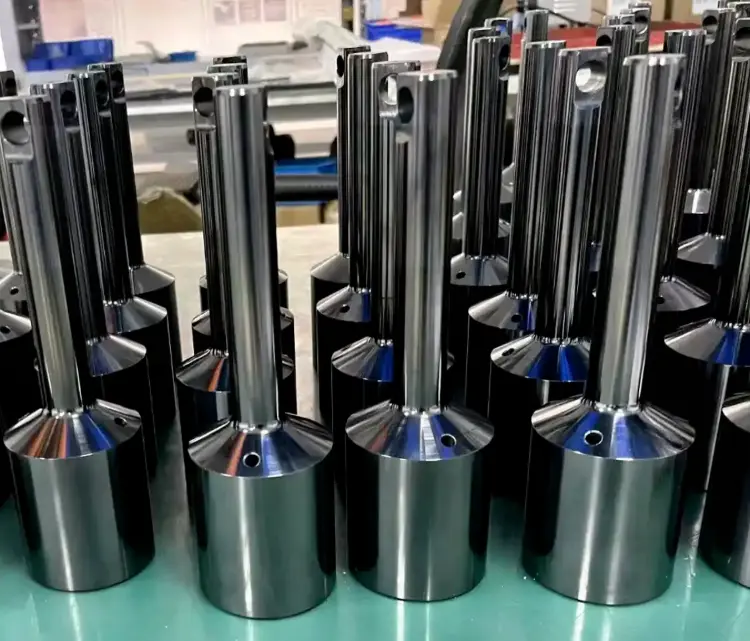
QPQ omvat doorgaans nitrocarbureren, polijsten en reoxidatie. Het behandelde oppervlak ziet er donkergrijs of zwart uit en biedt een goede slijtvastheid en corrosiebestendigheid.
Bij de aankoop van met QPQ behandelde onderdelen moet rekening worden gehouden met de vereisten op het gebied van reiniging, zoutresiduen, nabehandeling na oxidatie en naleving van milieunormen.
Voor- en nadelen van nitreren
| Voordeel | Toegevoegde waarde voor het onderdeel |
|---|---|
| Hoge oppervlaktehardheid | Verbetert de weerstand tegen indrukking en plastische vervorming |
| Goede slijtvastheid | Vermindert slijtage door glijden, rollen en schuren |
| Geringe verwerkingsvervorming | Geschikt voor precisieonderdelen die de definitieve afmetingen al bijna hebben bereikt |
| Goede weerstand tegen vermoeidheid | Drukbelasting aan het oppervlak vertraagt het ontstaan van vermoeidheidsscheuren |
| Behoudt de hardheid van de kern | De kern blijft bestand tegen schokken en structurele belastingen |
| Ondersteunt selectieve behandeling | Schroefdraad, pasvlakken en lasgebieden kunnen worden afgedekt |
| Nadeel | Overwegingen bij de inkoop |
|---|---|
| Afhankelijk van de materiaalsamenstelling | Gewoon koolstofstaal kan niet hetzelfde resultaat van grote diepte en hoge hardheid bereiken als genitreerd staal |
| Relatief ondiepe geharde mantel | Niet geschikt voor onderdelen voor zwaar gebruik die een diepe harding vereisen |
| Lange cyclus voor diepe gevallen | Een grotere NHD leidt tot hogere kosten en een langere doorlooptijd |
| Risico op broosheid | Een te dikke laag mengsel kan barsten of afbladderen |
| Er treedt nog steeds maatverandering op | Precisieonderdelen vereisen compensatie en validatie van het eerste exemplaar |
| Strenge eisen voor roestvrij staal | Een onjuiste temperatuur kan de oorspronkelijke corrosiebestendigheid verminderen |
Nitreren is geschikt voor onderdelen die een hoge oppervlaktehardheid, slijtvastheid en maatvastheid vereisen. Bij het vereisen van een diepe geharde laag en een hoge slagvastheid dient men te overwegen om in plaats daarvan te kiezen voor carboneren en afschrikken of inductieharden.
Welke materialen zijn geschikt voor nitreren?
De materiaalsamenstelling is bepalend voor de hardheid en de hardheidsdiepte die na het nitreren worden bereikt. Staalsoorten die aluminium, chroom, molybdeen en vanadium bevatten, lenen zich goed voor nitreren.
| Materiaalcategorie | Veelvoorkomende cijfers | Standaardonderdelen |
|---|---|---|
| Speciaal nitreringsstaal | 38CrMoAlA, 41CrAlMo7 | Tandwielen, spindels, onderdelen van het brandstofsysteem |
| Chroom-molybdeen-gelegeerd staal | 4140, 42CrMo, 4340 | Assen, krukassen, tandwielen, constructieonderdelen |
| Gereedschapsstaal voor heetwerk | H11, H13, SKD61 | Spuitgietmatrijzen, warmsmeedmatrijzen, extrusiematrijzen |
| Koudbewerkingsstaal | D2, SKD11, Cr12MoV | Stansmatrijzen, trekmatrijzen, slijtvaste gereedschappen |
| Neerslagverhardend roestvrij staal | 17-4PH, 17-7PH | Kleppen, assen, slijtvaste onderdelen |
| Austenitisch roestvrij staal | 304, 316, 316L | Onderdelen waarvoor gespecialiseerde nitrering bij lage temperatuur vereist is |
| Gietijzer | Nodulair gietijzer, grijs gietijzer | Geleidingsrails, voeringen, slijtvaste onderdelen |
| Titaniumlegering | Ti-6Al-4V en andere | Lucht- en ruimtevaart en gespecialiseerde slijtvaste onderdelen |
Gereedschapsstaal
Gereedschapsstaal en snelstaal worden doorgaans gehard en getemperd voordat ze worden genitreerd. De nitreertemperatuur moet onder de uiteindelijke tempertemperatuur blijven. Anders ondergaat de kern een extra temperbehandeling en verliest deze aan hardheid.
De samenstellingslaag moet rond snijranden, matrijsradii en scherpe hoeken worden gecontroleerd. Een te dikke, broze laag kan leiden tot afbrokkeling van de randen en afbladdering van het oppervlak.
Roestvrij staalsoorten
De chroomoxidefilm op roestvrij staal van de soorten 304, 316 en 316L remt de diffusie van stikstof af. Vóór de behandeling is een betrouwbare oppervlakteactivering vereist.
Wanneer de corrosiebestendigheid behouden moet blijven, moet een gevalideerd diffusieproces bij lage temperatuur worden toegepast. Het resultaat moet door middel van corrosietests worden bevestigd.
Bij conventioneel niteren bij hoge temperatuur wordt de neerslag van chroomnitride bevorderd, waardoor de oorspronkelijke corrosiebestendigheid van het materiaal afneemt.
Gewoon koolstofstaal
Gewoon koolstofstaal bevat geen sterke nitridevormende elementen. Bij conventionele nitrering kan niet hetzelfde hardingsresultaat worden bereikt als bij speciaal voor nitrering bestemd staal.
Nitrocarbureren is geschikter voor deze materialen. Het belangrijkste doel ervan is het verbeteren van de slijtvastheid bij ondiepe slijtage, de weerstand tegen vastlopen en de corrosiebestendigheid.
Hoe worden de parameters voor nitreren bepaald?
Bij het vaststellen van de nitreerparameters moet rekening worden gehouden met vier vereisten: oppervlaktehardheid, hardheidsdiepte van de nitreerlaag, toestand van de samengestelde laag en maattoleranties.
Temperatuur en tijd
De nitreertemperatuur beïnvloedt de diffusiesnelheid, de nitrideprecipitatie en de eigenschappen van de kern. De behandelingsduur bepaalt voornamelijk de diffusiediepte.
Korte nitrideringscycli duren enkele minuten tot enkele uren. Ze zijn geschikt voor gereedschappen, matrijzen en ondiepe oppervlakteharding. Lange cycli duren van meer dan tien uur tot enkele tientallen uren en worden gebruikt voor tandwielen, assen en zwaar belaste slijtageonderdelen.
Dezelfde parameters leiden niet tot hetzelfde resultaat bij verschillende materialen. De behandelingscyclus moet worden afgestemd op het materiaal, de aanvankelijke hardheid en de beoogde NHD.
Oppervlaktehardheid
De oppervlaktehardheid wordt bepaald door het materiaal, de oorspronkelijke microstructuur en de procesomstandigheden.
Op de tekening moeten de micro-Vickers-hardheid, de testbelasting, de meetlocatie en de monsterhoeveelheid worden vermeld. Conventionele HRC-tests zijn niet geschikt om een dunne genitreerde laag direct goed te keuren.
Diepte van de nitreerhardheid
De hardheidsdiepte bij nitreren wordt gewoonlijk aangeduid als NHD. Deze wordt bepaald aan de hand van het hardheidsprofiel in dwarsdoorsnede en geeft de diepte aan waarbij functionele verharding wordt bereikt.
NHD en de dikte van de samengestelde laag mogen niet door elkaar worden gebruikt. NHD wordt doorgaans uitgedrukt in millimeters, terwijl de dikte van de samengestelde laag doorgaans wordt uitgedrukt in micrometers.
Dimensionale verandering
Bij nitreren is afkoelen niet nodig, waardoor de maatverandering relatief klein is. Bij precisieonderdelen treedt echter nog steeds een lichte uitzetting of vervorming op.
Lange assen, dunwandige onderdelen en asymmetrische componenten moeten vóór het nitreren worden ontstreefd. Ook moet tijdens de productie van het eerste exemplaar worden gecontroleerd of de maatvoering correct is.
Productieproces voor genitreerde onderdelen
- Controleer de materiaalkwaliteit en de leveringsvoorwaarden.
- Volledige harden en ontlaten of voorharden.
- Voer de grofbewerking uit.
- Precisieonderdelen die spanning wegnemen.
- Volledige voor- of nabewerking uitvoeren.
- Reinig en activeer de te nitreren oppervlakken.
- Maskeer de gebieden die niet mogen worden genitreerd.
- Voer de nitrering volledig uit volgens de goedgekeurde parameters.
- Laat afkoelen onder gecontroleerde omstandigheden.
- Controleer de hardheid, NHD, microstructuur en afmetingen.
- Voer indien nodig licht polijsten, honen of afslijpen uit.
- Volledige reiniging, roestbescherming en verpakking.
Nitreren wordt doorgaans uitgevoerd wanneer het onderdeel zijn definitieve afmetingen bijna heeft bereikt. Na de behandeling kan er nog steeds worden geslepen, maar de afslijphoeveelheid moet worden beperkt.
Overmatig slijpen beschadigt de samenstellingslaag en verkleint de effectieve diffusiezone.
Veiligheids- en nalevingsvoorschriften voor nitreren
Bij nitreren is sprake van hoge temperaturen, procesgassen, vacuümapparatuur en hoogspanningsvoedingen. Inkoopmedewerkers hoeven de bediening van de oven niet onder de knie te hebben, maar ze moeten wel de veiligheidsvoorzieningen en managementsystemen van de leverancier controleren.
Gasnitreren
Ammoniak is giftig, bijtend en brandbaar. In productieruimtes zijn lekdetectie, ventilatie, afzuigsystemen en veiligheidsvergrendelingen vereist.
Gasflessen, leidingen, kleppen en drukapparatuur moeten worden gekeurd volgens de geldende voorschriften.
Plasmanitreren
Bij plasma-apparatuur is sprake van vacuüm, hoge spanning en hoge temperaturen. Ovendeuren, gastoevoeren, stroomvoorzieningen en koelsystemen moeten zijn voorzien van veiligheidsvergrendelingen.
Onderhoud aan apparatuur mag pas worden uitgevoerd nadat de stroomtoevoer is uitgeschakeld, de druk is afgebouwd en de apparatuur voldoende is afgekoeld.
Nitrocarbureren in een zoutbad
Gesmolten zouten brengen risico’s op thermische brandwonden en blootstelling aan chemische stoffen met zich mee. Bij traditionele zoutbadprocessen is bovendien sprake van gevaarlijke chemische stoffen en moet er zorg worden gedragen voor het beheer van afvalvloeistoffen.
De leverancier moet systemen hanteren die voldoen aan de voorschriften voor de opslag van chemicaliën, de verwijdering van zoutafval en het beheer van reinigingsafvalwater.
Personeels- en procesbeheer
De leverancier dient het volgende bij te houden:
- Veiligheidsinformatiebladen
- Opleidingsgegevens van operators
- Ventilatie- en lekdetectiesystemen
- Persoonlijke beschermingsmiddelen
- Onderhouds- en kalibratiegegevens van apparatuur
- Noodplannen voor lekkages, branden en brandwonden
- Registraties met betrekking tot de verwijdering van afvalgassen, afvalwater en gevaarlijk afval
In ruimtes waar gevaarlijke gassen voorkomen, moeten passende ventilatie- en plaatselijke afzuigsystemen aanwezig zijn. De blootstelling moet worden beheerst in overeenstemming met de informatie over chemische veiligheid.
Veiligheids- en milieuaspecten maken eveneens deel uit van het kwaliteitssysteem. Een onstabiele gas- en apparatuurregeling kan ook leiden tot variaties in hardheid, hardingsdiepte en oppervlaktekwaliteit.
Welke op maat gemaakte onderdelen zijn geschikt voor nitreren?
Aandrijving en draaiende onderdelen
Tandwielen, spline-assen, krukassen, nokkenassen en spindels worden blootgesteld aan contact- en cyclische belastingen.
Door nitreren wordt de slijtvastheid van tandwieltanden en lagerpennen vergroot, terwijl het draagvermogen van de kern behouden blijft.
Mallen en gereedschappen
Spuitgietmatrijzen, injectiegietmatrijzen, warmsmeedmatrijzen en extrusiematrijzen worden blootgesteld aan wrijving, hechting en thermische cycli.
Nitreren vermindert slijtage in holtes en vertraagt vermoeidheidsschade rond rondingen.
Hydraulische onderdelen
Klepschuiven, klephulzen, zuigerstangen en pompassen vereisen stabiele loopspeling.
Nitreren met lage vervorming draagt bij aan het behoud van nauwkeurige afmetingen en verbetert de weerstand tegen schuurvlekken.
Onderdelen voor industriële apparatuur
Extruderschroeven, cilinders, geleidingen van werktuigmachines en slijtbusjes worden voortdurend blootgesteld aan glijwrijving.
Nitreren vertraagt de slijtage van het oppervlak en verlengt de onderhoudsintervallen.
Wat zijn de meest voorkomende problemen bij het nitreren?
| Probleem | Belangrijkste oorzaak | Correctieve koers |
|---|---|---|
| Onvoldoende oppervlaktehardheid | Ongeschikt materiaal, lage aanvankelijke hardheid, onvoldoende nitrideringspotentieel | Controleer het materiaal en de eerdere warmtebehandeling |
| Onvoldoende NHD | Te weinig tijd, lage temperatuur of een oxide laag op het oppervlak | De reiniging verbeteren en de cyclus aanpassen |
| Broze witte laag | Te hoog nitrideringspotentieel of te grote dikte van de samengestelde laag | De atmosfeer optimaliseren en de dikte van de grenslaag beperken |
| Ongelijkmatig genitreerde mantel | Onjuiste belading of ongelijkmatige verdeling van het gas- of elektrisch veld | Het aanpassen van de belasting en de procesplanning |
| Afmetingen buiten de tolerantiegrenzen | Restspanning, ongelijkmatige dwarsdoorsneden of onjuiste opspanning | Spanning verlichten en maatcompensatie toepassen |
Als de hardheid onvoldoende is, mag de bewerkingstijd niet onmiddellijk worden verlengd. Eerst moeten het materiaal, de hardheid van de kern en de toestand van het oppervlak worden gecontroleerd.
Hoe kunnen de kosten van nitreren worden beheerst?
De kosten van het nitreren worden bepaald door het materiaal, de voorafgaande warmtebehandeling, de ovenbelading, het afplakken, de keuring en de daaropvolgende bewerking.
Geef de juiste hardheid en NHD op
Een diepere diffusiezone vereist een langere behandelingscyclus. Het verhogen van de NHD zonder functionele reden leidt tot een langere verwerkingstijd en hogere energiekosten.
De hardheid en de hardheidsdiepte moeten worden afgestemd op de belasting, de toegestane slijtage en de vereiste levensduur.
Kies het juiste materiaal
Speciaal voor niteren bestemde staalsoorten zijn duurder, maar zorgen voor stabiele procesresultaten. Ze verminderen het risico op testwerk, herstelwerk en afval.
Bij de materiaalkeuze moet niet alleen naar de grondstofprijs worden gekeken, maar naar de totale productiekosten.
Het gebruik van de oven verbeteren
In offertes voor nitreren wordt doorgaans een minimale ovenvulling vermeld. Onderdelen met dezelfde materiaal- en procesvereisten kunnen gezamenlijk worden behandeld om de kosten per eenheid te verlagen.
Bij projecten met een klein volume moeten, waar mogelijk, consistente materiaaleisen en opleveringsvoorwaarden worden gehanteerd.
Verminder onnodig afplakken en slijpen
Diepe gaten, smalle groeven en selectief nitreren verhogen de voorbereidingskosten. Bij het ontwerp moet worden vastgesteld welke functionele oppervlakken daadwerkelijk moeten worden gehard.
Door de maatcompensatie en de slijpspeling vooraf vast te stellen, wordt het aantal nabewerkingen na het nitreren beperkt.
Stel een passende reikwijdte voor de inspectie vast
Bij kritische onderdelen moeten de hardheid, NHD en microstructuur worden gecontroleerd. Voor standaardproductieonderdelen kan een goedgekeurd steekproefplan worden gebruikt.
Kopers dienen de totale leveringsprijs te vergelijken, inclusief verspanen, warmtebehandeling, nitreren, fijnslijpen en keuring.
Wat moet er op de tekening en in de offerteaanvraag worden vermeld?
De offerteaanvraag voor een genitreerd onderdeel moet ten minste het volgende bevatten:
- Materiaalkwaliteit en materiaalnorm
- Toestand na de eerste warmtebehandeling en kernhardheid
- Type nitreerproces
- Oppervlaktehardheid en testbelasting
- Eisen inzake NHD en samengestelde lagen
- Afgedekte gebieden en uiteindelijke maattoleranties
- Inspectiedocumenten en vereisten inzake de traceerbaarheid van partijen
- Hoeveelheid, levertijd en jaarlijkse vraag
Met deze informatie kunnen leveranciers een stabiel productieproces opzetten en vergelijkbare offertes indienen.
Hoe moeten genitreerde onderdelen worden gecontroleerd?
Hardheid en hardingsdiepte
De Micro-Vickers-hardheidsbepaling wordt gebruikt om het hardheidsprofiel van het oppervlak en de dwarsdoorsnede te meten. In het rapport moeten de belasting, de meetlocatie en de acceptatiecriteria worden vermeld.
De NHD moet worden gemeten volgens de methode die op de tekening is aangegeven. ISO 18203 kan worden gebruikt om de hardheidsdiepte bij nitreren te bepalen.
Microstructuur en afmetingen
Een metallografische dwarsdoorsnede wordt gebruikt om de dikte van de samengestelde laag, de porositeit, de continuïteit en afwijkende nitridenetwerken te onderzoeken.
De maatcontrole moet betrekking hebben op de buitendiameter, de binnendiameter, de rondheid, de slingering, de vlakheid en de kritische pasvlakken.
Oppervlaktekleur
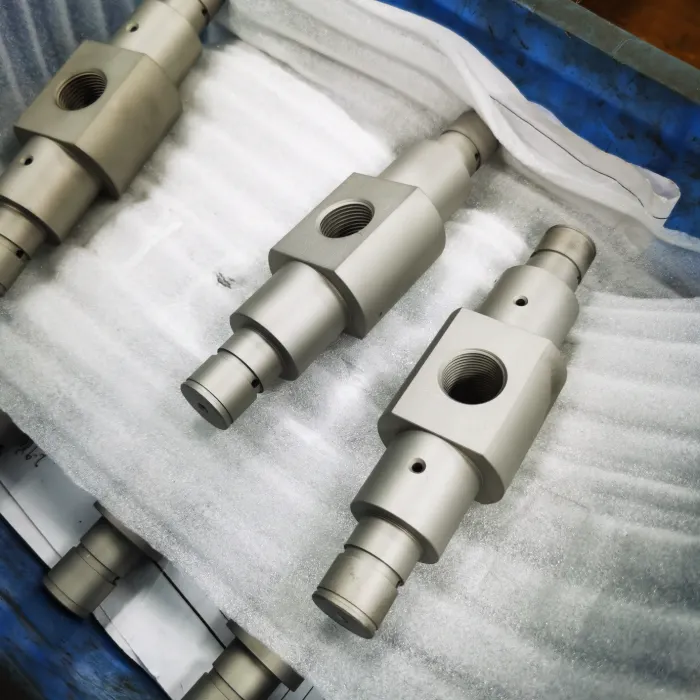
Stalen onderdelen zien er na conventionele gasnitrering doorgaans zilvergrijs tot donkergrijs uit. Plasma-genitreerde oppervlakken hebben over het algemeen een gelijkmatiger grijs of donkergrijs uiterlijk.
Nitrocarburatieonderdelen krijgen een donkergrijze of zwarte kleur wanneer ze daarna worden geoxideerd. De zwarte kleur die bij QPQ ontstaat, is voornamelijk afkomstig van de oxidelaag aan het oppervlak.
Kleur is slechts een uiterlijk kenmerk. Het kan hardheid, NHD of metallografisch onderzoek niet vervangen.
Hoe moeten genitreerde onderdelen veilig worden onderhouden en vervoerd?
Ginitreerde oppervlakken zijn hard en slijtvast, maar moeten toch worden beschermd tegen onvoldoende smering, stoten, corrosie en overmatige slijtage. Het onderhoud moet zich richten op aangrijpende, glijdende en dragende oppervlakken.
Reiniging en smering
Gebruik een neutraal reinigingsmiddel om spanen, olie en koelvloeistof te verwijderen. Gebruik geen sterke zuren, grove schuurmiddelen of agressieve straalbehandeling op nauwkeurig genitreerde oppervlakken.
Veelgebruikte smeermiddelen zijn onder meer:
| Onderdeeltype | Aanbevolen smeermiddel |
|---|---|
| Gesloten tandwielen | CLP-tandwielolie voor extreme druk, ISO VG 150, 220 of 320 |
| Hydraulische spoelen en hulzen | HM/HV-hydraulische olie met slijtagebescherming, ISO VG 32, 46 of 68 |
| Geleidingen voor werktuigmachines | CGLP anti-stick-slip-glijbaanolie, doorgaans ISO VG 68 |
| Splines, pennen en onder belasting staande oppervlakken bij lage snelheden | NLGI 1 of 2 EP-lithiumvet |
| Hogesnelheidslagers | NLGI 2-lagervet |
De uiteindelijke viscositeit moet afgestemd zijn op de belasting, het toerental, de temperatuur en de vereisten van de apparatuur. Verschillende soorten smeervet mogen niet worden gemengd zonder eerst de compatibiliteit te controleren.
Bij een routine-inspectie moet worden gecontroleerd op abnormale slijtage, scheuren, afbrokkeling, corrosie en veranderingen in de loopspeling.
Hoe moet er worden omgegaan met een beschadigde genitreerde mantel?
Een onderdeel moet buiten gebruik worden gesteld en worden geïsoleerd wanneer er schade aan de genitreerde laag wordt geconstateerd. Controleer na het reinigen op krassen, scheuren en afgebroken delen. Indien nodig moet een magnetische deeltjes- of kleurpenetrantkeuring worden uitgevoerd.
- Lichte verkleuring of vervuiling: Reinig, bescherm tegen corrosie en controleer opnieuw.
- Oppervlakkige krassen: Voer een gecontroleerde polijstbewerking uit indien dit volgens de tekening is toegestaan, en controleer vervolgens de afmetingen en de ruwheid.
- Schade die zich uitstrekt tot in de diffusiezone: Verwijder het beschadigde gebied en beoordeel de bewerkingsspeling, de hardheid van de kern en de resterende NHD voordat u beslist of hernitreren is toegestaan.
- Scheuren in het basismetaal, diepe deuken of ernstige vervormingen: Vervang het onderdeel of gooi het weg.
Zwarte retouche, olie en plaatselijk polijsten kunnen een beschadigde genitreerde behuizing niet herstellen. Voor hernitreering is een technisch onderzoek nodig. De hardheid, NHD en kritische afmetingen moeten na de reparatie opnieuw worden gecontroleerd.
Opslag en transport
Reinig en droog de onderdelen voordat u ze opslaat. Breng indien nodig een geschikt roestwerend middel aan. Voor langdurige opslag of zeevracht kunt u VCI-papier, verzegelde zakken en droogmiddelen gebruiken.
Tijdens het vervoer:
- Leg de onderdelen apart om stoten en schuren te voorkomen.
- Bescherm schroefdraad, spiebanen, randen en precisieboringen.
- Ondersteun lange assen op meerdere punten.
- Zet zware tandwielen en matrijzen stevig vast in stevige containers.
- Voeg inspectierapporten en documenten inzake de traceerbaarheid van de partij bij de zending.
Controleer na levering de verpakking, de oppervlakken en de kritische afmetingen. Onderdelen die sporen van stootschade, corrosie of afbrokkeling vertonen, mogen niet worden gemonteerd voordat ze zijn gecontroleerd.
Hoe verhoudt nitreren zich tot andere hardingsprocessen?
| Vereisten voor onderdelen | Geschikt proces |
|---|---|
| Hoge oppervlaktehardheid, geringe vervorming, dunne, slijtvaste laag | Nitreren |
| Diep geharde behuizing, zware belasting en schokken | Carburerings- en afkoelingsproces |
| Snelle uitharding van bepaalde delen | Inductieharden |
| Snelle oppervlakteharding van koolstofstaal | Nitrocarbureren |
| Specifieke wrijvings- of oppervlakte-eigenschappen | PVD-coating |
Bij de keuze van het bewerkingsproces moet rekening worden gehouden met het materiaal, de belasting, het slijtageproces, de hardheidsdiepte en de maattoleranties.
Hoe moet een leverancier van genitreerde onderdelen worden geselecteerd?
Een betrouwbare leverancier moet in staat zijn om:
- Stel een procesroute op op basis van het materiaal en de lading
- Controleer de hardheid van het oppervlak, de NHD en de toestand van de compoundlaag
- Dimensionale veranderingen voorspellen en verifiëren
- Lever rapporten aan met betrekking tot de oven, de hardheid, de metallografische analyse en de traceerbaarheid
- Coördineren CNC-bewerking, warmtebehandeling en precisieslijpen
Bij op maat gemaakte onderdelen die meerdere productiefasen doorlopen, zorgt een gecoördineerde productie voor lagere transport- en communicatiekosten. Bovendien worden hierdoor de verantwoordelijkheden op het gebied van kwaliteit duidelijk vastgelegd.
Conclusie
De kwaliteit van een genitreerd onderdeel kan niet uitsluitend op basis van de oppervlaktehardheid worden beoordeeld. De toestand van het materiaal, de NHD, de samengestelde laag, de eigenschappen van de kern en de maatvastheid zijn even belangrijk.
Door deze vereisten al in de ontwerp- en offerteaanvraagfase vast te leggen, worden de risico’s op het gebied van testen, herstelwerkzaamheden en levering beperkt.
Als uw tandwielen, assen, matrijzen of hydraulische onderdelen moeten worden genitreerd, stuur dan uw tekeningen, materiaal, hoeveelheid en acceptatie-eisen naar Weldo Machining. Wij helpen bij het beoordelen van het traject van CNC-bewerking, voorafgaande warmtebehandeling, nitreren en precisieslijpen, en doen aanbevelingen voor de productie en een citaat.
Veelgestelde vragen over nitrideerafwerking
Heeft nitreren invloed op de afmetingen van onderdelen?
Ja. Stikstofdiffusie en nitridevorming leiden tot een lichte toename van de afmetingen. Bij precisieonderdelen moet hiermee rekening worden gehouden, en de daadwerkelijke verandering moet worden gecontroleerd door middel van een eerste-exemplarencontrole.
Kan een onderdeel na het nitreren worden geslepen?
Ja. De slijpspeling moet worden gecontroleerd. De resterende oppervlaktehardheid en NHD moeten na het slijpen nog steeds voldoen aan de eisen van de tekening.
Kunnen diepe gaten en blinde gaten worden genitreerd?
Ja. De uniformiteit van de behandeling wordt beïnvloed door de diameter en diepte van het gat en het type proces. De oppervlakken binnenin het gat die behandeld moeten worden, moeten in de offerteaanvraag worden aangegeven.
Hoe lang duurt nitreren?
De behandeltijd is afhankelijk van het materiaal, het type proces en de beoogde NHD. Ondiepe nitrocarburering duurt doorgaans enkele uren. Diepe gasnitrering duurt meer dan tien uur tot enkele tientallen uren.
Hoe kunnen de kosten van in kleine series genitreerde onderdelen worden verlaagd?
Hanteer consistente eisen ten aanzien van materiaal, bewerkingsdiepte en inspectie. Vermijd afplakwerk dat geen functioneel doel dient en bundel onderdelen met dezelfde procesvereisten in één ovenlading. Complexe onderdelen moeten vóór de serieproductie aan een eerste-artikelkeuring worden onderworpen.