In machining and new product design, steel selection directly affects part strength, machining difficulty, service life, and manufacturing cost. To help engineers, buyers, and product designers better understand steel performance, this article explains key strength indicators such as tensile strength, yield strength, and endurance strength, while also analyzing common steel types and typical component applications. It provides a practical reference for material selection and machining process planning.
Steel Strengths type
Yield Strength of Steel
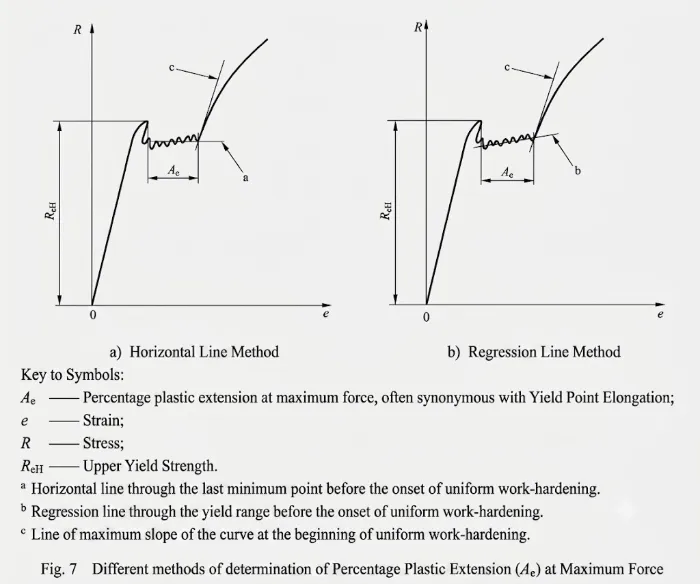
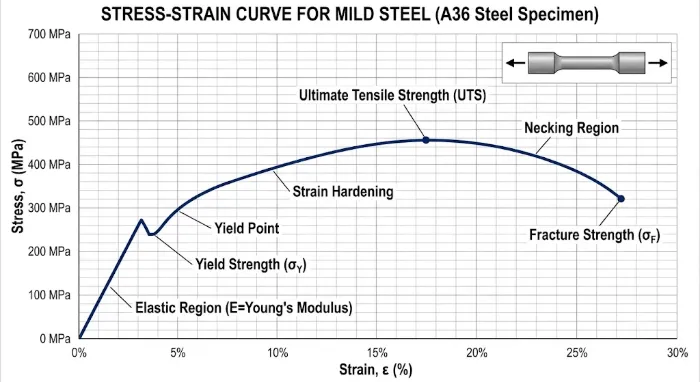
The yield strength of steel refers to the stress at which steel begins to undergo obvious plastic deformation, meaning permanent deformation starts. It reflects the ability of steel to resist deformation and is usually calculated as σy = Fy / A0, where Fy is the yield load and A0 is the original cross-sectional area. The common unit is MPa or N/mm².
In general, design stress should be kept below the yield strength to prevent permanent bending, stretching, or compressive deformation during service. For stainless steels or high-strength steels without a clear yield point, the 0.2% proof strength, Rp0.2, is usually used to represent yield strength.
Influencing factors:
Elements such as carbon, manganese, and silicon can dissolve into the crystal lattice and cause lattice distortion, thereby improving the yield strength of steel through solid-solution strengthening;
Microalloying elements such as niobium, vanadium, and titanium can form fine carbide or nitride particles, pin dislocations, and inhibit grain growth, further increasing strength.
In contrast, impurity elements such as phosphorus and sulfur tend to segregate at grain boundaries or form inclusions, weakening grain-boundary bonding, increasing brittleness, and reducing the stable load-bearing capacity of steel in actual service.
Tensile Strength of Steel
Tensile strength refers to the maximum engineering stress that steel can withstand before fracture in a standard tensile test, usually calculated as σb = Fmax / A0, where Fmax is the maximum tensile load and A0 is the original cross-sectional area. The common unit is MPa or N/mm². It is sometimes also called the ultimate tensile strength of steel. It marks the critical point at which the material changes from uniform plastic deformation to localized deformation, or necking, and represents the maximum load-bearing limit of the material under static tensile loading.
Factors affecting the tensile strength of steel:
A proper increase in carbon content can improve tensile strength, but excessively high carbon content reduces ductility and toughness, and may even make the steel brittle, causing tensile performance to decline.
Alloying elements such as manganese, silicon, chromium, molybdenum, and vanadium can strengthen the steel matrix through solid-solution strengthening, carbide strengthening, and grain refinement;
Nickel can also improve strength while maintaining good ductility, and nitrogen provides a significant interstitial solid-solution strengthening effect in duplex stainless steel.
In contrast, harmful impurities such as sulfur, phosphorus, and oxygen easily form inclusions or cause grain-boundary segregation, weakening material continuity and toughness and reducing the actual tensile strength of steel.
Shear Strength of Steel
The shear strength of steel refers to the maximum stress value at which steel resists relative sliding, shear deformation, or shear failure between adjacent sections under shear force, usually calculated as τ = F / A, where F is the shear force and A is the shear area. The common unit is MPa or N/mm². It is an important indicator for evaluating the load-bearing capacity of shear-loaded components such as bolts, rivets, pins, welds, and connection plates.
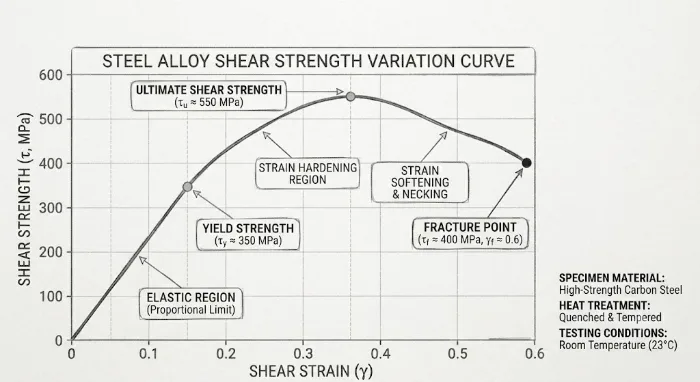
Factors affecting the shear strength of steel:
Increasing carbon content can indirectly improve its ability to resist shear failure;
Alloying elements such as manganese, chromium, and molybdenum can improve shear resistance through solid-solution strengthening, grain refinement, and improved microstructural stability.
However, harmful impurities such as phosphorus and sulfur can easily form brittle inclusions or weaken grain-boundary bonding, making steel more prone to cracking or brittle failure under shear loads and reducing shearing strength and toughness.
Endurance Strength of Steel
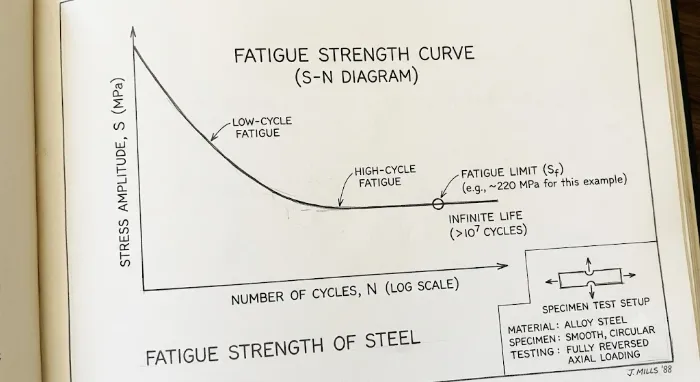
“Endurance strength” is not a standard independent mechanical property. It is determined by both creep rupture strength and fatigue strength, which together define the safe service life of steel under long-term operating conditions. Since it is not a single fixed value, it is usually evaluated by creep rupture stress or fatigue strength, commonly expressed as σ = F / A0 or stress amplitude σa = (σmax – σmin) / 2, with units of MPa or N/mm².
Creep Rupture Strength:
This refers to the maximum stress value that steel can withstand without fracture after a specified period under a given high temperature and constant tensile stress, usually 100,000 hours, or about 11.4 years. It mainly reflects the material’s resistance to creep rupture.
Factors affecting the creep rupture strength of steel:
Elements such as chromium, molybdenum, vanadium, niobium, and tungsten can improve the microstructural stability and creep resistance of steel at high temperatures through solid-solution strengthening, precipitation strengthening, and the formation of stable carbides or nitrides; meanwhile, impurity inclusions such as phosphorus and sulfur can easily become high-temperature crack sources and reduce creep rupture strength.
Fatigue Strength of Steel
This refers to the maximum stress value that steel can withstand under cyclic alternating stress for an infinite number of cycles, usually 10^7 cycles, without fracture. For materials without a clear fatigue limit, it refers to the stress at which fracture does not occur at a specified number of cycles, such as 10^7 cycles.
Influencing factors:
Carbon and alloying elements such as Mn, Cr, Mo, and V can improve fatigue strength through mechanisms such as solid-solution strengthening and fine-grain strengthening. However, non-metallic inclusions such as oxides and sulfides can form internal stress concentration sources and promote fatigue crack initiation, so high-cleanliness steel is more favorable for improving fatigue performance.
Fracture Strength of Steel
Fracture strength refers to the stress value corresponding to the instant of fracture during a tensile test, indicating the ultimate load-bearing capacity of the material before final failure. It is the stress at which the specimen actually breaks. For ductile steels such as low-carbon steel, necking occurs before fracture, so the engineering fracture strength is usually lower than the tensile strength; for more brittle steels, fracture strength is often relatively close to tensile strength.
Influencing factors:
An increase in carbon content usually improves strength, but it reduces ductility and toughness; alloying elements such as manganese and nickel help improve toughness, while phosphorus, sulfur, and non-metallic inclusions such as oxides and sulfides can easily cause grain-boundary segregation or form crack sources, significantly weakening fracture resistance.
Compressive Strength for Steel
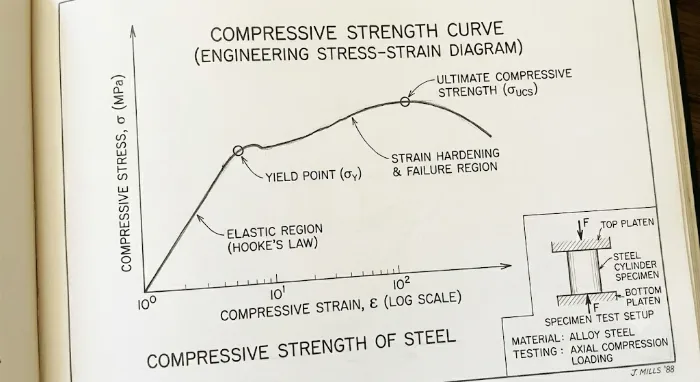
Compressive strength refers to the maximum stress steel can withstand under compressive loading before failure, buckling, or excessive plastic deformation. It is usually calculated as σc = Fmax / A0, where Fmax is the maximum compressive load and A0 is the original cross-sectional area, with units of MPa or N/mm². For ductile materials such as steel, it usually causes plastic deformation or bulging rather than sudden fracture, and its crushing strength is generally close to or slightly higher than its tensile strength.
Influencing factors:
Increasing carbon content can improve the crushing strength of steel, but it reduces ductility and toughness; alloying elements such as manganese, silicon, chromium, and molybdenum can strengthen the matrix through solid-solution strengthening or carbide formation, while impurities and inclusions such as phosphorus and sulfur can damage material continuity and weaken compressive strength.
Summary Comparison Table
| Parameter Name | Core Definition | Main Engineering Significance |
| Yield Strength | Critical stress at which plastic deformation begins | Design basis for preventing permanent structural deformation |
| Tensile Strength | Maximum stress before tensile fracture | Maximum load-bearing capacity and safety reserve of the material |
| Shear Strength | Maximum shear stress resisting shear sliding failure | Design basis for connectors and shear-resistant components |
| Endurance Strength | Ability to resist failure under cyclic loading (usually referring to fatigue strength) | Life design for components under vibration and alternating loads |
| Fracture Strength | Ability to resist crack propagation (usually referring to fracture toughness) | Safety assessment against brittle fracture in structures with defects |
| Compressive Strength | Maximum compressive stress before failure under compression | Design basis for compression members, such as columns and foundations |
Common Steel Types for Machining
Structural Steel
Structural steel is an engineering steel based on iron and carbon, with specified strength, ductility, and formability. It is mainly used for load-bearing building components, mechanical parts, and engineering structural parts. Its core requirement is good load-bearing capacity while also considering toughness, weldability, and machinability. It is commonly divided into carbon structural steel and alloy structural steel.
A36 Steel
The yield strength of A36 steel is ≥250 MPa. When the thickness of an A36 steel plate is >203 mm, the required yield strength is ≥220 MPa. It belongs to ordinary-strength structural steel. For high-strength, high-pressure, high-temperature, heavy-load, or low-temperature critical load-bearing areas, steels such as A572 and A588 should be considered.
The tensile strength of A36 steel is 400-550 MPa, which can meet the load-bearing needs of general building structures, brackets, base plates, connectors, and ordinary mechanical structural parts.
There is no directly specified standard value for the shear strength of A36 steel. In engineering practice, it is usually estimated as 0.6 times the tensile strength, about 240-330 MPa.
A992 Steel
The yield strength of A992 steel is ≥345 MPa, making it a medium- to high-strength structural steel. Compared with A36, A992 offers higher load-bearing capacity and a better strength-toughness match, so it is commonly used for load-bearing components such as building beams, steel columns, bridge structures, and heavy-duty frames.
The tensile strength of A992 steel is usually 450-620 MPa. It has good resistance to deformation under tensile, compressive, and bending loads. A992 steel is commonly used in building and engineering steel structures that require strength, weldability, and structural stability.
Carbon Steel
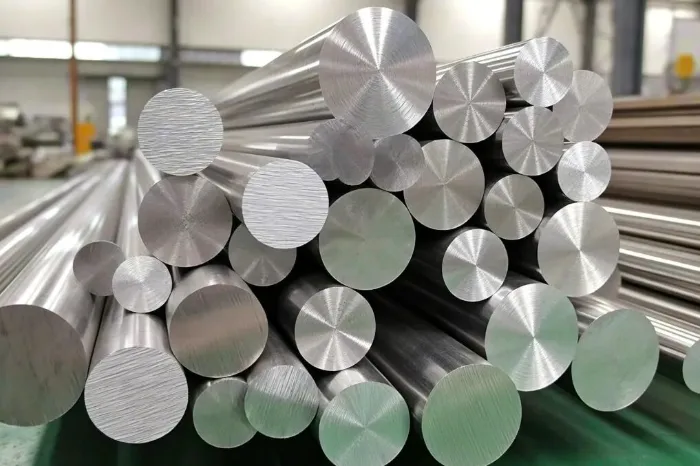
Carbon steel is an iron-carbon alloy mainly composed of iron and carbon, without the intentional addition of other alloying elements. Its carbon content is generally between 0.02% and 2.11%. Material properties can be adjusted through carbon content and heat treatment processes. It is divided into three categories: low-carbon steel, medium-carbon steel, and high-carbon steel.
1018 Steel
The yield strength of 1018 mild steel is ≥210 MPa, about 30 ksi, with an actual range of approximately 210-275 MPa. In the cold-drawn condition (C1018), the yield strength can increase to 370 MPa, about 53 ksi, or higher. After heat treatments such as quenching and tempering, the strength can be further improved, but this usually sacrifices some ductility and formability. 1018 steel offers good weldability, cold formability, and machinability rather than high strength, and is suitable for ordinary mechanical parts such as shafts, pins, bolts, and gear blanks.
The tensile strength of 1018 mild steel is about 370-440 MPa. In the cold-drawn condition, due to work hardening, the tensile strength can increase to 440-540 MPa or higher.
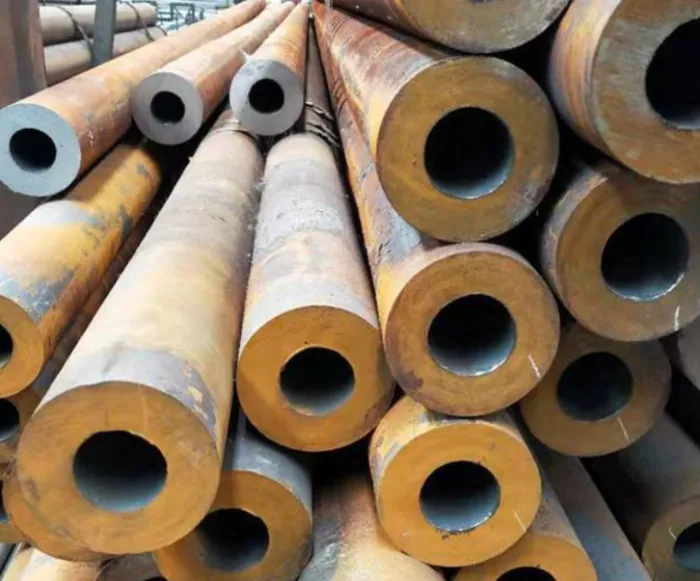
1045 Steel
The tensile strength of 1045 steel is about 570-700 MPa, and the yield strength of 1045 steel is about 310-530 MPa
, depending on process conditions such as hot rolling, normalizing, cold drawing, or quenching and tempering. 1045 is a medium-carbon steel with relatively high strength, hardness, and wear resistance. It is commonly used for load-bearing or wear-resistant mechanical parts such as shafts, gears, connecting rods, crankshafts, pins, bolts, sleeves, and tooling fixtures. After quenching, tempering, or quenching-and-tempering treatment, the overall balance of strength, toughness, and wear resistance can be further improved, making it suitable for medium-load structural parts and transmission components.
Alloy Steel
Alloy steel is made by intentionally adding elements such as chromium, nickel, molybdenum, vanadium, titanium, niobium, tungsten, and boron to carbon steel to improve strength, hardness, toughness, wear resistance, hardenability, corrosion resistance, or high-temperature performance. It is commonly used for high-performance parts or structural components such as gears, shafts, connecting rods, bridges, cutting tools, molds, stainless steel, heat-resistant steel, and wear-resistant steel.
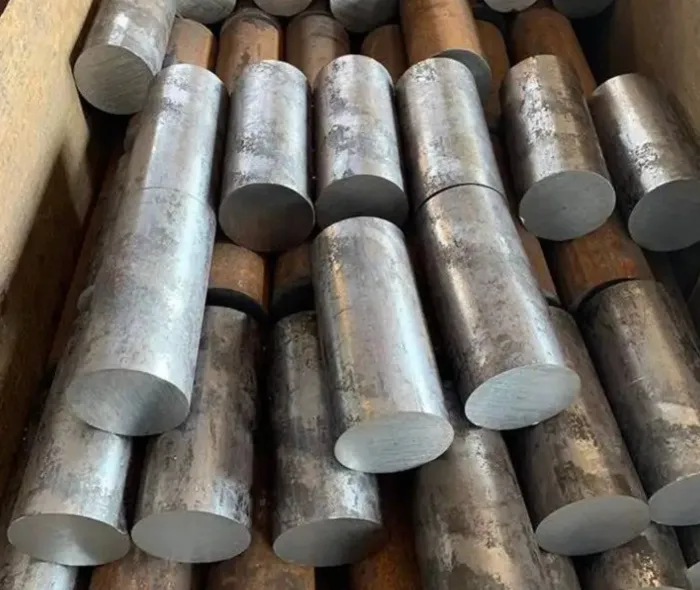
4140 Steel
4140 steel has a yield strength of about 415 MPa in the annealed or normalized condition, and it can be increased to 930–1100 MPa or higher after quenching and tempering. It is a high-strength quenched and tempered steel in the medium-carbon chromium-molybdenum alloy steel family. With its excellent hardenability, high strength, and good toughness balance, 4140 steel is commonly used for gears, shafts, connecting rods, bolts, drive shafts, crankshafts, drill pipe joints, high strength steel buckle components, and other high-load mechanical parts.
The tensile strength of 4140 steel in the annealed or normalized condition is usually about 655-750 MPa. After quenching and tempering, it can increase to 1080-1200 MPa or higher, meeting the requirements of operating conditions involving high load-bearing capacity, impact loads, and fatigue stress.
4130 Steel
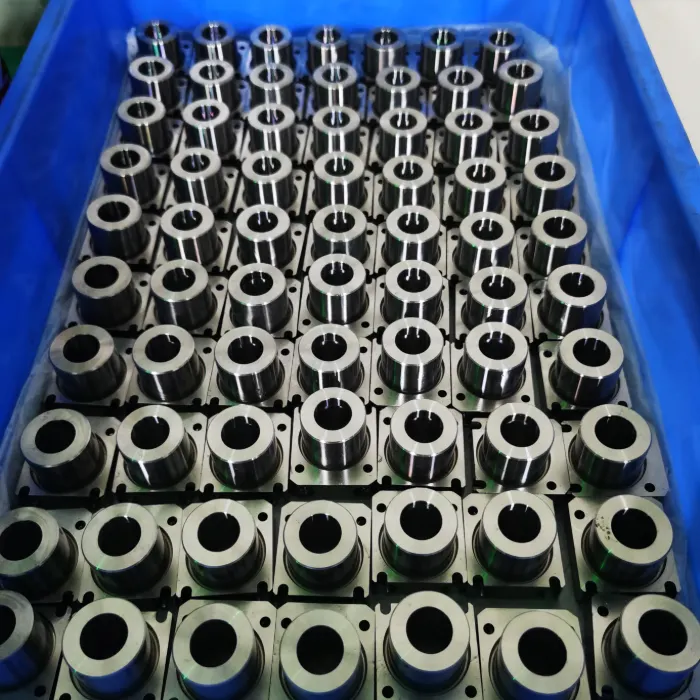
The yield strength of 4130 steel in the annealed or normalized condition is usually about 415 MPa. After quenching and tempering, it can increase to 785-930 MPa or higher, making it a high-strength grade among medium-carbon chromium-molybdenum alloy structural steels. With relatively high yield strength, good toughness, and hardenability, 4130 steel is suitable for manufacturing gears, shafts, connecting rods, bolts, frames, aircraft tubing, and mechanical parts subjected to fatigue loads, especially structural components that require a balance of strength, toughness, and lightweight design.
The tensile strength of 4130 steel in the annealed or normalized condition is usually below about 590 MPa. After quenching and tempering, it can increase to 930-1000 MPa or higher, making it suitable for mechanical and aerospace structural components with high requirements for tensile strength, fatigue resistance, and structural reliability.
Stainless Steel
304 Stainless Steel
After solution treatment or annealing, 304 stainless steel has a yield strength of more than 205 MPa, and the tensile strength of 304 stainless steel is about 515-750 MPa. After cold working such as cold rolling or cold drawing, the yield strength can increase to more than 515 MPa, and the tensile strength can reach more than 800 MPa. 304 is an austenitic stainless steel with medium strength, good corrosion resistance, high ductility, and strong weldability. It is suitable for chemical pipelines, food equipment, medical devices, fasteners such as bolts and nuts, sheet metal parts, decorative structural parts, and general corrosion-resistant parts.
316 SS
The yield strength of 316 stainless steel in the solution-treated or annealed condition is usually ≥205 MPa, making it a medium- to low-strength austenitic stainless steel. It is corrosion-resistant, easy to weld, and highly ductile, and is suitable for chemical pipelines, valves, pump bodies, flanges, fasteners, food equipment, medical devices, and marine parts. After cold working, its yield strength can reach ≥515 MPa, making it suitable for corrosion-resistant parts with higher deformation-resistance requirements.
What Are Ultra-High Strength Steels?
Ultra-high strength steel usually refers to alloy steel with a yield strength greater than 1380 MPa or a tensile strength greater than 1470 MPa.
Ultra high strength steels can be divided into various types according to their composition systems and strengthening mechanisms. Common low-alloy ultra-high-strength steels include AISI 4340, 300M, Eglin steel, and others. Among them, AISI 4340 is a classic low-alloy ultra-high-strength steel widely used in high-load components such as aircraft landing gear and engine shafts.
Secondary-hardening ultra high strength steels such as HY-180, AF1410, and AerMet 100 have high strength, high toughness, and excellent fatigue resistance, and are commonly used in fighter aircraft landing gear, aircraft engine parts, and carrier aircraft arresting hooks.
Maraging ultra high strength steels such as 18Ni, T250, and T300 obtain high strength through age-precipitation strengthening and are commonly used in rocket engine casings and aerospace structural parts.
Ultra-high strength steels commonly used in the automotive field include boron steel 22MnB5. After hot forming, its tensile strength can reach 1500-2000 MPa, and it is mainly used for automotive safety structural parts such as A/B pillars and anti-collision beams.
How does steel strength affect machining cost?
The higher the strength of steel, the greater the cutting force required during machining. This places higher demands on tool performance, machine rigidity, and machining accuracy, often leading to faster tool wear, lower efficiency, and higher manufacturing costs. Therefore, steel selection should consider not only strength and service performance, but also machinability and overall production cost.
In general, stainless steel, alloy steel, and high-carbon steel have higher machining costs; medium-carbon steel is at a moderate level; while low-carbon steel, cast iron, and galvanized steel usually have relatively lower machining costs. However, the actual cost still depends on material specifications, part structure, machining process, and equipment capability.
Summary:
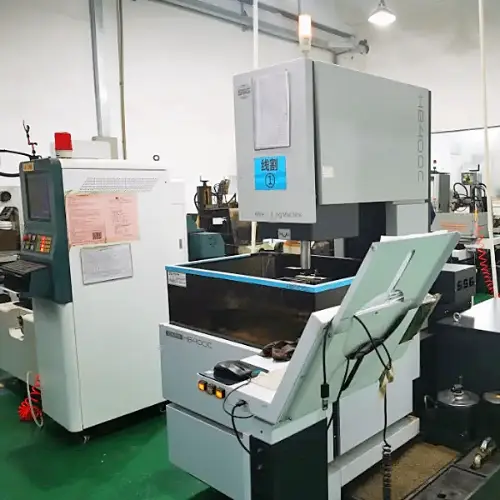
The above covers the key knowledge related to steel strength, mainly introducing different types of steel and the strength categories commonly considered in engineering manufacturing. If you want to learn more, or if you encounter problems during steel machining, you can contact the engineers at Weldo Machining for DFM design support and machining cost estimation.