When looking for a steel machining manufacturer, buyers usually focus on three core questions: whether the manufacturer can machine the target steel grade, whether it can consistently control tolerances, and whether it has a delivery and quality system suitable for the project. This article summarizes 8 manufacturers / suppliers that have relatively high search visibility in the U.S. market or are often used by U.S. buyers for steel CNC machining projects, and introduces their advantages, shortcomings, steel material options, and key points to consider when choosing a supplier.
Top 8 Steel Machining Manufacturer List
| Supplier | Type | Suitable Projects |
| Protolabs | U.S. digital manufacturing platform | Rapid prototyping, small batches, projects with certification requirements |
| Xometry | U.S. on-demand manufacturing platform | Multi-supplier price comparison, steel part prototyping and production |
| Weldo Machining | Precision machining manufacturer | Steel parts, stainless steel, CNC machining + EDM cutting, sheet metal |
| Norck | Digital manufacturing supplier | CNC, EDM, sheet metal, 3D printing |
| JLCCNC | Online CNC machining supplier | Low-cost steel parts, fast online quotation |
| Getzshape | Overseas CNC machining manufacturer | Small batches, complex parts, multi-process machining |
| Miller CNC | U.S.-based CNC machine shop | Hard metals, high precision, aerospace parts |
| eMachineShop | U.S. online machine shop | Simple steel parts, prototypes, no minimum order quantity |
1. Protolabs
Protolabs is a digital manufacturing supplier with strong brand recognition in the U.S. market, offering CNC machining, 3D printing, injection molding, sheet metal fabrication, and other services. According to its official website, Protolabs can provide manufacturing support from the prototyping stage to the production stage, and has relevant quality and compliance capabilities such as ISO 9001, AS9100D, and ITAR.
Advantages:
Protolabs’ biggest advantages are fast speed and a highly standardized process, making it suitable for steel CNC machining projects that require quick quotations, rapid prototyping, and small-batch production. For engineers, it is very convenient to upload files online and obtain DFM feedback and quotations. For aerospace, defense, or medical-related projects, its certification system is also more likely to meet procurement audit requirements.
Shortcomings:
Protolabs is usually not the lowest-price option. For steel part projects that are very complex and require extensive manual communication, its standardized online process may be less flexible than a traditional machine shop. If an order moves into long-term, high-volume production, directly looking for a specialized steel machining factory may better reduce communication costs.

2. Xometry
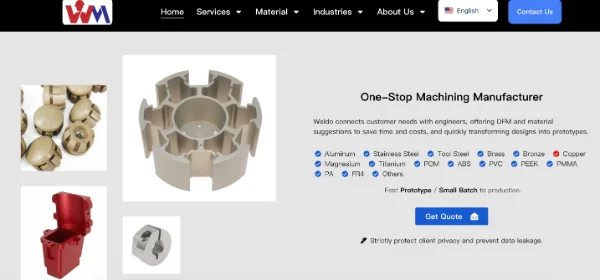
Xometry is a representative on-demand manufacturing platform in the United States. It mainly matches customers with CNC machining, sheet metal, 3D printing, and other machining services through its large manufacturing partner network. According to its official website, Xometry can support CNC milling, turning, drilling, wire EDM, and other processes, and has certification-related capabilities such as ISO 9001, AS9100D, ISO 13485, IATF 16949, and ITAR.
Advantages:
Xometry’s advantages are its large supplier network and fast quotation speed, making it suitable for U.S. buyers to quickly compare the prices and lead times of steel machining suppliers. For different materials such as stainless steel, carbon steel, and alloy steel, the platform can match suitable machining resources and provide quick quotations based on project requirements.
Shortcomings:
Xometry is not a single cnc steel machining factory, but a platform-type supplier. The actual machining may be completed by different offline steel part machining partners, so for long-term repeat orders, it is necessary to confirm whether the same machining resource can be used consistently. For steel parts projects with extremely tight tolerances, complex process routes, or a need for in-depth engineering communication, directly connecting with a professional machining factory may be more stable.
3. Weldo Machining
Weldo Machining is a steel CNC machining factory with 14 years of machining experience, providing multi-axis CNC machining, wire EDM machining, precision grinding, and other services to customers in Europe and the United States. Weldo can match process solutions based on part drawing requirements, cost budgets, and delivery schedules, and supports one-stop delivery from prototype to small batch and mass production, including surface treatment, heat treatment, and other processes.
Advantages:
Weldo Machining’s advantages are broad process coverage, suitability for steel machining of various grades, and the ability to quickly write out process steps based on drawings. For U.S. buyers, it can be positioned as a flexible steel machining supplier, especially suitable for small-batch production, high-volume production, and budget-controlled custom CNC machined steel parts that have high requirements for the mechanical properties of steel parts and require heat treatment and surface machining.
Shortcomings:
Weldo is more suitable for companies in the U.S. market whose delivery-time requirements are not extremely urgent, because the shipping cycle may be 4-15 days. If customers require fast delivery, they can look locally for a nearby CNC machining center with rapid response capability.
4. Norck
Norck is a digital manufacturing supplier that provides on-demand CNC machining, CNC milling, turning, 5-axis machining, EDM, sheet metal fabrication, 3D printing, and other services. According to its official website, both Norck Inc. and Norck GmbH hold ISO 9001:2015 quality management system certification and can access manufacturing resources in the United States, Germany, and Europe.
Advantages:
Norck’s advantage is its rich combination of processes. It can handle CNC steel machining while also covering sheet metal, EDM, and 3D printing. For projects that require multi-region supply chains, multi-process collaboration, and engineering support, Norck is more flexible than a single small machine shop.
Shortcomings:
Norck also has obvious platform and supply chain attributes, and is not completely equivalent to a traditional steel machining factory. Buyers need to confirm the material inspection report for the parts in advance and what type of factory will carry out the machining.
5. JLCCNC
JLCCNC is an online CNC machining supplier that supports uploading design files and obtaining online quotations. Its official materials page lists steel material options such as SUS304 and 45# Steel, and it provides CNC milling, CNC turning, 3/4/5-axis milling, surface treatment, and other machining services.
Advantages:
JLCCNC’s advantages are convenient online quotation and strong price competitiveness, making it suitable for budget-sensitive prototypes, small-batch steel parts, and ordinary stainless steel parts. For projects with relatively simple structures and clear material and tolerance requirements, the procurement process will be relatively efficient.
Shortcomings:
For custom steel parts, JLCCNC may be prone to delays in the delivery cycle, so contracts should be signed in advance and communication matters should be well prepared. For aerospace, medical, military, or high-precision hard-material machining projects, buyers need to additionally confirm quality documents, material reports, inspection capabilities, and delivery risks.
6. Getzshape
Getzshape is a custom CNC machining manufacturer serving overseas customers. Its machining projects include CNC machining, EDM machining, sheet metal fabrication, die casting, aluminum extrusion, 3D printing, and other services. The factory has passed ISO 9001:2015 certification, offers tolerance down to +/-0.01mm, and supports multiple materials and surface treatments.
Advantages:
Getzshape’s advantage is its relatively comprehensive multi-process capability, making it suitable for prototypes, low-volume steel machining, complex steel parts, fixtures, jigs, and projects that require EDM precision cutting or sheet metal support. As an overseas steel machining supplier, it has a certain appeal for cost-sensitive U.S. buyers.
Shortcomings:
Getzshape is not a U.S.-based factory, so international logistics, time-zone differences in communication, rework cycles, and import customs clearance all need to be considered. For highly compliant industries, buyers should confirm material certificates, heat treatment reports, dimensional inspection reports, and quality system documents in advance.
7. Miller CNC
Miller CNC is a U.S.-based precision CNC machine shop located in Southern California and is a hard metal and complex machining supplier. It holds AS9100 and ISO 9001 certifications, primarily serving aerospace, defense, space, energy, and industrial manufacturing industries, and can machine stainless steel, carbon steel, Inconel, Hastelloy, and other high-hardness alloys and specialty alloys.
Advantages:
Miller CNC is a true U.S.-based CNC machine shop. It is suitable for high-precision, hard metal, complex structural parts, and projects with certification requirements, especially aerospace, defense, and energy parts.
Drawbacks:
Miller CNC may not be the best fit for low-cost rapid prototyping or simple steel parts. If the project only involves ordinary brackets, spacers, or low-difficulty turned parts, a platform-based supplier may be cheaper. For ultra-high-volume production or oversized steel parts with complex designs, it may not be able to compete with other suppliers on machining cost.
8. eMachineShop
eMachineShop is a U.S. online machine shop that allows customers to use free CAD software or upload CAD files to get fast quotes. The company has provided steel part machining for more than 15 years and offers free shipping in the USA, no minimum order quantity, and a quality guarantee.
Advantages:
eMachineShop is relatively friendly to new product development, small companies, engineers, and individual developers. It is suitable for prototypes, one-off custom steel parts, small-batch ordinary steel parts, and stainless steel parts. The no minimum order quantity policy is very attractive for early-stage validation projects.
Drawbacks:
For 5-axis complex parts, hard metal machining, tight tolerances, or complex assembly projects, eMachineShop may not be as capable as a specialized CNC factory. It is more suitable for simple to moderately complex parts and may not be the best choice for long-term, high-volume steel machining.
Common Material Options for Steel Machining
When selecting a steel machining manufacturer, the material grade is very critical. Different steels vary greatly in strength, corrosion resistance, heat treatment performance, and machining difficulty. Choosing the wrong material may lead to excessively high costs, difficult machining, insufficient part service life, over-specified performance, or even delivery failure.
1. Carbon Steel
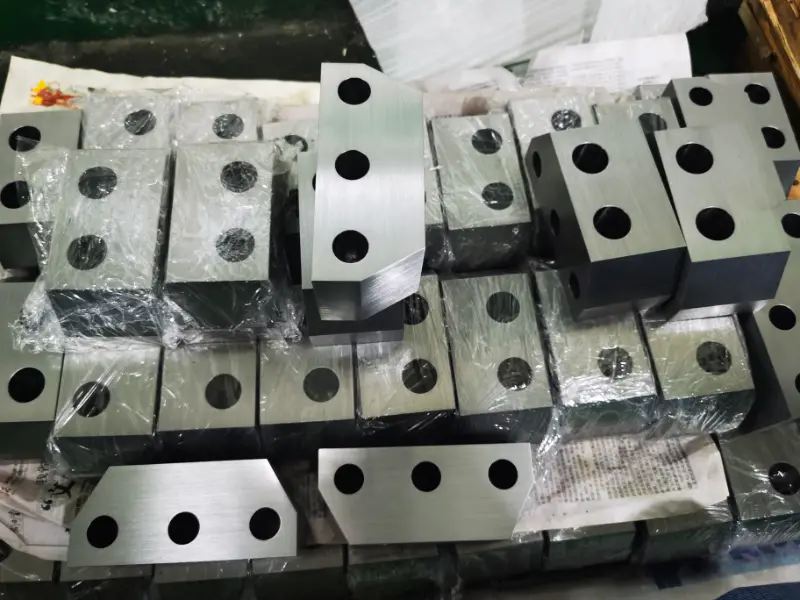
Carbon steel is the most common material type in steel machining. It is suitable for structural parts, base plates, brackets, shaft parts, connectors, and ordinary industrial parts.
| Grade | Features | Common Applications |
| A36 | Low cost, suitable for welding and structural parts | Base plates, brackets, frames |
| 1018 | Easy to machine and weld | Shafts, pins, spacers, mounting plates |
| 1045 | Higher strength than 1018 | Shafts, gears, load-bearing parts |
| 12L14 | Free-cutting, good surface finish | High-efficiency turned parts |
If the customer does not require corrosion resistance or high hardness, 1018, 1045, and A36 are usually more economical choices.
2. Alloy Steel
Alloy steel has higher strength than ordinary carbon steel, and heat treatment provides more obvious performance improvement. It is suitable for high-load, high-wear-resistance, and high-strength parts.
Common grades:
| Grade | Features | Common Applications |
| 4140 | Good balance of strength, toughness, and wear resistance | Shafts, gears, fixtures, heavy-duty parts |
| 4340 | Higher strength and toughness | Aerospace, automotive, energy equipment parts |
| 8620 | Suitable for carburizing heat treatment | Gears, spline shafts, wear-resistant parts |
If the part requires heat treatment, the buyer should confirm the proposed machining process with the supplier in advance. Precision steel parts usually need rough machining first, then heat treatment, and finally precision milling or surface grinding.
3. Stainless Steel
Stainless steel is suitable for parts that require corrosion resistance, good appearance, or use in food, medical, and marine environments. Compared with ordinary carbon steel, stainless steel is more difficult to machine, and tool wear and work hardening problems are more obvious.
| Grade | Features | Common Applications |
| 303 | Free-cutting, suitable for precision turning | Bushings, nuts, connectors |
| 304 | General-purpose corrosion-resistant stainless steel | Food equipment, housings, brackets |
| 316 | Better corrosion resistance than 304 | Medical, marine, chemical environments |
| 17-4 PH | High strength, heat treatable | Aerospace, valves, shaft parts |
If the main focus of the project is corrosion resistance, 304 and 316 are more common; if both strength and corrosion resistance are required, the higher-cost 17-4 PH can be considered.
4. Tool Steel
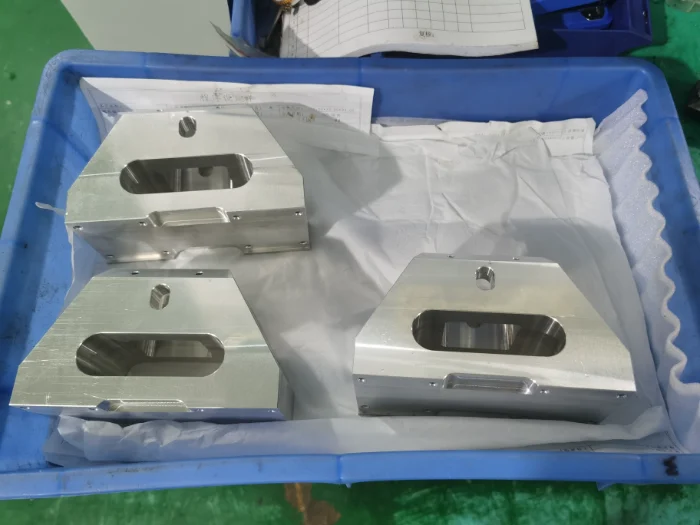
Tool steel is mainly used for molds, punches, wear blocks, fixtures, and long-life parts. It has high hardness and good wear resistance, but the machining cost is also higher.
Common grades:
| Grade | Features | Common Applications |
| D2 | Strong wear resistance | Stamping dies, cutting tools, wear blocks |
| A2 | Less deformation after heat treatment | Precision molds, fixtures |
| H13 | Good high-temperature resistance | Hot-work dies, die-casting molds |
| S7 | Good impact resistance | Punches, impact tools |
Parts made from these materials have high hardness or long-term wear resistance, and can maintain stable use in heavy-load and high-temperature working environments.
Guide to Selecting the Right Steel Grade
You can make a quick judgment based on the application scenario:
| Requirement | Recommended Material |
| Low-cost ordinary structural parts | A36, 1018 |
| Ordinary shaft parts, connectors | 1018, 1045 |
| High-strength load-bearing parts | 4140, 4340 |
| Gears and wear-resistant parts | 8620, 4140 |
| Ordinary corrosion-resistant parts | 304 stainless steel |
| Marine, chemical, medical environments | 316 stainless steel |
| High strength and corrosion resistance | 17-4 PH stainless steel |
| Molds, punches, wear parts | D2, A2, H13, S7 |
Simply put: choose carbon steel for low cost, alloy steel for high strength requirements, stainless steel for corrosion resistance, and tool steel for high hardness and wear resistance.
Common Surface Treatments for Steel Machining
After CNC machining of steel parts is completed, many parts still require surface treatment to improve rust prevention, wear resistance, or appearance.
| Surface Treatment | Suitable Materials | Main Function |
| Black Oxide | Carbon steel, alloy steel | Improves appearance, provides slight rust protection |
| Zinc Plating | Carbon steel | Low-cost rust prevention |
| Nickel Plating | Carbon steel, stainless steel | Improves corrosion resistance and wear resistance |
| Powder Coating | Carbon steel structural parts | Outdoor corrosion protection and appearance protection |
| Passivation | Stainless steel | Improves corrosion resistance |
| Electropolishing | Stainless steel | Improves smoothness, commonly used in medical and food equipment |
| Heat Treatment | Carbon steel, alloy steel, tool steel | Improves hardness, strength, and wear resistance |
If the part will be used in a humid or outdoor environment, ordinary carbon steel is recommended to receive plating, black oxide, or powder coating. Stainless steel parts commonly use passivation or electropolishing.
How to Choose a reliable Steel CNC Machining Supplier?
1. Whether they are familiar with the mechanical properties and machining precautions of the target material
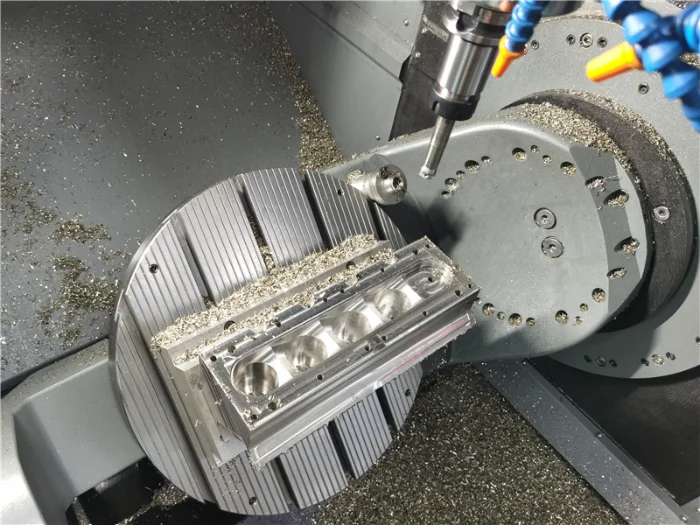
2. Whether they have a full set of process machining equipment, as well as CMM inspection instruments, and whether the programming staff and engineering team are professional
3. Whether they can meet the drawing’s tolerance requirements
4. Whether they can provide material certification reports and batch finished-product quality inspection certificates
5. Whether they support efficient heat treatment and post-processing processes to ensure fast delivery and dimensional standards
6. Whether they have DFM engineering support and can provide professional suggestions and optimization for design defects in drawings and difficult-to-machine features such as thin walls and radii
7. Signing a confidentiality agreement to ensure your design is unique
8. Whether the delivery lead time can be guaranteed, and whether the measures for delays are complete (discount / delay compensation)
Different suppliers are suitable for different order quantities:
| Quantity | More Suitable Supplier Type |
| 1-10 pieces | Online CNC supplier / prototype shop |
| 10-100 pieces | Small-batch CNC machining factory |
| 100-1,000 pieces | Precision machine shop with fixtures and stable processes |
| More than 1,000 pieces | Mass-production steel machining manufacturer |
If it is only for samples, online suppliers such as Protolabs, Xometry, JLCCNC, and eMachineShop may be more convenient;
If it is for long-term mass production of steel machined parts, Weldo Machining of this type can usually effectively reduce costs and standardize production quality.
Conclusion
Choosing the right steel machining manufacturer should not be based only on price. Company brands also need to be evaluated comprehensively based on material machining project experience, equipment capability, tolerance control capability, quality documents, heat treatment, and surface treatment capability.
Among these 8 suppliers, Protolabs, Xometry, and eMachineShop are more suitable for online quotes, price comparison, rapid prototyping, and small-batch purchasing;
Miller CNC is more suitable for fast delivery in the United States and verifying part design assembly capability;
Weldo Machining is more suitable as an option serving the U.S. market for buyers that are price-budget-sensitive and have relatively flexible lead time requirements;
For U.S. buyers, the safest approach is to contact 3-5 steel machining suppliers at the same time, submit complete drawings, materials, quantities, tolerances, surface treatment, and inspection requirements, and then select the final partner from multiple dimensions including price, lead time, quality system, communication efficiency, sample quality inspection comparison, and long-term stability.
