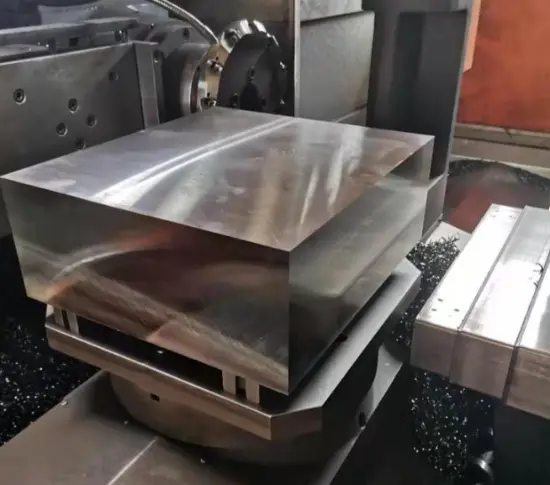
A2 steel is an air-hardening tool steel. With its practical balance of strength, wear resistance, and toughness, it has become one of the steels frequently used in mold manufacturing. It also offers good dimensional stability during heat treatment, which helps reduce deformation risks in A2 steel machining. Because of its excellent overall performance, A2 tool steel has become a general-purpose metal choice for various cold working scenarios and is widely used in the manufacturing of precision molds, cutting tools, and wear-resistant and impact-resistant parts.
This article will comprehensively analyze A2 tool steel from the dimensions of core characteristics, chemical composition, mechanical properties, corrosion resistance, advantages and disadvantages, application scenarios, heat treatment processes, and more. It will also compare the differences between A2 tool steel and other similar steels to provide professional and accurate references for your machining material selection.
A2 steel chemical composition
The reason A2 tool steel combines hardness, wear resistance, and toughness lies in its reasonable alloy composition ratio. Elements such as carbon, chromium, molybdenum, and vanadium work together to determine the material’s hardenability, wear resistance, stability, and service life. Its main chemical composition ratio parameters are shown in the table below:
| Element | Content proportion (%) |
| Iron (Fe) | Balance |
| Chromium (Cr) | 4.75 – 5.50 |
| Carbon (C) | 0.95 – 1.05 |
| Molybdenum (Mo) | 0.90 – 1.40 |
| Manganese (Mn) | 0 – 1.00 |
| Silicon (Si) | 0 – 0.50 |
| Vanadium (V) | 0.15 – 0.50 |
| Nickel (Ni) | 0 – 0.30 |
| Copper (Cu) | 0 – 0.25 |
| Phosphorus (P) | 0 – 0.03 |
| Sulfur (S) | 0 – 0.03 |
To help you better understand its composition characteristics, I have made a preliminary summary of the element characteristics of A2 tool steel:
Carbon (C) is the key element that determines the hardness of steel. High carbon content can form high-carbon martensite, allowing the steel to obtain relatively high hardness after quenching (around 64 HRC), while also promoting carbide formation and improving wear resistance.
Chromium (Cr): Improves the hardenability of the steel and ensures that the workpiece can harden uniformly during air cooling. It also forms chromium carbides, enhances wear resistance, and gives the steel a certain degree of corrosion resistance (the content does not meet the stainless steel standard, but it can resist slight corrosion).
Molybdenum (Mo): Refines grains, suppresses temper brittleness, and improves the toughness and high-temperature stability of the steel, enabling A2 steel to maintain a good balance of strength and toughness after tempering.
Vanadium (V): Forms fine vanadium carbides, further refines grains, improves the hardness, wear resistance, and fatigue resistance of the steel, and also improves the machinability of the steel.
Manganese (Mn): Helps with deoxidation and desulfurization, improves the casting performance of A2 tool steel, and also improves the hardenability and toughness of the steel. However, excessive content may affect the toughness of the steel.
Silicon (Si): As a deoxidizer, it improves the casting performance of steel and also increases the strength and hardness of steel, but excessive content may reduce the toughness of the steel.
Phosphorus (P) and sulfur (S): These are impurity elements, and their content must be strictly controlled to avoid reducing the toughness and machinability of the steel.
Iron (Fe): As the matrix element, it forms the framework of the steel and provides basic mechanical properties and machinability.
A2 steel equivalent
The American standard A2 tool steel also has equivalent grade options in other established industrial manufacturing countries, helping you and local machining manufacturers better choose similar substitute materials:
| Standard/Region | Grade | Relationship with A2 tool steel | Main features/applications |
| United States | A2 | Benchmark grade | Air-hardening cold work die steel with good hardness, wear resistance, and toughness |
| China | Cr5Mo1V | Similar grade | Composition and performance close to A2; commonly used for precision stamping dies, cold heading dies, etc. |
| Germany | 1.2363 / X100CrMoV5-1 | Equivalent or similar grade | Suitable for cold work dies, cutting tools, and wear-resistant parts |
| Japan | SKD12 | Similar grade | Has high hardness and wear resistance; commonly used in cold work die manufacturing |
| Sweden | XW-10 | Equivalent grade | Good toughness and wear resistance; widely used in the mold machining field |
A2 tool steel properties
A2 tool steel is a medium cold-hardening tool steel, mainly used to make cold work dies and stamping dies. It is characterized by high hardness, good wear resistance, good resistance to chipping and breakage, and good heat treatment performance, making it especially suitable for precision machining. Below, I will briefly introduce the main properties of this material.
A2 tool steel yield strength
The yield strength of A2 tool steel varies with the heat treatment condition and hardness level. After conventional heat treatment, it is usually about 1450-1700 MPa (about 210000-247000 psi). A2 tool steel is commonly used for accessories such as blanking dies, forming dies, trimming dies, thread rolling dies, and stamping dies.
A2 steel tensile strength
The tensile performance of A2 tool steel is affected by heat treatment and is not a fixed value. After conventional quenching and tempering, its tensile strength is usually about 1850-2100 MPa (about 268000-305000 psi). It has high load-bearing capacity, wear resistance, and dimensional stability, and is commonly used to manufacture tool-type parts such as punches, blanking dies, shear blades, gauges, locating pins, etc.
A2 steel hardness
Rrockwell hardness of A2 tool steel varies greatly with the heat treatment condition: the annealed condition is about 197-241 HBW, the quenched but untempered condition can reach about 64 HRC, and the working hardness after conventional tempering is usually 57-62 HRC, which can well meet cutting, blanking, forming, and other needs. Thanks to its high hardness, A2 tool steel is commonly used in the production of stamping/mold accessories.
A2 tool steel machinability
A2 tool steel can be processed by milling, turning, tapping, grinding, wire cutting, and other processes. After quenching and tempering, A2 steel has relatively high hardness, so ceramic tools or ultra-hard coated carbide tools should be selected, and machining parameters should be properly adjusted. Because A2 steel is conductive, wire cutting is also often used to obtain high-precision and high-surface-quality A2 steel injection molds.
Corrosion resistance
Containing 4.75%-5.50% chromium, it has moderate corrosion resistance and can resist slight rust and atmospheric corrosion in ordinary workshop environments or indoor storage conditions. It is mainly used to produce punches, dies, shear blades, mold inserts, wear plates, precision fixtures, and so on.
Dimensional stability
A static natural cooling method is used to quench A2 tool steel. During this heat treatment process, the material deformation is extremely small, and stress can be more fully released. It is suitable for manufacturing parts with complex geometric shapes and high-precision tolerances, such as precision molds and gauges.
Toughness
A2 tool steel has relatively good toughness among cold work die steels. After heat treatment, its impact toughness is about 60-85 J/cm². Low-temperature tempering at 200°C can reach more than 60 J/cm², while high-temperature tempering at 600°C can increase it to about 85 J/cm², but the hardness will decrease significantly. It can resist chipping and cracking caused by impact, but it should be noted that temper brittleness may occur at 400-500°C.
Heat treating for A2 steel machining
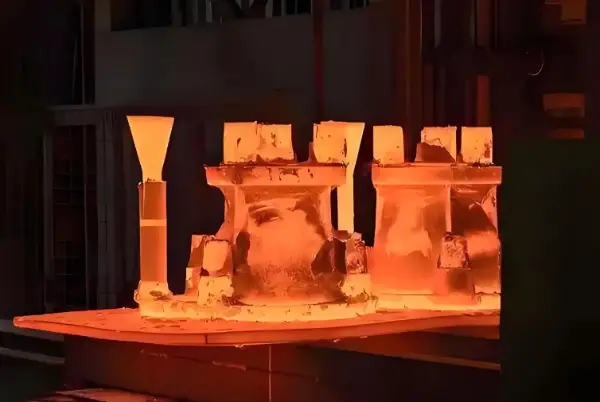
To strengthen the overall physical performance of A2 tool steel, we often need to heat treat this material:
Annealing
Heat at a rate not exceeding 400°F/hour to 1550°F (843°C), hold for 1 hour per inch of thickness (minimum 2 hours), then furnace-cool at a rate not exceeding 50°F/hour to 1000°F (538°C), and then continue furnace cooling or air cooling to room temperature. After annealing, the hardness does not exceed 235 HBW.
Purpose: To soften the material, improve machinability, and prepare for subsequent hardening treatment.
Quenching
Preheating: Heat at a rate not exceeding 400°F/hour to 1150-1250°F (621-677°C), and then raise the temperature to 1350-1450°F (732-788°C).
Austenitizing: Hold at 1750-1800°F (941-982°C) for 30-45 minutes per inch of thickness.
Quenching: Air cool, use pressurized gas, or interrupted oil cooling to below 150°F (66°C). The hardness after quenching is about 64 HRC.
Purpose: To obtain high hardness and wear resistance by rapid cooling after austenitizing.
Note: A2 tool steel is not a water-quenching steel. In principle, air cooling or gas quenching should be used. Water cooling is too severe and can easily cause deformation and cracking.
Tempering treatment
Temper immediately after quenching. The tempering temperature is generally 350-500°F (177-260°C), commonly 400°F (204°C). The holding time is at least 2 hours per inch of thickness. A double-tempering process is recommended (cooling to room temperature between the two tempering cycles is required to promote the transformation of austenite into martensite).
Purpose: To eliminate quenching stress, improve the overall performance of hardness and toughness, and improve dimensional stability.
What machining processes does A2 tool steel support
Machining processes are often needed to process A2 tool steel into molds and other accessories.
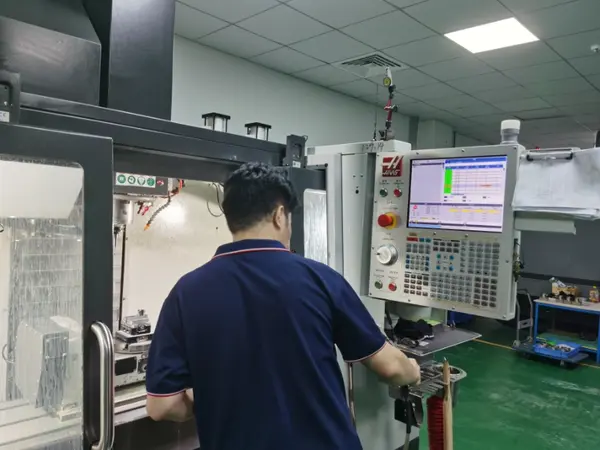
CNC machining
Professional CNC engineers will select suitable tools, machining parameters, and machining sequences according to the heat treatment condition of the material. Workpieces with single-sided machining or low multi-surface precision requirements can use 3-axis CNC machining. For A2 tool steel parts with multi-surface designs and high precision requirements, 4-axis/5-axis CNC machining is recommended to avoid tolerance accumulation, delayed delivery, and reduced qualification rates. Sometimes, three-axis CNC can also be used for roughing, followed by fine milling on a five-axis machine tool, which can greatly improve production efficiency.
Grinding
Green silicon carbide grinding wheels can be used for batch surface grinding. The grinder feed rate and grinding speed must be properly set to avoid surface burns on the workpiece. This is suitable for molds, tools, and batch parts processing with high requirements for dimensional accuracy and surface roughness.
Forging
The initial forging temperature is 1080-1120°C, and the final forging temperature is ≥850°C. Forged A2 tool steel cannot be water-cooled and must be slowly cooled naturally to prevent cracking. It is suitable for manufacturing molds, tooling, blades, and wear-resistant parts with complex shapes or excellent toughness.
Welding
Special welding wire for A2 tool steel can be used for TIG welding. Preheat to 200-300°C before welding, then slowly cool after welding and temper in time to restore the overall strength and toughness of the welded seam.
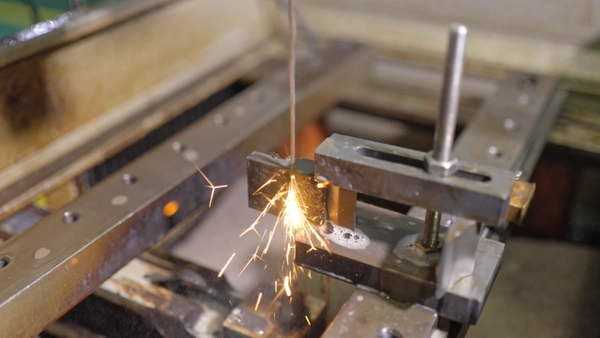
Wire cutting
For mold machining using A2 tool steel, fast wire cutting or slow wire cutting can be used. Slow wire cutting has higher machining costs, but the workpiece accuracy and surface quality are better. High-temperature tempering can reduce residual stress, reduce cracks and deformation, and is suitable for precision blanking dies and similar applications.
Difficulties and solutions in CNC machining of A2 steel
1. Fast tool wear
A2 tool steel has high hardness and many alloying elements, which can easily cause tool wear during cutting. Fine-grain carbide, hard-coated tools, or ceramic tools can be selected, and cutting speed and feed rate should be appropriately reduced.
2. High cutting force and vibration
The material has high strength and high cutting resistance, which can easily cause vibration and affect accuracy and surface quality. Machine tool and fixture rigidity should be improved, tool angles should be optimized, and cutting parameters should be adjusted to avoid resonance.
3. Thermal deformation and dimensional stability problems
A2 tool steel has poor thermal conductivity, and cutting heat can easily concentrate, potentially causing thermal deformation. Cooling should be strengthened, roughing and finishing should be separated, and stress relief treatment should be performed when necessary.
4. Difficulty controlling surface quality
Tool wear, vibration, or improper parameters can lead to increased roughness, scratches, and burrs. Tools should be kept sharp, finishing parameters should be optimized, and post-processing such as grinding and polishing should be used.
Comparison between A2 steel and similar tool steel materials
A2 steel vs D2 steel vs O1 steel
A2, D2, and O1 steel are 3 common tool steels. They have similarities and differences in composition, performance, and applications. The specific comparison is as follows:
Composition differences
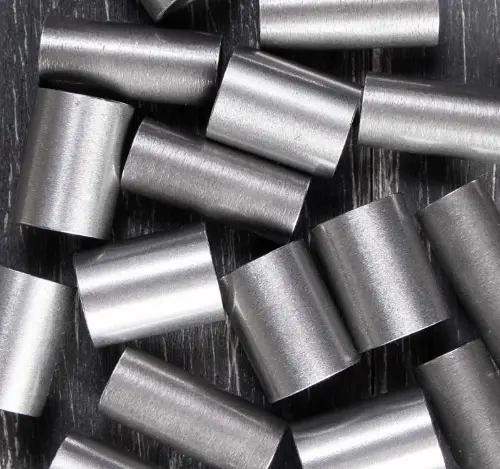
A2: Carbon content 0.95%-1.05%, chromium content 4.75%-5.50%, containing molybdenum, vanadium, and other elements; it is an air-hardening steel.
D2: Carbon content 1.40%-1.60%, chromium content 11.00%-13.00%, containing cobalt, vanadium, and other elements; it is a high-carbon, high-chromium air-hardening steel.
O1: Carbon content 0.85%-1.00%, mainly containing manganese, chromium, tungsten, and other elements; it is an oil-hardening steel.
Performance comparison
Hardness and wear resistance:
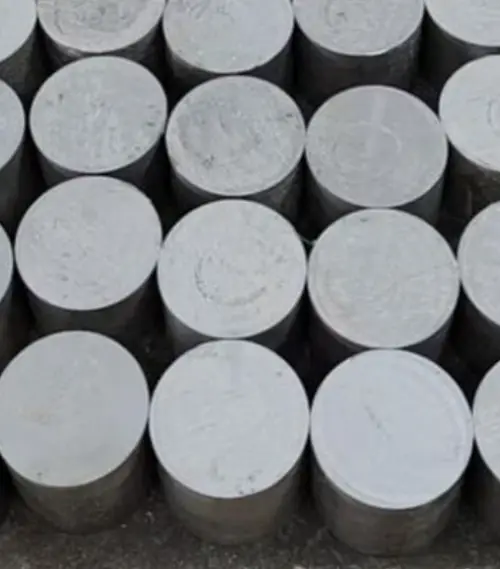
A2 has a hardness of 58-62 HRC after quenching, with wear resistance better than O1 but lower than D2.
D2 can reach a hardness of 60-65 HRC and has the strongest wear resistance, making it suitable for high-wear scenarios.
O1 has a hardness of 57-62 HRC, moderate wear resistance, and good edge retention.
Toughness:
A2 has medium toughness, better than D2, and is suitable for molds that need to withstand a certain degree of impact.
D2 has lower toughness and is prone to brittle cracking, so high impact loads should be avoided.
O1 has relatively good toughness and is suitable for long blades or tools requiring impact resistance.
Dimensional stability:
Because A2 and D2 are air-hardening steels, quenching deformation is extremely small, making them suitable for precision molds. O1 oil steel has relatively larger deformation after oil quenching.
Application differences
A2 steel: Suitable for high-precision cold work dies, tooling gauges, shear tools, etc., especially for scenarios that require both wear resistance and toughness, such as stamping dies under medium impact loads and custom knives.
D2 steel: Used for high-wear-resistance and long-life cold work dies, such as blanking dies, trimming dies, thread rolling dies, polishing tools, etc. It is suitable for processing high-hardness materials or long-term continuous operations.
O1 steel: Commonly used for general-purpose tools, such as punches, dies, gauges, cutting tools, etc. It is suitable for scenarios requiring higher toughness and moderate wear resistance, and is also often used for DIY knife making.
A2 steel vs A2 70 stainless steel
Composition differences
A2 tool steel is a high-carbon, high-chromium cold work tool steel. It has high carbon content and contains alloying elements such as chromium and molybdenum, mainly to obtain high hardness and wear resistance. A2-70 stainless steel is an austenitic stainless steel fastener grade, with higher chromium and nickel content and low carbon content. Its core characteristics are corrosion resistance and good plasticity and toughness.
Performance differences
After quenching and tempering, A2 tool steel can obtain high hardness and excellent wear resistance. It is suitable for working conditions with high pressure, friction, and high dimensional stability requirements, but its corrosion resistance is relatively weak. A2-70 stainless steel has medium strength, good toughness and ductility, and resistance to atmospheric and freshwater corrosion, but it has a risk of pitting or stress corrosion in chloride-containing environments.
Application differences
A2 tool steel is mainly used for high-wear tool-type parts such as cold work dies, punches, shear blades, and gauges. A2-70 stainless steel is mainly used for fasteners such as bolts, screws, and nuts, as well as construction, kitchen equipment, and general corrosion-resistant structural parts.
A2 steel vs PM v11 steel
Composition differences
A2 tool steel is a traditionally melted cold work tool steel, containing high carbon and medium-high chromium, with molybdenum and vanadium added to improve hardenability and wear resistance. PM V11 steel is a powder metallurgy tool steel. Its alloy design focuses more on the balance of wear resistance and toughness, and its carbides are finer and more evenly distributed.
Performance comparison
After heat treatment, A2 steel can usually reach a hardness of 58-62 HRC, with good wear resistance and dimensional stability, but its toughness is at a medium level. Because PM V11 steel has a uniform structure and refined carbides, it usually has better edge retention, wear resistance, and chipping resistance.
Process and stability
A2 steel has small heat treatment deformation and is relatively easy to machine, grind, and maintain, making it suitable for conventional precision tool manufacturing. PM V11 steel has better dimensional stability and service consistency, but it is more difficult to machine and sharpen, and requires stricter process control.
Application differences
A2 tool steel is suitable for medium-impact cold work scenarios such as piercing dies, blanking dies, bending dies, shear tools, and gauges. PM V11 steel is more suitable for high-performance cutting tools, precision stamping dies, cold heading dies, and high-load, long-life tool applications.
Machinable accessories of A2 tool steel
Because A2 tool steel has good overall mechanical performance, it can be machined into different types of parts, not only molds but also other accessories that require a combination of strength and toughness. Below, I have categorized the A2 tool steel production cases that Weldo has produced over the years as follows:
Mold category
Blanking dies: Used for blanking and punching metal sheets, such as blanking dies for automotive parts and electronic components.
Forming dies: Including bending dies, folding dies, deep drawing dies, curling dies, etc., used for forming metal or plastic.
Embossing dies: Used to emboss patterns, text, or marks on the surface of materials.
Cold heading dies: Used in cold heading processes, such as cold heading forming of fasteners like bolts and nuts.
Cold extrusion dies: Used for metal cold extrusion forming, such as extrusion dies for pipes and profiles.
Tool category
Shear tools: A2 tool steel is often used to manufacture shear-type tools such as shearing machine blades, slitting knives, and trimming knives. It is suitable for cold shearing conditions of metal sheets or coils. Due to its good hardness, wear resistance, and dimensional stability, A2 blade steel has high applicability in industrial shear tools.
Cutting tools: Some A2 steel can also be used for small cutting tools, such as milling cutters, drills, reamers, etc., especially for applications that require a certain degree of wear resistance and edge retention. In addition, A2 steel knife is also commonly seen in tool applications that require toughness, wear resistance, and edge stability.
Gauges and measuring tools
Gauges: Such as plug gauges, ring gauges, snap gauges, etc., used to measure the size and shape of workpieces.
Templates: Used to inspect workpiece contours and dimensional accuracy.
Mechanical parts
Punches: Used as punches in stamping, blanking, cold heading, and other processes, bearing high impact loads.
Mandrels and bushings: Used for mechanical transmission and support, requiring high wear resistance and dimensional stability.
Fixtures and chucks: Used to fix and clamp workpieces to ensure machining accuracy.
Fastener types
A2 tool steel is suitable for manufacturing fasteners that require high hardness, wear resistance, and dimensional stability. Common examples include bolts, screws, self-tapping screws, special-shaped bolts, retaining rings, clamps, washers, and non-standard screws for molds. Most are used at connection points of tooling, molds, and key equipment, providing reliable fixing and sealing functions.
Surface treatment for A2 steel parts
Nitriding
Nitriding forms a high-hardness nitrided layer on the surface of A2 tool steel, improving wear resistance, anti-galling performance, and mold release. It is commonly used for punches, dies, deep-drawing die inserts, and other components in stamping, deep drawing, and cold forming applications.
PVD Coating
PVD deposits thin films such as TiN, CrN, or AlCrN on the surface of A2 mold steel. It offers low deformation, high hardness, and low friction, making it suitable for precision punches, trimming blades, and mold inserts used in high-precision stamping, sheet metal forming, and high-wear conditions.
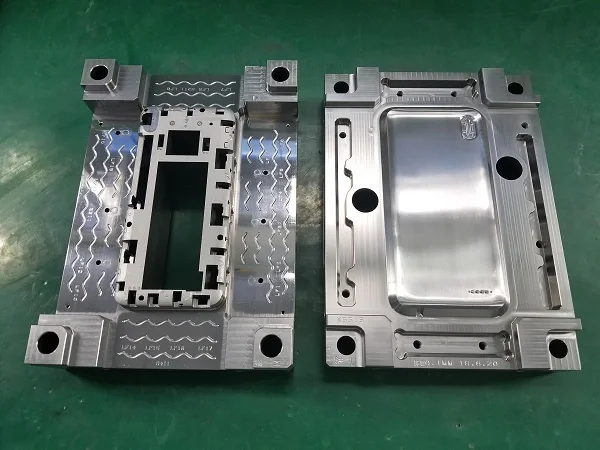
CVD and TRD Treatment
CVD and TRD create carbide layers with strong adhesion on air-hardening tool steel, providing good wear resistance and high-pressure performance. They are commonly applied to cold forging die cores, extrusion dies, and wear-resistant sliders in cold forming applications with high surface pressure and severe friction.
Shot Peening
Shot peening creates a compressive stress layer on the surface of A2 cold work tool steel through impact treatment, improving fatigue resistance and crack resistance. It is often used for die bases, die cores, pressure blocks, and impact-loaded parts in molds exposed to repeated stress or heavy impact.
Hard Chrome Plating
Hard chrome plating improves the surface hardness, wear resistance, rust prevention, and release performance of A2 steel parts. It is commonly used on deep-drawing dies, guide components, pressure plates, and simple cavity surfaces, especially for cost-sensitive molds with relatively simple shapes.
Conclusion
A2 steel is a reliable choice for precision molds, cutting tools, and durable wear-resistant parts thanks to its balanced hardness, toughness, wear resistance, and dimensional stability. Understanding its properties, heat treatment, machining challenges, and differences from similar tool steels can help you choose the right material. For more A2 steel machining information or a quote comparison, contact Weldo Machining engineers for accurate pricing, tight tolerances, multiple surface treatment options, and on-time project delivery.