
Understanding the true cnc engine block machining cost is essential for automotive builders, race teams, engine tuners, and manufacturers who rely on precision-engineered blocks for high-power and high-reliability performance. From aluminum racing blocks to cast iron heavy-duty engines, machining cost varies based on material hardness, design complexity, bore size, honed surfaces, and performance requirements. This guide breaks down materials, performance impact, machining processes, and the real cost factors that influence both prototype and full-production engine block machining.
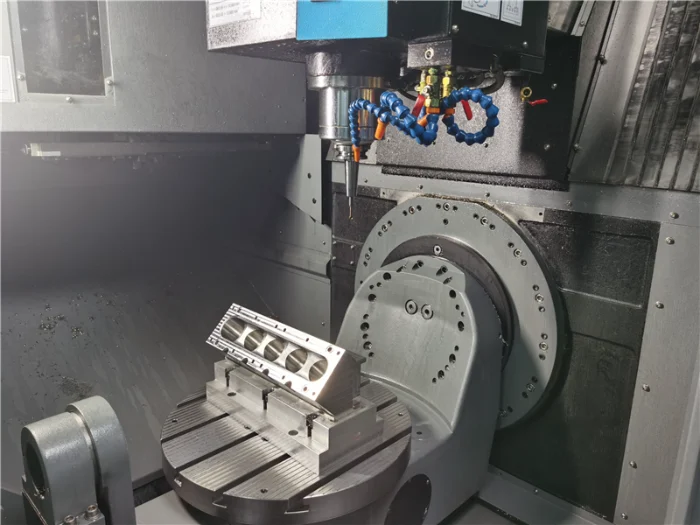
What Influences CNC Engine Block Machining Cost?
A well-machined engine block requires precision metalworking, multiple CNC operations, and strict tolerance control. Because of this, the cnc engine block machining cost depends on several key technical factors.
1. Material Type and Hardness
Material hardness is one of the strongest indicators of both machining time and the final cnc engine block machining price.
Aluminum Engine Blocks (6061, 7075, A356-T6)
The advantages of an aluminum engine block are its light weight, good heat dissipation, and excellent machinability. It can reduce engine and vehicle weight, improve fuel economy and handling, and also supports better engine cooling and the manufacturing of complex structures.
Its disadvantages are relatively lower strength, heat resistance, wear resistance, and corrosion resistance. Under high-load conditions, it is more prone to deformation or wear, and usually requires cylinder liners or reinforced structures, which increases cost and manufacturing complexity. Therefore, it is more suitable for regular passenger vehicles.
- Lightweight
- Easier to machine
- High thermal conductivity
Cost impact:
Lower machining cost due to easier tool passes and reduced cycle time.
Cast Iron Engine Blocks
The advantages of a cast iron engine block are its high strength, good pressure resistance, wear resistance, corrosion resistance, and durability. It can withstand high temperature, high pressure, and heavy-load operating conditions, making it suitable for high-power, high-torque, or turbocharged engines. In addition, cast iron blocks offer stable structure, strong modification potential, mature repair techniques, and relatively low maintenance costs.
Its disadvantages are heavy weight, poorer heat dissipation, and greater machining difficulty. The added weight can affect fuel economy and handling, while its slower heat transfer may require a more efficient cooling system. Cast iron blocks also warm up more slowly, which can lead to greater wear during cold starts, and their production and machining costs may be higher.
- High rigidity
- Excellent wear resistance
- Strong under high horsepower and torque
Cost impact:
Medium to high cost due to slow cutting speeds and greater tool wear.
Compacted Graphite Iron (CGI)
The advantages of a ductile iron engine block are its high strength, good toughness, fatigue resistance, wear resistance, and corrosion resistance. It can withstand high mechanical loads, impact forces, and high combustion pressure, making it suitable for highly strengthened engines. Meanwhile, its material cost is relatively low, the casting process is mature, and it is suitable for mass production with good cost performance.
Its disadvantages are heavy weight, poorer vibration damping, and higher casting and machining difficulty. Its high density is not favorable for engine lightweighting and may affect fuel economy and handling. In addition, ductile iron requires strict casting process control, and tool wear is faster during machining, which may increase manufacturing and processing costs.
- 75% stronger than cast iron
- Excellent fatigue resistance
Cost impact:
High machining cost—CGI requires special tooling and slower feeds.
Billet Steel Blocks
The advantages of a steel billet/cast iron engine block are high strength, good rigidity, heat resistance, deformation resistance, wear resistance, and corrosion resistance. It can withstand high temperature, high pressure, and heavy loads, making it suitable for diesel engines and high-performance turbocharged engines. It also offers good vibration damping, low material cost, and mature mass-production processes.
Its disadvantages are heavy weight, poor thermal conductivity, and difficult machining and repair. The high density affects lightweight design, fuel economy, and handling, while slower heat dissipation may cause heat buildup under heavy loads. Its high hardness also leads to faster tool wear and stricter quality-control requirements.
- Maximum rigidity
- Used in extreme racing builds
Cost impact:
Highest machining cost because steel requires precision tools, long machining cycles, and expensive finishing.

How Performance Requirements Affect CNC Engine Block Machining Cost
Engine blocks designed for high horsepower (HP) and torque require additional machining precision and reinforcement steps.
1. Horsepower Limits (HP)
Higher power requires stronger structural accuracy:
| HP Range | Required Machining Level |
|---|---|
| 300–600 HP | Standard machining |
| 600–1,200 HP | High-precision surfacing + improved oil passages |
| 1,200–2,000 HP | Reinforced block + tight-tolerance machining |
| 2,000–3,000+ HP | Billet block + race-grade CNC machining |
More boost + more heat = higher cnc engine block machining cost.
2. Torque Resistance
Torque places extreme stress on:
- Main caps
- Cylinder walls
- Crankshaft tunnel
- Deck surface
Engines exceeding 800–1,500 Nm require:
- Line honing
- Deck reinforcement
- Stronger materials
These additional machining steps directly affect the cnc engine block machining price.
3. High RPM Stability
High-RPM race engines require:
- Dead-straight crank tunnels
- Perfectly matched cylinder bores
- Balanced main bearing alignment
Premium accuracy demands slow feed rates and more inspection time, increasing cost.

Machining Processes That Influence Engine Block Machining Cost
Engine block machining includes multiple CNC operations, each contributing to the final cnc engine block machining cost.
CNC Boring
Engine boring removes excess materials from the inner cylinder wall to repair wear, out-of-roundness, scratches, and other damage, restoring proper cylinder size, roundness, cylindricity, piston-to-cylinder clearance, and sealing performance.
Its main functions include restoring cylinder size and shape, improving cylinder wall surface finish, repairing cylinder damage, and allowing larger pistons to increase engine displacement and power. It also helps reduce piston friction, improve oil film formation, lower the risk of oil burning, and enhance engine performance, reliability, and service life.
Cylinder Honing
Engine cylinder honing is a precision finishing process that uses low-speed, high-accuracy grinding on the inner cylinder wall. Through the rotation and reciprocating movement of the honing head, it removes small amounts of surface material and creates a specific surface texture.
Its main functions are to improve cylinder size and shape accuracy, reduce surface roughness, form an oil-retaining crosshatch pattern, and enhance sealing performance. This helps reduce friction between the piston and cylinder wall, improve oil film formation, lower wear and gas leakage, and improve engine efficiency, reliability, and service life.
Deck Surfacing
Engine block surface finishing refers to the machining and finishing of surfaces such as the top deck, bottom surface, and front/rear end faces, so they meet the required dimensional accuracy, flatness, parallelism, and surface roughness standards.
Its main functions are to ensure sealing and assembly accuracy between the engine block, cylinder head, and other components, prevent gas, oil, or coolant leakage, reduce friction and wear, improve heat dissipation, and ensure the block meets quality inspection and reliability requirements.
Line Honing / Line Boring
Honing and boring are both important hole-machining processes in engine manufacturing, commonly used for key areas such as cylinder bores. Boring uses a boring tool to cut a pre-formed hole, mainly to enlarge the hole diameter and correct position or shape errors. Honing is a finishing process usually performed after boring, using a honing head and abrasive stones to remove a very small amount of material from the hole wall, improve surface quality, and create a crosshatch pattern for better lubrication.
Their functions differ: boring mainly removes machining allowance, improves dimensional accuracy, corrects hole position and shape, and prepares the surface for later finishing; honing mainly reduces surface roughness, improves roundness and cylindricity, enhances oil retention and lubrication, and reduces friction, wear, blow-by, and oil burning. In engine production, boring is usually followed by honing to ensure the cylinder bore meets the required size, shape, and surface quality for engine performance, fuel economy, and emission control.
Oil Passage Machining
Engine oil passage machining refers to using mechanical machining to create oil channels, such as main oil passages, branch oil passages, and inclined oil passages, in engine blocks, cylinder heads, crankshafts, and other components. The shape, size, and position of these passages must meet design requirements to ensure that engine oil is delivered accurately and steadily to each lubrication area.
Its main functions are lubrication, cooling, cleaning, and pressure stabilization. Oil passages deliver oil to friction areas such as pistons, crankshafts, camshafts, and bearings to form an oil film and reduce wear. They also help carry away heat and metal debris, while working with the oil pump and filter to maintain stable oil pressure and flow, improving engine reliability and service life.

Common Surface Treatments for Engine Block Machining
Proper finishing extends engine life and supports high power levels. These processes also contribute to the final cnc engine block machining cost.
Thermal Barrier Coating
Engine block thermal barrier coating is a protective ceramic coating applied to the engine block surface. It is usually made from low-thermal-conductivity materials, such as YSZ, and is designed to reduce heat transfer from high-temperature combustion gases to the metal substrate.
Its main function is to lower the engine block temperature, reduce thermal stress, prevent deformation and cracking, and improve engine efficiency, durability, and long-term reliability under high-temperature operating conditions.
Anti-Corrosion Coating
Engine block anti-corrosion coatings are protective surface coatings used to improve corrosion resistance, wear resistance, friction reduction, and durability. Common types include WC, DLC, CrN, hard chrome, epoxy composite coatings, and Parylene coatings.
Their main function is to protect the engine block from corrosive media such as acids, alkalis, cooling fluid, and combustion byproducts, while reducing surface wear and friction. This helps extend engine service life and improve reliability under harsh operating conditions.
Oil-Shedding Coating
Engine block oil-based coatings are functional surface coatings designed to provide lubrication, wear resistance, friction reduction, and heat dissipation. Common types include nickel-based silicon carbide coatings, iron-based coatings, and metal matrix composite coatings, which are often used on aluminum engine blocks to replace traditional cast iron liners.
Their main function is to reduce direct friction between the piston rings and cylinder wall. The coating’s high hardness and microporous surface can store engine oil, form a stable oil film, reduce wear, improve engine efficiency, and help lower fuel consumption and emissions.
Cylinder Wall Coating (Nikasil / Iron Plating)
Engine cylinder wall coating is a surface treatment applied to the inner wall of the engine block, mainly used to improve wear resistance, friction reduction, sealing performance, and thermal management. Common materials include iron-based and nickel-based metal coatings, ceramic coatings such as alumina and zirconia, and metal-ceramic composite coatings, usually applied through plasma spraying, arc spraying, or laser cladding.
Its main functions are to reduce friction and wear between the piston and cylinder wall, lower energy loss, improve engine efficiency and service life, enhance piston ring sealing, reduce gas leakage and exhaust emissions, and help distribute heat more evenly to reduce local overheating and knocking risk.
Cost Impact
Medium to high depending on thickness and treatment method.
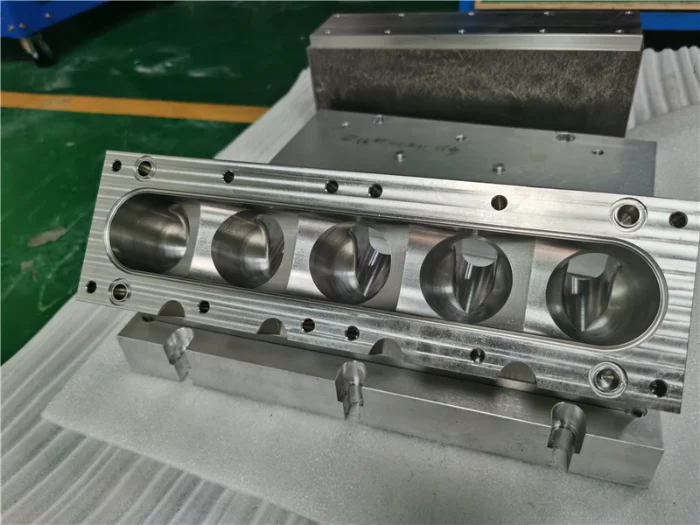
Estimated CNC Engine Block Machining Cost
Actual cnc engine block machining price varies by specifications, but general estimates include:
| Engine Type | Typical Machining Cost |
|---|---|
| 4-cylinder aluminum block | $300–$800 |
| 6-cylinder aluminum block | $500–$1,100 |
| V8 cast iron block | $700–$1,500 |
| Billet racing block | $2,000–$6,000+ |
Precision machining, high horsepower demands, or exotic materials can increase cost significantly.
How to Reduce CNC Engine Block Machining Cost
Choose a material that matches performance needs
Avoid over-specifying billet steel when aluminum suffices.
Optimize bore/hone requirements
Standard tolerances reduce machining time.
Simplify oil passage redesigns
Complex lubrication channels raise costs.
Use standard coatings when applicable
Performance coatings increase cost but may be unnecessary in moderate HP builds.
Increase order quantity
Batch machining reduces setup cost per block.

Request CNC Engine Block Machining Cost — Contact Weldo Machining
For precise, durable, and performance-focused engine block machining, choosing a professional partner is essential. As an experienced provider of cnc engine block machining cost solutions, Weldo Machining supports aluminum, cast iron, CGI, and billet materials with high-tolerance boring, honing, decking, and finishing capabilities. Whether you need prototype development or high-HP racing engine blocks, our team delivers consistent accuracy and competitive pricing.
Contact us today for accurate quotations, performance guidance, and tailored CNC engine block machining solutions.
FAQ of CNC Engine Block Machining Cost
What affects CNC engine block machining cost the most?
Material hardness, bore size, tolerances, coatings, and performance requirements contribute most to final cost.
How does machining affect engine horsepower capability?
Precision boring, honing, and deck surfacing improve ring sealing, boost tolerance, and torque stability.
What surface treatments improve engine block life?
Honing, thermal coatings, oil-shedding coatings, and anti-corrosion processes enhance durability and power handling.