
Индивидуальные клеммы для динамиков и соединительные клеммы
Компания Weldo производит прецизионные компоненты для клемм акустических систем из латуни, медных сплавов, нержавеющей стали, алюминия и инженерных пластиков. Мы осуществляем изготовление клемм для акустических систем по индивидуальному заказу — от функциональных прототипов до серийного производства.
Токарная обработка с ЧПУ, токарно-фрезерная обработка, многоосевое фрезерование и электроэрозионная резка проволокой комбинируются для контроля качества проводящих поверхностей, резьбы, изолирующих элементов и монтажной геометрии в рамках единого производственного процесса.
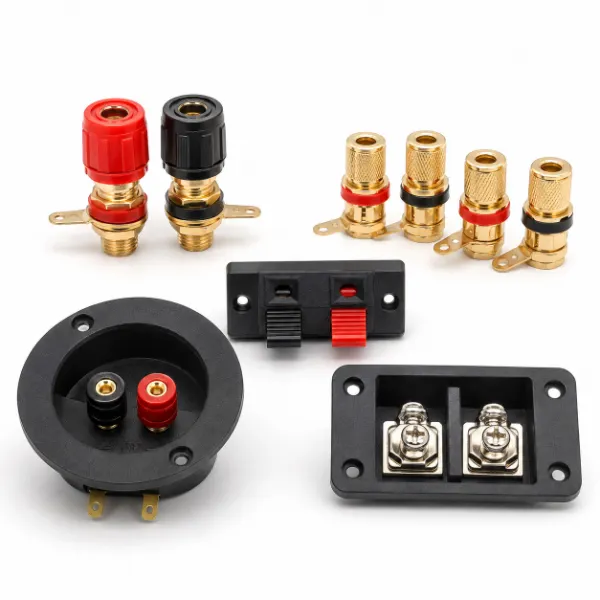
Что такое клемма динамика?
Клемма акустической системы представляет собой проводящий интерфейс между кабелем акустической системы и усилителем, динамиком или системой проводки корпуса акустической системы. В типовых конструкциях используются банановые разъемы, вилочные разъемы, оголенный провод или резьбовые кабельные наконечники.
Специализированный клеммник для динамиков влияет не только на его внешний вид. Материал проводника, геометрия контактов, резьбовое соединение, изоляция, система гальванического покрытия и способ крепления к панели определяют надежность сборки и долгосрочные электрические характеристики.
- Нестандартные диаметры, длины, резьба и противовращательные плоские участки
- Проводящие и изолирующие детали, выполненные в виде единого узла
- Селективное нанесение покрытий из золота, никеля, серебра или олова
- Разъемы для банановых штекеров, вилочных разъемов, оголенных проводов или кабельных наконечников
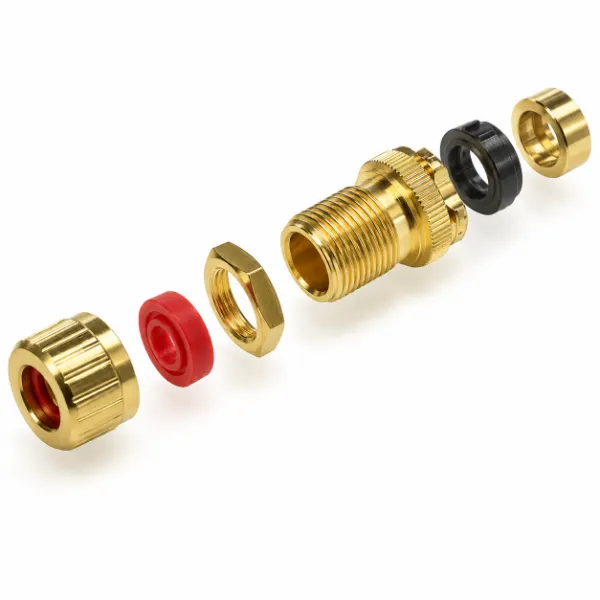
Типы клемм для динамиков, которые мы производим
Мы изготавливаем отдельные проводящие детали, изолирующие компоненты и готовые клеммные узлы по чертежам заказчика. Эти конфигурации подходят для типичных применений в сфере аудиотехники.
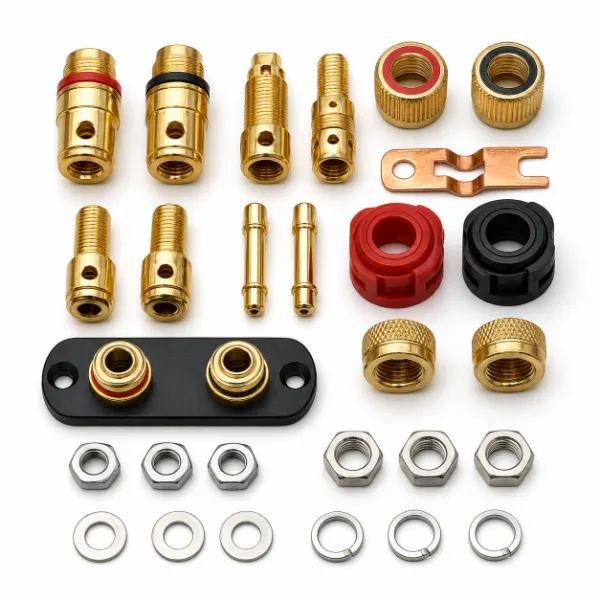
Пятиконтактные клеммы
Многофункциональные разъёмы для банановых штекеров, вилочных разъёмов, кабельных наконечников и оголенного провода. Используются в акустических системах и усилителях премиум-класса.
- Разъем типа «банан» диаметром 4 мм
- Крепежные резьбы M4–M8
- Диапазон диаметров корпуса: 8–18 мм
- Покрытие из золота, никеля или серебра
Клеммные шпильки для монтажа в панель
Проводящие шпильки с изолирующими втулками, стопорными гайками и устройствами, предотвращающими вращение, для монтажа на панели.
- Диапазон резьбы M3–M8
- Толщина панели 1–8 мм
- Конструкции с одной или двумя гайками
- Индивидуальные плоские детали и плечи
Розетки с банановыми разъемами
Прецизионные гнезда для стандартных банановых разъемов с паяными, резьбовыми, обжимными или печатными контактами.
- Номинальный диаметр соединения 4,0 мм
- Корпус с обработанной поверхностью диаметром 6–12 мм
- Прямолинейные или прямоугольные планировки
- Селективное контактное покрытие
Печатные платы и паяные выводы
Компактные разъемы с контролируемой геометрией выводов для пайки, сквозного монтажа или механической фиксации.
- Выводы диаметром 1–4 мм
- Нестандартный шаг выводов печатной платы
- Поперечные отверстия и паяльные чашки
- Контактные кромки с ограничителями заусенцев
Клеммные пластины для акустических систем
Двухполюсные и многополюсные клеммы для акустических систем поставляются в виде отдельных компонентов или в виде готовых монтажных узлов.
- 2- и 4-полюсные схемы
- Настройка интервалов между записями
- Установка в один уровень с поверхностью или встраиваемая установка
- Пластины из ПОМ, ПА или алюминия
High-Current Custom Posts
Larger copper-alloy terminals for subwoofers, power amplifiers and designs requiring increased conductor cross-section.
- C11000 or C14500 copper
- Ø10–22 mm conductor bodies
- Custom lug interfaces
- Electrical rating verified by design
Key Parameters for Custom Speaker Terminals
Final dimensions must follow the cable interface, mating connector, panel structure and plating thickness. These values are practical design references rather than fixed catalog limits.
| Design Item | Typical Reference | Инженерное направление |
|---|---|---|
| Banana-plug interface | Ø4.0 mm nominal | Contact fit, insertion force and plating allowance |
| Mounting thread | M3–M8 | Panel thickness, torque and insulating washer stack |
| Conductive body diameter | Ø6–22 mm | Current path, stiffness and installation space |
| Panel thickness | 1–8 mm | Shoulder length, anti-rotation feature and nut engagement |
| Gold plating | 0.05–2 μm | Contact life, appearance and customer specification |
| Nickel underplate | 1–5 μm | Diffusion barrier, adhesion and corrosion resistance |
| Machined surface | Ra ≤ 0,8 мкм | Selected contact surfaces can reach Ra ≤ 0.4 μm |
Materials for Speaker Terminal Components
Conductive, structural and insulating components serve different functions. Material selection must consider conductivity, machinability, strength, corrosion resistance and plating compatibility.
Conductive Copper Alloys
- C36000 Brass: High machinability for threaded bodies, caps and retaining nuts.
- C11000 ETP Copper: High conductivity for large current paths and low-resistance parts.
- C14500 Tellurium Copper: Combines conductivity with improved chip control for precision contacts.
- C17200 Beryllium Copper: High elasticity and fatigue resistance for spring-contact elements.
Structural and Insulating Materials
- 303 / 304 / 316 Stainless Steel: Used for nuts, shafts and structural parts requiring strength.
- 6061-T6 Aluminum: Lightweight material for mounting plates and amplifier panels.
- POM / Acetal: Stable electrical insulation for collars, bushings and terminal bodies.
- PTFE or PA66: Selected for insulation, heat resistance and assembly requirements.
When Is a Custom Speaker Terminal the Right Choice?
Catalog terminals suit standard audio assemblies. Custom machining is the stronger choice when fixed catalog geometry restricts installation, performance or product design.
| Decision Factor | Catalog Terminal | Custom Weldo Terminal |
|---|---|---|
| Геометрия | Fixed dimensions and configuration | Manufactured to the drawing |
| Panel integration | Panel must match the purchased terminal | Shoulders, flats and threads match the enclosure |
| Материал | Supplier-selected conductor alloy | C36000, C11000, C14500 or specified alloy |
| Покрытие | Standard finish and coverage | Specified coating stack and selective masking |
| Точность | Commercial catalog tolerance | Critical dimensions controlled to the assembly |
| Supply control | Dependent on catalog availability | Drawing-controlled repeat production |
| Best use | Standard general audio products | Premium, compact or non-standard assemblies |
Machining Capabilities for Speaker Terminals
Weldo combines multi-axis milling, precision turning, turn-mill machining and wire EDM. Related bores, threads, flats, cross-holes and mounting features can be controlled from fewer setups.
Explore CNC Machining →3-, 4- и 5-осевое фрезерование с ЧПУ
Terminal plates, cups, anti-rotation flats, counterbores, slots and multi-face mounting features.
Токарная обработка с ЧПУ и токарно-фрезерная обработка
Conductor bodies, sockets, threads, grooves, knurls, cross-holes and solder features.
Conductive Profile Cutting
Narrow slots, split-contact features and internal profiles in electrically conductive materials.
Finishing and Assembly
Deburring, polishing, plating coordination, insulation fitting and final assembly inspection.
Обзор производственных возможностей
*Final capacity depends on material, geometry, aspect ratio, feature access and inspection method.
Speaker Terminal Machining Tolerance Reference
Terminal performance depends on controlled mating geometry. Oversized bores affect fit. Poor concentricity affects assembly, while uncontrolled plating changes contact diameters and threads.
Precision limits are assigned to functional dimensions. General features retain economical production tolerances.
| Характеристика | Production Reference | Special Setup | Метод осмотра |
|---|---|---|---|
| Turned conductor OD | ±0,01 мм | ±0,005 мм | Micrometer and CMM |
| Banana socket bore | ±0,02 мм | ±0,01 мм | Plug gauge or optical measurement |
| Post spacing | ±0,05 мм | ±0,02 мм | CMM or QUICK VISION |
| Concentricity / runout | 0.02 mm | 0,01 мм | CMM or dial measurement |
| Knurled diameter | ±0,05 мм | ±0,02 мм | Micrometer and profile inspection |
| Metric thread fit | 6H / 6g | 4H / 4g | GO/NO-GO thread gauges |
| Machined surface | Ra ≤ 0,8 мкм | Ra ≤ 0.4 μm | Surface roughness tester |
Critical Points in Speaker Terminal Manufacturing
Conductivity and Machinability
Copper grade selection balances electrical resistance, chip control, dimensional stability and tool wear.
Coaxial Geometry
Bores, shoulders and threads use common datums to control runout and terminal alignment.
Plating Allowance
Contact diameters and threads include coating buildup. Masking protects surfaces that must remain unplated.
Burr Control
Cable holes, solder cups and thread starts are deburred without reducing the functional contact area.
Insulator Fit
POM, PTFE and PA components require controlled fits that prevent looseness without cracking the material.
Assembly Torque
Threads and shoulders must support installation torque while maintaining electrical isolation.
Finishing Options for Speaker Terminals
The finish must support the conductor material, contact environment, cosmetic requirement and mating cycle. Plating thickness should be stated on the drawing.
Покрытие золотом
Provides stable contact surfaces, oxidation resistance and a premium appearance. Nickel is commonly used as an underplate.
Никелирование
Improves corrosion and wear resistance and creates a diffusion barrier beneath gold.
Посеребрение
Supports conductive contact surfaces in high-current designs where tarnish is addressed by the specification.
Оцинковка
A practical finish for solderable terminals and cost-controlled internal connections.
Пассивация
Restores corrosion resistance on compatible stainless-steel terminal components.
Aluminum Anodizing
Protects mounting plates and amplifier panels. Conductive interfaces require masking.
How Speaker Terminal Parts Are Inspected
Speaker terminal inspection covers material, functional dimensions, thread fit, geometric accuracy and surface finish. The 0.001 mm values below refer to instrument display or reporting resolution, not a universal ±0.001 mm machining tolerance.
| Контрольно-измерительное оборудование | Справочные возможности | Использование в целях проверки |
|---|---|---|
| Координатно-измерительная машина Hexagon CROMA Bridge | Разрешение отчёта 0,001 мм | Position, concentricity, profile, perpendicularity and datum relationships |
| Mitutoyo QUICK VISION | Разрешение дисплея 0,001 мм | Small holes, post spacing, slots, edges and optical profiles |
| Оптический профилопроектор | Сравнение профилей и углов | Threads, radii, chamfers, knurls and terminal outlines |
| Цифровой высотомер | Разрешение дисплея 0,001 мм | Step height, shoulder position and mounting plate dimensions |
| Микрометры и калибры для отверстий | Шкала с делениями по 0,001 мм | Turned diameters, socket bores and production sampling |
| GO/NO-GO Thread Gauges | Specified thread class | Internal and external thread acceptance |
| Прибор для измерения шероховатости поверхности | Измерение Ra / Rz | Contact surfaces and visible machined surfaces |
| Plating Inspection Records | Thickness and process certificate | Gold, nickel, silver and tin plating verification |
Проверка материалов
Material grade and supplier documents are checked before machining.
Контроль в процессе производства
Diameters, bores, threads and post spacing are monitored during production.
Окончательная проверка
Dimensions, geometric tolerances, finish and assembly fit are verified.
Inspection Records
Dimensional, material and plating reports are supplied when specified.
Where Custom Speaker Terminals Are Used
Custom terminals are used where the enclosure, amplifier panel, conductor size or product appearance requires a dedicated connection interface.
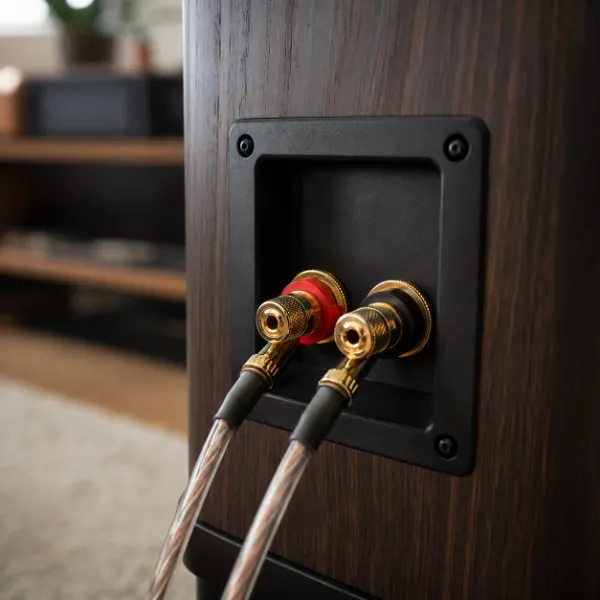
Hi-Fi Loudspeakers
Premium loudspeaker terminals for floor-standing speakers, bookshelf speakers, studio monitors and custom audio systems.
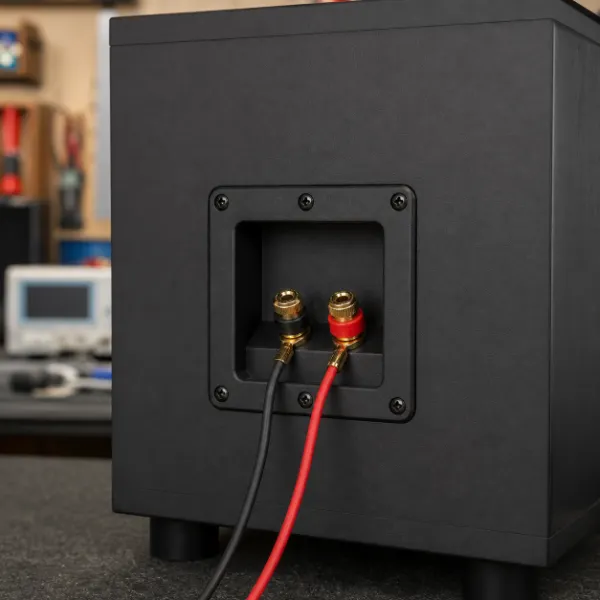
Subwoofers and Speaker Boxes
Recessed speaker box terminals for powered subwoofers, passive enclosures and professional speaker cabinets.
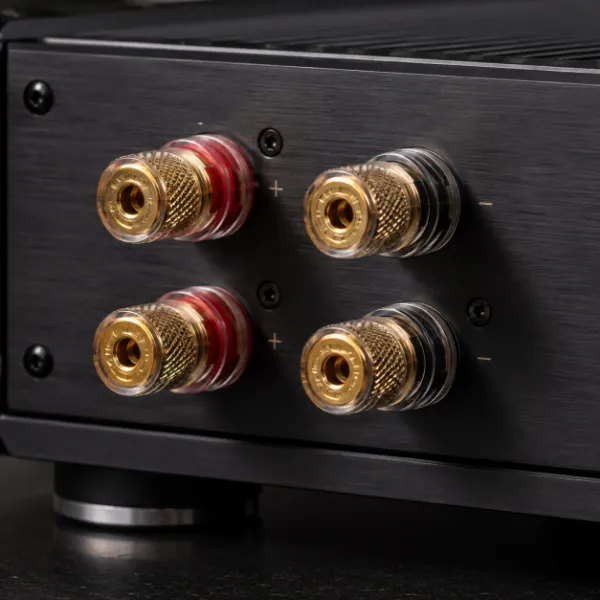
Amplifiers and Audio Equipment
Panel-mounted outputs for stereo amplifiers, power amplifiers, receivers and specialized audio electronics.
How to Reduce Custom Speaker Terminal Cost
Reliable cost control comes from matching the design to the correct manufacturing route. Material price alone does not determine the finished terminal cost.
Use Functional Tolerances
Apply tight limits only to contact bores, mating diameters, spacing and assembly datums.
Standardize Interfaces
Retain standard Ø4 mm banana interfaces and common metric threads unless the design requires alternatives.
Reduce Re-Clamping
Use turn-mill or multi-axis machining to complete related features from fewer setups.
Select the Right Alloy
Use C36000 for efficient machining and higher-conductivity copper only where required.
Define Selective Plating
Apply premium coatings only to specified contact and cosmetic surfaces.
Consolidate Repeat Orders
Stable drawings and planned batch quantities reduce repeated setup and qualification costs.
Speaker Terminal FAQs
How to fix a speaker terminal?
Disconnect the amplifier from power. Check the mounting nut, cable connection, solder joint and insulating washer. Tighten loose hardware or replace cracked insulators and damaged terminals. Internal amplifier repairs require a qualified technician.
Which terminal on a speaker is positive?
The positive terminal is normally red or marked with a plus sign. The negative terminal is normally black or marked with a minus sign. Confirm the product marking before connection.
How to connect wires to speaker terminals?
Strip the cable without cutting the conductor strands. Connect it using a banana plug, spade connector or the bare-wire opening. Match positive to positive and negative to negative.
What is the most common speaker failure?
Common failures include damaged voice coils, deteriorated surrounds, loose internal wiring and poor terminal connections. Inspect the terminal first when sound changes as the cable moves.
What causes a speaker to have no sound?
No sound results from an open cable, loose terminal, incorrect amplifier setting, damaged crossover, failed driver or amplifier fault. Test the cable and connection first.
Start Your Custom Speaker Terminal Project
Send Weldo your 2D drawing or 3D model with the material, quantity, tolerance, plating, mounting and inspection requirements. Our team will review manufacturability and prepare a machining quotation.