What Is Soft Machining?
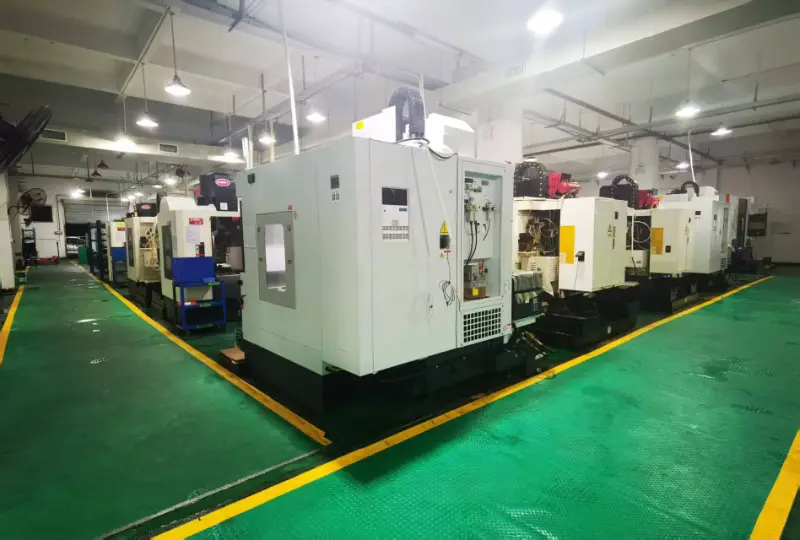
Soft machining refers to the cutting and machining of materials with relatively low hardness, or materials in an unhardened or annealed state. Common materials include aluminum alloys, copper, brass, plastics, low-carbon steel, and steel parts before heat treatment. It is commonly used for CNC rough machining, semi-finishing, prototypes, and low-volume production. Its key characteristics are low cutting resistance, high machining efficiency, reduced tool wear, and more controllable overall cost. In simple terms, soft machining means machining a material while it is easier to cut, thereby improving efficiency and reducing the difficulty of subsequent machining operations.
Material Selection
Soft Metals and Non-Ferrous Metals
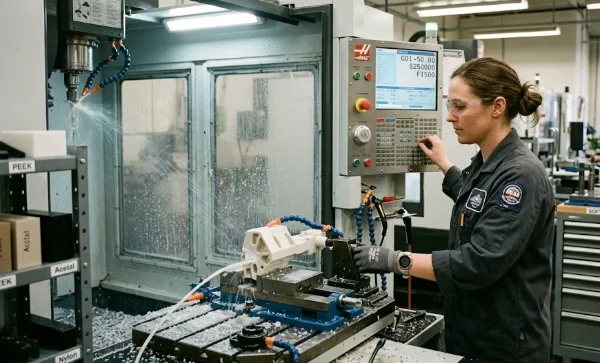
Soft metals and non-ferrous metals are the most common material types in soft machining, mainly including aluminum alloys, copper, brass, and low-carbon steel. These materials have relatively low hardness and low cutting resistance, making them suitable for machining complex structural parts, small precision components, and prototype parts through CNC milling, turning, drilling, and other processes. However, some of these materials have high toughness and strong ductility, so problems such as built-up edge, burrs, or surface scratches can occur during machining. Therefore, the cutting tools, cutting parameters, and cooling method must be selected properly.
Plastics and Polymer Materials
Plastics and polymer materials include PE, PP, PVC, PTFE, PET, PA, epoxy resin, polyurethane, silicone rubber, and others. They are commonly used for insulating parts, medical components, fixtures, housings, and lightweight parts. These materials have low density and are easy to form, but they have poor thermal conductivity. During machining, heat buildup can easily cause deformation, melted edges, or burrs. Therefore, sharp cutting tools should be used when machining plastics, and spindle speed, feed rate, and cutting heat should be properly controlled to ensure dimensional stability and surface quality.
Composite Materials
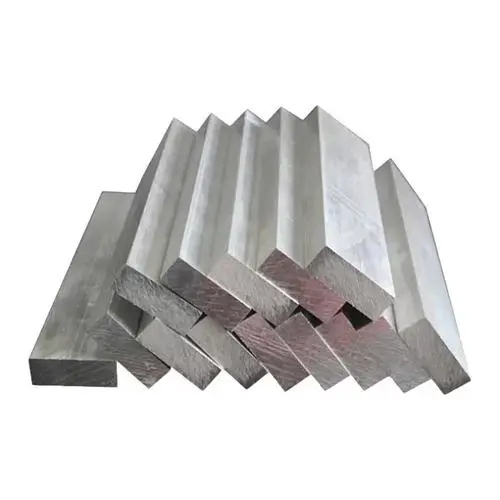
Composite materials mainly include carbon fiber-reinforced materials, glass fiber-reinforced materials, and other hybrid reinforced materials. They are not necessarily low-hardness materials, but in the context of soft machining, they are often used for forming and trimming rapid prototypes, lightweight structural parts, and special functional components. Since composite materials usually have layered or fiber-reinforced structures, machining can easily cause delamination, burrs, fiber pull-out, or edge chipping. Special cutting tools, stable fixturing methods, and appropriate cutting parameters are required to maintain material integrity.
Soft-Touch and Elastic Materials
Soft-touch and elastic materials include TPE, PU, liquid silicone rubber, rubber, latex, and similar materials. They are commonly used for vibration-damping pads, seals, flexible connectors, skin-like touch components, and cushioning structures. These materials have high elasticity and a wide hardness range, and they deform easily under force. As a result, they place higher requirements on fixturing, tool sharpness, and machining paths. Some materials are more suitable for silicone molds, soft tooling, casting, or replication molding to obtain a stable shape and better surface finish.
Biocompatible and Micro/Nano Soft Materials
Biocompatible polymers and micro/nano soft materials include agar, agarose, organic monolayer materials, and others. They are commonly found in biomedical applications, microfluidics, lab-on-a-chip devices, and micro/nano structure manufacturing. These materials are usually not mass-machined by conventional CNC methods; instead, they are more often processed through soft lithography, pattern transfer, replication molding, and similar techniques. The focus is on maintaining biocompatibility, microstructure accuracy, and surface integrity, making them suitable for microchannels, flexible templates, and experimental functional structures.
Common Soft Machining Processes
Milling
Milling uses a conventional milling machine or CNC equipment to control a rotating cutting tool to cut the workpiece. It is suitable for machining complex contours, cavities, step surfaces, and parts with tight tolerances, and is commonly used for plastics, composite materials, aluminum alloys, and similar materials.
Turning
Turning removes material by rotating the workpiece and moving the cutting tool. It is mainly used for cylindrical parts, shafts, and rotational components, and is suitable for efficient machining of soft metals, plastics, and similar materials.
Drilling
Drilling is used to create round holes in a workpiece. It is often combined with CNC operations to machine locating holes, assembly holes, and thread pilot holes, and is suitable for most soft materials.
Grinding
Grinding uses abrasive grains on a grinding wheel to perform micro-cutting. It is suitable for surface finishing, dimensional correction, or tight tolerance control on soft materials, but attention must be paid to grinding wheel loading, heat dissipation, and surface scratches.
Laser Cutting
Laser cutting uses a high-energy laser beam to locally melt or vaporize the material. It is suitable for rapid cutting of sheet materials, films, plastics, and some soft materials, offering high speed and high contour accuracy.
Waterjet Cutting
Waterjet cutting uses a high-pressure water jet or abrasive waterjet to cut materials. It is suitable for heat-sensitive materials and can avoid heat-affected zones and thermal deformation. It is commonly used for plastics, rubber, composite materials, and soft metal sheets.
Chemical Etching
Chemical etching selectively removes material through a chemical solution. It is suitable for thin sheets, films, and fine pattern machining, and can produce complex structures and fine contours, but the etching depth and surface quality must be strictly controlled.
Rough Machining and Semi-Finishing
Rough Machining
Rough machining is the first step in machining. It quickly removes most of the excess material from the blank so that the part first approaches its approximate final shape. This stage does not pursue very high precision or surface finish. The focus is on improving machining efficiency and leaving suitable stock allowance for subsequent semi-finishing, finishing, or heat treatment.
For parts that require heat treatment, rough machining is usually performed before heat treatment because the material is easier to cut in its unhardened state, which can reduce tool wear and machining time. After rough machining, the part may go through stress relief, quenching, tempering, and other treatments, and then be finished to correct dimensions and surface quality. Since heat treatment may cause slight deformation, the part should not be machined directly to its final dimensions during rough machining; stock allowance should be reserved in advance.
Semi-Finishing
Semi-finishing is a transitional process between rough machining and finishing. Its main role is to create more stable machining conditions for final finishing. After rough machining, it further corrects the part shape and dimensions, removes uneven stock allowance, and makes the cutting allowance for subsequent finishing more uniform.
Semi-finishing can reduce internal stress, deformation, and surface unevenness caused by rough machining, and it can also machine some secondary features in advance. This reduces tool load and dimensional fluctuation during finishing. Semi-finishing is not the final forming process, but it is an important step in ensuring final dimensional accuracy, geometric accuracy, and surface quality.
Inspection and Finishing
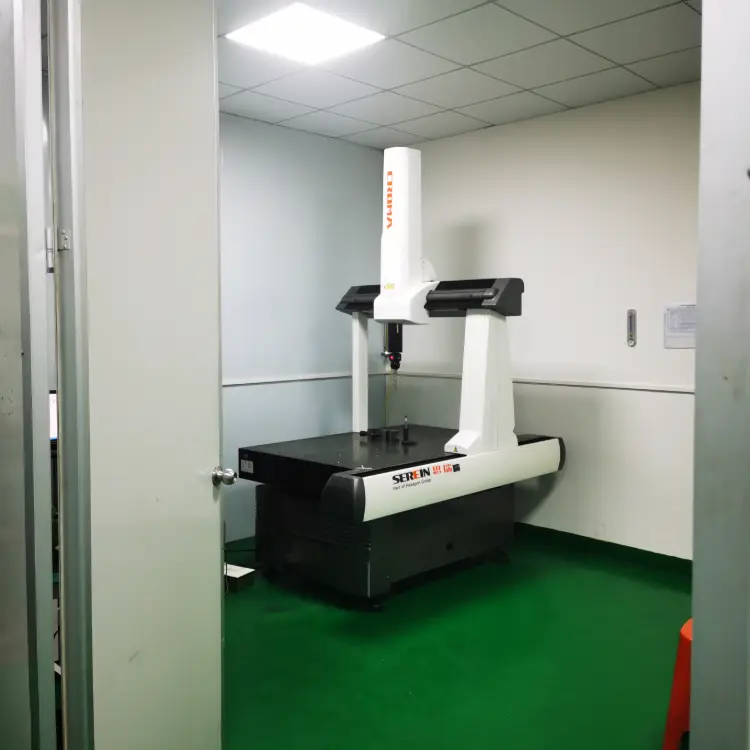
After machining, inspection and surface finishing are important steps for ensuring part quality and performance. Inspection is mainly used to confirm whether the part meets drawing requirements, including dimensional accuracy, geometric tolerances, surface roughness, hardness, and defect conditions. Common equipment includes CMMs, calipers or micrometers, surface roughness testers, hardness testers, and non-destructive testing equipment. To ensure reliable results, the inspection environment should be controlled, equipment should be calibrated regularly, operating procedures should be standardized, and data should be recorded and traceable.
Surface finishing improves the surface performance and appearance of a part through physical or chemical methods. Common processes include sandblasting, polishing, anodizing, electroplating, black oxide, painting, and passivation. Different processes can improve wear resistance, corrosion resistance, oxidation resistance, or appearance. In actual selection, the process should be determined based on material, service environment, drawing requirements, and cost, with particular attention to pre-treatment cleanliness, process parameters, and coating adhesion strength.
Soft Machining vs Hard Machining
The core difference between soft machining and hard machining lies in material hardness and machining condition. Soft machining is used for low-hardness or unhardened materials and emphasizes efficiency, cost, and rapid forming; hard machining is used for quenched or high-hardness materials and emphasizes wear resistance, dimensional stability, and service life.
| Comparison Dimension | Soft Machining | Hard Machining |
| Machining Object | Low-hardness or unhardened materials | Quenched or high-hardness materials |
| Common Materials | Aluminum, copper, brass, low-carbon steel, annealed steel, plastics | Quenched steel, tool steel, mold steel, bearing steel, case-hardened steel |
| Machining Difficulty | Lower | Higher |
| Machining Efficiency | High; suitable for rapid material removal | Lower, but can replace some grinding operations |
| Tool Requirements | High-speed steel, carbide, sharp-edge cutting tools | PCBN, ceramic tools, coated carbide tools, etc. |
| Cost Characteristics | Lower machining cost and lower tool consumption | Higher tool and equipment costs |
| Common Problems | Material adhesion, burrs, deformation, built-up edge | Edge chipping, high cutting heat, tool wear, risk of surface cracks |
| Process Goal | Improve efficiency, reduce cost, and achieve rapid forming | Improve wear resistance, precision stability, and service life |
Applications of Soft Machining
Aerospace
Used to manufacture complex structural parts such as cabin components, wing ribs, engine housings, and landing gear components, meeting requirements for lightweight design, precision, and structural reliability.
Medical Devices
Used for rapid prototyping and precision machining of orthopedic implants, surgical instruments, endoscopic tools, and diagnostic equipment components.
Electronics and Semiconductors
Used to machine precision components such as PCB boards, equipment housings, connectors, sensors, wafer carriers, and gas distribution channels.
Consumer Products and High-End Manufacturing
Used for precision forming and surface finishing of parts such as jewelry, musical instrument components, high-end furniture, consumer electronics frames, and earphone cavities.
Automotive and Molds
Used for prototype validation of automotive parts, custom interior components, and cavity machining of precision molds such as injection molds and die-casting molds.
Common Challenges and Solutions in Soft Machining
Fixturing Deformation and Positioning Difficulty
Soft materials have relatively low rigidity. Thin-walled parts, plastic parts, rubber parts, and soft metal parts are easily crushed or elastically deformed during clamping. After unclamping, they may also rebound, causing dimensions to exceed tolerance. The solution is to use vacuum chucks, flexible soft jaws, low-stress pressure plates, or dedicated fixtures to distribute clamping force evenly; auxiliary supports or temporary filling materials can be added when necessary to improve machining rigidity.
Built-Up Edge, Poor Chip Evacuation, and Unstable Surface Quality
Materials such as aluminum, copper, and plastics tend to produce continuous chips. When chip evacuation is poor, secondary cutting, material adhesion, and built-up edge can occur, affecting surface quality and tool life. Sharp cutting edges, large rake angles, and polished chip flutes should be used, together with air cooling, internal cooling, minimum quantity lubrication, or suitable cutting fluid to remove chips and reduce heat in time.
Cutting Vibration and Dimensional Fluctuation
When machining deep cavities, thin walls, or long tool overhangs, insufficient system rigidity can easily cause chatter, tool deflection, vibration marks, or even tool breakage. Stability can be improved by shortening tool overhang, using anti-vibration tool holders, reducing cutting load, and adopting small depth of cut, multi-pass cutting, high spindle speed, and low feed per tooth.
Internal Stress Release and Dimensional Drift
After a large amount of material is removed during rough machining, residual stress inside the material redistributes, which can lead to subsequent part deformation or dimensional drift. This is especially obvious in aluminum alloys, plastics, thin-walled parts, and long shaft parts. A process route of “rough machining → natural aging or stress relief → semi-finishing → finishing” is recommended, with reasonable stock allowance left after rough machining to facilitate later dimensional correction.
Thermal Deformation and Temperature Sensitivity
Plastics, rubber, copper, and some aluminum alloys are sensitive to cutting heat. Heat buildup can easily cause expansion, softening, melted edges, or dimensional deviation. During machining, sharp tools, smaller depths of cut, and stable feed should be used, long continuous cutting should be avoided, and air cooling, minimum quantity lubrication, or suitable cooling methods should be selected according to the material. Precision parts should also be machined and inspected in a temperature-controlled environment.
Difficulties in Deep Cavities, Thin Walls, and Irregular Structures
Deep-cavity parts are prone to chatter because of excessive tool overhang; thin-walled parts are easily deformed by cutting force and clamping force; irregular parts often have unstable datums and poor tool accessibility. Stability can be improved through dedicated fixtures, auxiliary supports, layered cutting, symmetrical machining, anti-vibration tool holders, high-pressure internal cooling, or five-axis machining. During the design stage, the depth-to-width ratio, corner radius, and machining accessibility should also be optimized.
Inspection Condition and Dimensional Consistency Control
Soft material parts are easily affected by clamping force, temperature, and rebound, which can lead to different inspection results in clamped and free states. The inspection condition should be clearly defined in the drawing or inspection specification, and CMMs, optical measuring equipment, or dedicated gauges should be used for inspection. For high-precision parts, the temperature and humidity of the inspection environment should also be controlled, and data should be recorded and traceable.
Tool Wear and Process Stability
Soft material machining can also cause tool wear due to material adhesion, built-up edge, abrasive reinforced materials, or poor chip evacuation, which in turn affects dimensions and surface quality. Tool cutting edges should be checked regularly, and dulled tools should be replaced in time. When machining composite materials, glass fiber-reinforced plastics, or carbon fiber materials, coated carbide tools, diamond tools, or dedicated grinding tools should be selected.
Design Tips for Soft Machined Parts
Use Radiused Transitions for Internal Corners
Soft machined parts should avoid sharp internal right angles because milling cutters cannot directly machine perfectly square internal corners. Radiused transitions should be used in the design. The corner radius should be no smaller than the tool radius and preferably slightly larger than the commonly used tool radius, so as to reduce corner-clearing operations and improve machining efficiency.
Control Deep Cavities, Narrow Slots, and Thin-Walled Structures
Deep cavities, narrow slots, and thin-walled structures can easily cause chatter, tool breakage, chip evacuation difficulty, and part deformation. During design, overly deep, narrow, or thin structures should be avoided. Slot width should be no smaller than the tool diameter whenever possible; wall thickness can be increased or ribs can be added in weak areas to improve machining rigidity and stability.
Set Tolerances Reasonably
Soft materials are easily affected by cutting force, clamping force, and temperature. Overly tight tolerances increase machining difficulty, inspection cost, and scrap risk. During design, key dimensions and non-critical dimensions should be distinguished. Tight tolerances should be applied only to fitting surfaces, sealing surfaces, locating surfaces, and other critical areas, while general machining tolerances can be used for other dimensions.
Use Standard Holes and Standard Threads First
Hole diameters and threads should use standard sizes whenever possible, avoiding excessive non-standard holes, small holes, and small threads. Standard holes and standard threads can reduce custom tooling and tool changes while improving machining stability. For blind holes, the drill point angle, tapping depth, and machining allowance should also be considered.
Reserve Machining Allowance and Use Unified Datums
Soft materials may deform, rebound, or fluctuate dimensionally during machining, so reasonable allowance should be reserved on key machined surfaces for later correction. Stable datum surfaces or locating holes should also be designed, and unified datums should be used as much as possible to reduce accumulated errors caused by multiple setups.
Consider Fixturing and Surface Finishing Effects in Advance
If soft machined parts lack suitable clamping positions, they can easily be crushed, clamping-deformed, or positioned unstably during machining. Process bosses, clamping edges, locating holes, or dedicated clamping surfaces can be added during design to distribute clamping force evenly. If the part requires anodizing, electroplating, painting, passivation, or other surface treatments, coating thickness and dimensional compensation should also be considered in advance to avoid affecting assembly accuracy after finishing.
Surface Finishing Options for Soft Machined Parts
Aluminum Alloy Parts
Common processes for aluminum alloys include anodizing, hard anodizing, chemical conversion coating, sandblasting, painting, and electroplating. Anodizing can form a dense oxide film to improve corrosion resistance, wear resistance, and decorative appearance. Sandblasting can remove tool marks, create a uniform matte surface, and improve coating adhesion. Anodizing and electroplating change part dimensions, so film thickness allowance should be reserved in advance for precision fitting areas.
Copper Alloy Parts
Common processes for copper alloys include polishing, passivation, anti-oxidation treatment, nickel plating, tin plating, gold plating, and chrome plating. They are mainly used for oxidation prevention, improved conductivity, solderability, or decorative appearance. Electronic connectors and conductive terminals often use tin plating or gold plating; decorative parts often use polishing or electroplating. Copper alloy surfaces oxidize easily, so pre-treatment cleanliness and coating adhesion are critical.
Low-Hardness Steel or Stainless Steel Parts
Low-hardness steel or stainless steel parts commonly use passivation, black oxide, sandblasting, zinc plating, nickel plating, and painting. Passivation can remove free iron from the surface and form a stable passive film, improving corrosion resistance with almost no dimensional change. It is suitable for medical devices, food equipment, and precision structural parts. If rust prevention, wear resistance, or decorative appearance is required, black oxide, electroplating, or painting can be selected according to the service environment.
Engineering Plastic Parts
Engineering plastics commonly use painting, vacuum metallization, plastic electroplating, screen printing, pad printing, and polishing. Painting can improve color, gloss, touch feel, and scratch resistance. Vacuum metallization and plastic electroplating can give plastic parts a metallic appearance, conductive shielding, or decorative effect. Because plastics have relatively low surface energy, cleaning, roughening, activation, or primer coating is usually required before treatment to ensure coating adhesion.
Summary
Soft machining is suitable for efficient machining of low-hardness or unhardened materials, especially prototypes, low-volume parts, complex structural parts, and pre-machining before heat treatment. To obtain stable machining quality, suitable processes must be selected based on material characteristics, and systematic control should be applied to fixturing, tooling, cutting parameters, cooling and chip evacuation, heat treatment allowance, inspection, and surface finishing. A reasonable soft machining solution not only improves machining efficiency but also reduces tool wear, avoids machine tool deflection, reduces the risk of workpiece deformation, and lays a solid foundation for subsequent finishing and final service performance.