L'alliage d'aluminium 6063 est l'un des matériaux représentatifs des alliages d'aluminium de la série Al-Mg-Si. En raison de ses excellentes performances d'extrusion, de sa qualité de surface et de sa résistance à la corrosion, il est largement utilisé dans les profilés architecturaux, les profilés industriels et les composants structurels décoratifs. Les sections suivantes présentent systématiquement les caractéristiques du matériau, les propriétés mécaniques, la classification des états, les domaines d'application, la comparaison avec le 6061, les applications d'extrusion et les principales formes de produits.
Composition chimique et caractéristiques de l'alliage d'aluminium 6063
L'alliage d'aluminium 6063 est un alliage d'aluminium de résistance moyenne, pouvant être traité thermiquement, dont les principaux éléments d'alliage sont le magnésium (Mg) et le silicium (Si). Ces deux éléments forment la phase de renforcement Mg₂Si lors du traitement thermique, améliorant ainsi les propriétés mécaniques du matériau. Ses performances équilibrées en font l'un des matériaux les plus utilisés pour les profilés architecturaux et les profilés décoratifs pour portes et fenêtres.
Composition chimique de l'alliage d'aluminium 6063 (pourcentage de poids)
| Al | Si | Mg | Fe | Cu | Mn | Cr | Zn | Ti | Autres éléments |
| Équilibre | 0.2-0.6 | 0.45-0.9 | ≤0.35 | ≤0.1 | ≤0.1 | ≤0.1 | ≤0.1 | ≤0.1 | Unique ≤0,05, Total ≤0,15 |
Description de chaque élément
Aluminium (Al) : L'aluminium est le principal élément de la matrice de l'alliage d'aluminium 6063, représentant la majeure partie de la composition de l'alliage. Il confère au matériau des caractéristiques de légèreté, de bonne conductivité thermique et de résistance à la corrosion.
Silicium (Si) : Le silicium se combine au magnésium pour former la phase de renforcement Mg₂Si, qui augmente la résistance et la dureté de l'alliage tout en améliorant la formabilité par extrusion.
Magnésium (Mg) : Le magnésium est l'un des principaux éléments de renforcement. Il améliore considérablement la solidité et la résistance à la corrosion du matériau et renforce l'efficacité du traitement thermique.
Fer (Fe) : Le fer est généralement un élément impur. Sa teneur doit être contrôlée pour éviter d'affecter la plasticité et la qualité de surface du matériau.
Cuivre (Cu) : La teneur en cuivre est relativement faible et fournit principalement un renforcement mineur. L'excès de cuivre peut réduire la résistance à la corrosion, c'est pourquoi il est strictement limité dans le 6063.
Manganèse (Mn) : Le manganèse contribue à améliorer la microstructure du matériau et peut renforcer la solidité et la résistance à la corrosion dans une certaine mesure.
Chrome (Cr) : Le chrome affine la structure du grain et améliore la résistance à la corrosion sous contrainte du matériau, rendant la structure plus stable.
Zinc (Zn) : Le zinc est généralement présent sous forme de traces et a peu d'influence sur l'alliage, mais des quantités excessives peuvent réduire la résistance à la corrosion.
Titane (Ti) : Le titane est principalement utilisé pour affiner le grain. Il améliore la structure de coulée des alliages d'aluminium et les performances de traitement.
Propriétés mécaniques de l'alliage d'aluminium 6063 à différentes températures
L'alliage d'aluminium 6063 peut obtenir différentes propriétés mécaniques grâce à divers traitements thermiques ou conditions de transformation (températures). Les températures les plus courantes sont O, T4, T5 et T6, parmi lesquelles T5 et T6 sont les plus utilisées dans les profilés industriels et architecturaux. Les propriétés mécaniques typiques sous différentes températures sont indiquées dans le tableau ci-dessous.
| Tempérer | Résistance à la traction (MPa) | Limite d'élasticité (MPa) | Élongation (%) | Dureté/module Description |
|---|---|---|---|---|
| O (état recuit) | ≤131 | 48 | ≥18 | Faible dureté, module d'élasticité d'environ 69 GPa |
| T4 / T42 (Traitement thermique de mise en solution + vieillissement naturel) | ≥124-131 | ≥62-69 | ≥14 | Dureté moyenne, module d'élasticité d'environ 69 GPa |
| T5 (vieillissement artificiel après extrusion) | ≥145-152 | ≥103-110 | ≥8 | Dureté typique d'environ 60-65 HB, module d'élasticité d'environ 69 GPa |
| T52 (Traitement anti-stress) | 152-207 | 110-172 | ≥8 | Dureté typique d'environ 60-65 HB, module d'élasticité d'environ 68-69 GPa |
| T6 / T62 (Traitement thermique de mise en solution + vieillissement artificiel) | ≥207 | ≥172 | ≥8-10 | Dureté typique d'environ 73 HB, module d'élasticité d'environ 69 GPa |
Description de l'état de santé
6063 - État O : État entièrement recuit. Ce matériau est le plus souple et présente la meilleure plasticité et formabilité.
6063 - T4 Temper : Vieillissement naturel après traitement thermique de mise en solution, adapté aux pièces nécessitant un traitement ultérieur.
6063 - T5 Temper : Vieillissement artificiel directement après l'extrusion. C'est l'un des états les plus courants pour les profilés architecturaux et industriels.
6063 - État T52 : Traitement de détente basé sur T5, améliorant la stabilité dimensionnelle et réduisant la déformation.
6063 - T6 Temper : Vieillissement artificiel après traitement thermique de mise en solution, offrant la plus grande résistance et convenant aux profils structurels industriels exigeant une capacité de charge plus élevée.
Principales caractéristiques
1. Excellentes performances d'extrusion
L'alliage d'aluminium 6063 possède une bonne plasticité et une bonne fluidité du métal, ce qui le rend particulièrement adapté à la production de profilés en aluminium de section complexe par extrusion, tels que les profilés pour portes et fenêtres, les profilés pour murs-rideaux, les profilés pour cadres industriels et les profilés pour dissipateurs de chaleur. Il est largement utilisé dans l'industrie de fabrication de profilés.
2. Bonne performance en matière de traitement de surface
L'alliage d'aluminium 6063 présente une excellente qualité de surface et permet d'obtenir des finitions de surface uniformes et attrayantes. Il convient parfaitement à divers traitements de surface tels que l'anodisation, le revêtement électrophorétique, le revêtement en poudre et l'impression par transfert de grain de bois, ce qui le rend couramment utilisé dans la décoration architecturale et les produits exigeant une qualité d'aspect élevée.
3. Forte résistance à la corrosion
En tant qu'alliage de la série Al-Mg-Si, le 6063 présente une bonne résistance à la corrosion et ne se corrode pas facilement dans les environnements atmosphériques et industriels généraux. Il convient pour une utilisation à long terme dans les structures architecturales extérieures et les profilés décoratifs, mais il ne doit pas être exposé au brouillard salin, en particulier dans des situations de corrosion électrochimique sévère, où la corrosion peut se produire.
4. Bonne soudabilité
L'alliage d'aluminium 6063 présente une bonne soudabilité et peut être soudé à l'aide de méthodes courantes telles que le soudage TIG et le soudage MIG. Après le soudage, il peut encore conserver une résistance structurelle et une stabilité relativement bonnes.
Principaux domaines d'application et composants de l'alliage d'aluminium 6063
En raison de ses excellentes performances d'extrusion, de sa bonne capacité de finition de surface et de sa forte résistance à la corrosion, l'alliage d'aluminium 6063 est largement utilisé dans les domaines de la construction, des équipements industriels et de la dissipation de la chaleur électronique.
Industrie de la construction
Dans le domaine de la construction, l'alliage d'aluminium 6063 est principalement utilisé pour les profilés de portes et de fenêtres, les composants structurels des murs-rideaux, les profilés de garde-corps et les garnitures décoratives. Ses bonnes performances d'extrusion permettent la production de profils à section transversale complexe, tandis que son excellente capacité de traitement de surface le rend adapté aux processus d'anodisation et de revêtement, répondant à la fois aux exigences décoratives et structurelles.
Domaine industriel
Dans les applications industrielles, l'alliage d'aluminium 6063 est couramment utilisé dans les châssis d'équipements d'automatisation, les structures de systèmes de convoyage, les boîtiers mécaniques et les supports industriels. Ce matériau est léger, présente une résistance modérée et offre une bonne usinabilité, répondant ainsi aux besoins des structures d'équipements industriels et des conceptions modulaires.
Domaine de l'électronique
Dans l'industrie électronique, l'alliage d'aluminium 6063 est principalement utilisé pour les dissipateurs de chaleur des LED, les boîtiers d'équipement électronique et les profils de dissipateurs de chaleur des unités centrales. Sa bonne conductivité thermique et sa capacité d'extrusion permettent de créer des structures de dissipation thermique complexes, améliorant ainsi l'efficacité de la dissipation thermique et la stabilité opérationnelle.
Avantages, inconvénients et différences entre l'aluminium 6063 et l'aluminium 6061
Les alliages 6063 et 6061 appartiennent tous deux à la série des alliages d'aluminium Al-Mg-Si, mais leurs applications et leurs performances sont différentes.
Comparaison de la composition
| Alliage | Si (%) | Mg (%) | Cu (%) | Cr (%) | Fe (%) | Mn (%) | Al |
|---|---|---|---|---|---|---|---|
| 6061 | 0.40-0.80 | 0.80-1.20 | 0.15-0.40 | 0.04-0.35 | ≤0.70 | ≤0.15 | Équilibre |
| 6063 | 0.20-0.60 | 0.45-0.90 | ≤0.10 | ≤0.10 | ≤0.35 | ≤0.10 | Équilibre |
Explication des principales différences entre les éléments
Différentes teneurs en magnésium (Mg)
La teneur en magnésium de l'alliage d'aluminium 6061 est généralement plus élevée que celle de l'alliage 6063, ce qui permet à l'alliage 6061 d'atteindre une résistance plus élevée après traitement thermique. Il est souvent utilisé pour les structures mécaniques et les composants d'ingénierie.
Différentes teneurs en silicium (Si)
La teneur en silicium du 6061 est également légèrement plus élevée, ce qui contribue à améliorer la résistance du matériau, tandis que la teneur en silicium plus faible du 6063 favorise le traitement par extrusion et une meilleure qualité de surface.
Différentes teneurs en cuivre (Cu)
Le 6061 contient une certaine quantité de cuivre, ce qui améliore encore la solidité mais réduit légèrement la résistance à la corrosion. En revanche, le 6063 contient très peu de cuivre, ce qui lui confère une meilleure résistance à la corrosion et de meilleures performances en matière de finition de surface.
Différentes teneurs en chrome (Cr)
Le 6061 contient du chrome pour améliorer la microstructure et renforcer la résistance à la corrosion par l'eau de mer, tandis que le 6063 a généralement une teneur en chrome plus faible et n'est pas adapté aux environnements chlorés tels que l'eau de mer.
Avantages et inconvénients de l'alliage d'aluminium 6063
Avantages
L'alliage d'aluminium 6063 a d'excellentes performances d'extrusion et peut produire des profils d'aluminium avec des sections transversales complexes. Il est donc largement utilisé dans les applications de profilés architecturaux et industriels. Par ailleurs, ce matériau présente une excellente qualité de surface et se prête aux traitements d'anodisation et de revêtement, ce qui permet d'obtenir des finitions de surface uniformes et attrayantes et d'assurer une qualité globale élevée des profilés.
Inconvénients
Comparé à l'alliage d'aluminium 6061, l'alliage d'aluminium 6063 a une résistance relativement plus faible. Il n'est donc pas adapté aux composants structurels à haute résistance ou aux pièces mécaniques lourdes qui supportent des charges importantes. Dans les scénarios nécessitant des performances structurelles plus élevées, les alliages tels que le 6061 sont généralement préférés.
Principales formes de produits de l'alliage d'aluminium 6063
L'alliage d'aluminium 6063 possède une bonne plasticité et de bonnes propriétés d'extrusion. Il peut donc être transformé en diverses formes de produits par différentes méthodes de traitement pour répondre aux besoins de la construction, de l'équipement industriel et des produits électroniques.
Extrusions d'aluminium
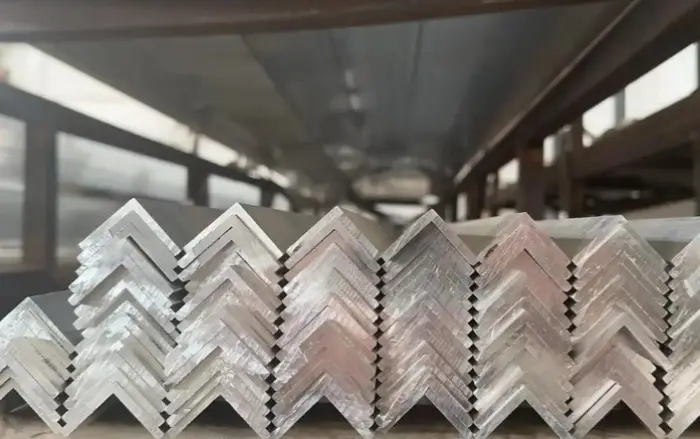
Les profilés en aluminium 6063 sont principalement produits par extrusion à chaud. Les billettes d'aluminium chauffées sont extrudées dans des moules pour former des profilés de différentes sections. Ils présentent une grande précision dimensionnelle et une bonne qualité de surface et sont largement utilisés dans les portes et fenêtres architecturales, les structures de murs-rideaux, les cadres industriels et les profils de dissipateurs thermiques. Les processus suivants peuvent inclure anodisation, le revêtement, le découpage, et Usinage CNC.
Barres en aluminium
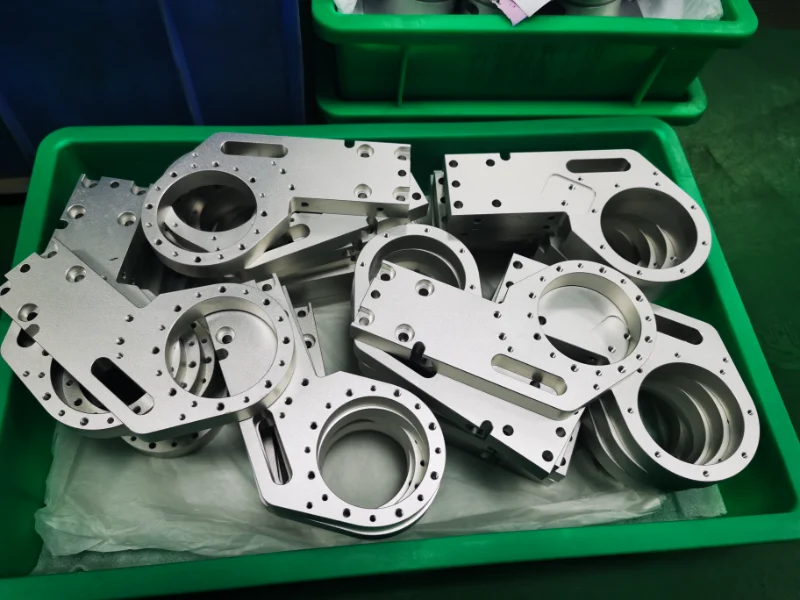
Les barres d'aluminium 6063 sont généralement produites par extrusion ou par laminage, pour former des barres rondes ou carrées. Elles présentent une bonne usinabilité et sont couramment utilisées pour les composants mécaniques, les supports structurels et les pièces usinées par CNC, avec d'autres procédés tels que le tournage, fraisageLes travaux d'usinage, de perçage et de finition de la surface.
Tubes en aluminium
Tubes en aluminium 6063 sont généralement produits à l'aide de filières d'extrusion creuses et peuvent être fabriqués en différentes dimensions. Ils sont légers et résistants à la corrosion et sont souvent utilisés pour les tubes structurels, les tubes décoratifs et les composants de châssis d'équipement. Les autres procédés comprennent le cintrage, le soudage et la finition de surface.
Tôles d'aluminium
Les tôles d'aluminium 6063 sont généralement produites par laminage. Elles présentent une bonne qualité de surface et une bonne résistance à la corrosion et sont couramment utilisées pour les panneaux décoratifs, les boîtiers d'équipement et les pièces structurelles légères. Le post-traitement peut inclure l'estampage, le pliage, la découpe et l'anodisation.
Fil d'aluminium
Le fil d'aluminium 6063 est produit par des tréfileuses utilisant un processus d'étirage à froid. Il présente une bonne conductivité électrique et peut être transformé par tissage, soudage ou revêtement plastique. Il est utilisé pour la fabrication de fils électriques et de conducteurs de câbles, de blindages de câbles, de fils de mise à la terre, de structures de protection contre les interférences électromagnétiques, ainsi que de paniers, de grillages décoratifs et de structures d'éclairage.
L'aluminium 6063 est-il de qualité marine ?
L'alliage d'aluminium 6063 n'est généralement pas considéré comme un alliage d'aluminium de qualité marine. Bien qu'il présente une certaine résistance à la corrosion, sa résistance à la corrosion de l'eau de mer n'est pas aussi forte que les alliages d'aluminium de qualité marine typiques tels que les alliages 5052, 5083 et 5086. C'est pourquoi il n'est généralement pas utilisé dans les structures marines qui sont exposées à l'eau de mer pendant de longues périodes.
Le 6061 ou le 6063 est-il plus facile à souder ?
Le 6063 contient moins d'éléments d'alliage et est plus souple, ce qui réduit le risque de fissuration pendant le soudage et entraîne moins de déformation après le soudage. En revanche, le 6061 a une résistance plus élevée et contient du cuivre. Sa résistance diminue plus fortement après le soudage, ce qui le rend relativement plus difficile à souder.
Résumé
Après avoir compris les caractéristiques et la composition de l'alliage d'aluminium 6063, il devient plus facile de sélectionner le matériau d'alliage d'aluminium approprié dans la transformation industrielle. L'alliage 6063 convient mieux à la production par extrusion de profils à section transversale complexe, tandis que l'alliage 6061, en raison de sa plus grande résistance, convient mieux aux composants structurels nécessitant une plus grande capacité de charge. Si vous souhaitez en savoir plus ou obtenir un devis pour le 6063 services d'usinage des alliages d'aluminiumvous pouvez nous contacter et laisser un message.