
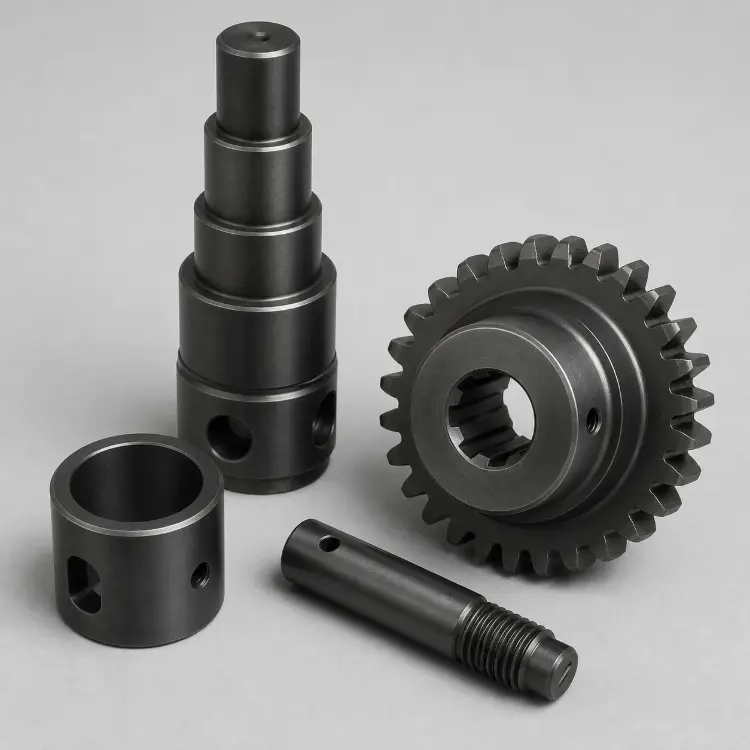
La nitruration est couramment utilisée pour les engrenages, les arbres, les moules et les composants hydrauliques. Elle permet d'augmenter la dureté superficielle, la résistance à l'usure et la résistance à la fatigue, tout en conservant la résistance et la ténacité du cœur du matériau.
Pour les acheteurs de pièces sur mesure, il ne suffit pas d’indiquer simplement “ nitruration ” sur un plan. L’état du matériau, la dureté de surface, la profondeur de dureté après nitruration, la couche de transition et les tolérances dimensionnelles ont tous une incidence sur le résultat final. Ces exigences déterminent également directement le coût et le délai de livraison.
Ce guide présente le processus, les matériaux, les coûts et les contrôles qualité liés à la nitruration. Il aide les équipes chargées des achats à définir des exigences claires pour les pièces nitrurées.
Qu'est-ce que la nitruration ?
La nitruration est un procédé thermochimique de durcissement superficiel. La pièce à traiter est chauffée dans un milieu contenant de l'azote actif. Les atomes d'azote sont absorbés par la surface du métal et se diffusent progressivement dans le matériau.
La température de nitruration reste inférieure à la température Ac₁ de l'acier. L'acier ne subit pas d'austénitisation complète, et aucune trempe n'est nécessaire après le traitement.
La nitruration permet principalement d'améliorer :
- Dureté de surface et résistance à l'usure
- Résistance aux éraflures et au grippage
- Comportement à la fatigue de contact et à la fatigue en flexion
- Stabilité de surface à des températures élevées
- Résistance à la corrosion dans des environnements spécifiques
La nitruration durcit la surface plutôt que l'ensemble de la section transversale. La microstructure du cœur continue de déterminer la capacité de charge globale. L'état de trempe et de revenu initial ainsi que la dureté du cœur revêtent donc une importance tout aussi grande.
Quelle est la différence entre la nitruration et la nitrocarburation ?
La nitruration classique consiste principalement à faire diffuser de l'azote à la surface du métal. La nitrocarburation permet d'introduire simultanément de l'azote et une petite quantité de carbone.
Le terme “ nitruration douce ” désigne généralement la nitrocarburation ferritique. Le qualificatif “ douce ” ne signifie pas que la surface traitée présente une faible dureté.
La nitrocarburation présente un cycle plus court et permet d'obtenir une couche de cémentation moins profonde. Elle convient aux aciers au carbone, aux aciers faiblement alliés et aux composants soumis à des charges légères ou modérées.
La nitruration classique est mieux adaptée aux aciers contenant de l'aluminium, du chrome, du molybdène ou du vanadium. Elle permet d'obtenir une zone de diffusion plus profonde et une dureté superficielle homogène.
Pourquoi la nitruration est-elle importante pour les pièces sur mesure ?
Les pièces sur mesure sont souvent soumises à des exigences strictes en matière de dimensions, de tolérances et de caractéristiques de surface. La nitruration permet de durcir les surfaces de travail sans durcir la pièce dans son ensemble. Ce procédé convient aux pièces de précision dont les dimensions sont déjà proches de leurs dimensions finales.
La nitruration permet également de contrôler séparément les propriétés de la surface et celles du cœur. La couche externe résiste à l'usure, aux rayures et à la fatigue de contact. Le cœur continue quant à lui de résister aux chocs, à la flexion et aux charges de torsion.
Le résultat de la nitruration est étroitement lié aux opérations de fabrication précédentes. Le choix du matériau, la trempe et le revenu, le détensionnement, la compensation dimensionnelle et le meulage de finition doivent être planifiés comme un seul et même parcours de fabrication.
Lorsque l'usinage et la nitruration ne sont pas correctement coordonnés, les problèmes suivants peuvent survenir :
- La température de revenu précédente est inférieure à la température de nitruration.
- Les dimensions dépassent les tolérances d'assemblage après la nitruration
- Un meulage excessif après nitruration enlève une trop grande partie de la couche de cémentation.
- Les zones masquées ne correspondent pas aux surfaces fonctionnelles
- La répartition des responsabilités entre l'atelier d'usinage et traitement thermique fournisseur
La nitruration doit donc être intégrée au plan de fabrication dès les phases de conception et d'appel d'offres. Elle ne doit pas être considérée comme une opération supplémentaire imprévue une fois l'usinage terminé.
Comment se forme une couche de nitruration ?
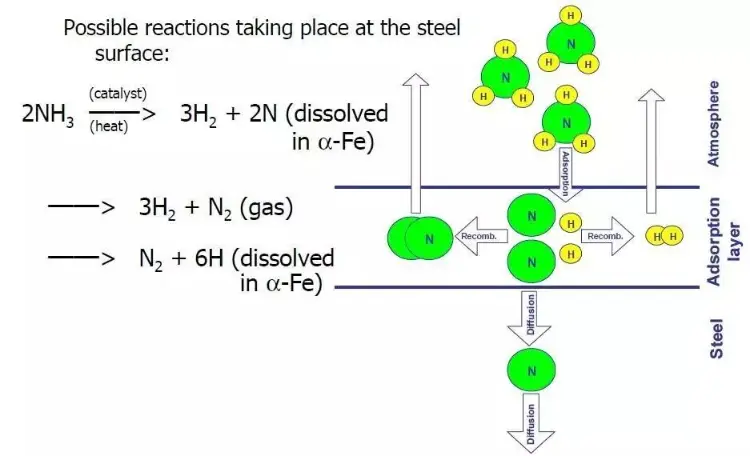
L'azote actif est d'abord adsorbé par la surface métallique, puis pénètre dans la matrice de fer. À mesure que la concentration en azote augmente, celui-ci réagit avec le fer et les éléments d'alliage pour former des nitrures.
L'aluminium, le chrome, le molybdène et le vanadium sont des éléments qui forment efficacement des nitrures. Les nitrures fins formés par ces éléments limitent la déformation plastique et augmentent la dureté superficielle.
La diffusion de l'azote génère également une contrainte de compression résiduelle à la surface. Cette contrainte empêche l'apparition de fissures de fatigue et améliore la durée de vie sous des charges cycliques.
Une surface nitrurée se compose généralement d'une couche composite et d'une zone de diffusion.
Couche composite
La couche composite se trouve à la surface la plus externe de la pièce. On l'appelle également « couche blanche ». Elle présente généralement des structures telles que γ′-Fe₄N, ε-Fe₂–₃N ou un mélange de ces deux phases.
Cette couche influe principalement sur la résistance à l'usure, le comportement au frottement, la résistance au grippage et la résistance à la corrosion.
Une couche de composé plus épaisse n'est pas toujours synonyme de meilleure qualité. Une couche blanche trop épaisse présente une plus grande fragilité et risque davantage de se fissurer en cas de choc ou de charges de contact élevées.
Zone de diffusion
La zone de diffusion se trouve sous la couche composite. Elle est constituée d'azote en solution solide et de nitrures d'alliage fins.
La zone de diffusion crée un gradient de dureté et renforce la couche composite externe. Pour les engrenages, les vilebrequins et les broches, la profondeur de diffusion influe directement sur la capacité de charge et la résistance à la fatigue.
Quels sont les principaux types de nitruration ?
| Processus | Température typique | Caractéristiques du cycle | Applications principales |
|---|---|---|---|
| Nitruration gazeuse | 480 à 580 °C | De quelques heures à plusieurs dizaines d'heures | Engrenages, arbres, vilebrequins, vis |
| Nitruration au plasma | 350 à 580 °C | En fonction du matériau et de la profondeur du boîtier | Pièces de précision, moules, outillages |
| Nitrocarburation au gaz | 560 à 590 °C | En général, entre 1 et 4 heures | Pièces en acier au carbone et en acier faiblement allié |
| Nitrocarburation en bain de sel | 540–590 °C | Chauffage rapide et cycles courts | Pièces d'usure et pièces automobiles à fort volume |
| Oxydation post-nitruration | Réalisé après la nitruration | Ajoute une étape d'oxydation | Pièces noires résistantes à l'usure et à la corrosion |
Les valeurs indiquées dans ce tableau servent à la sélection préliminaire des procédés. Les paramètres de production doivent être définis en fonction du matériau, du plan et de la norme de réception.
Nitruration gazeuse
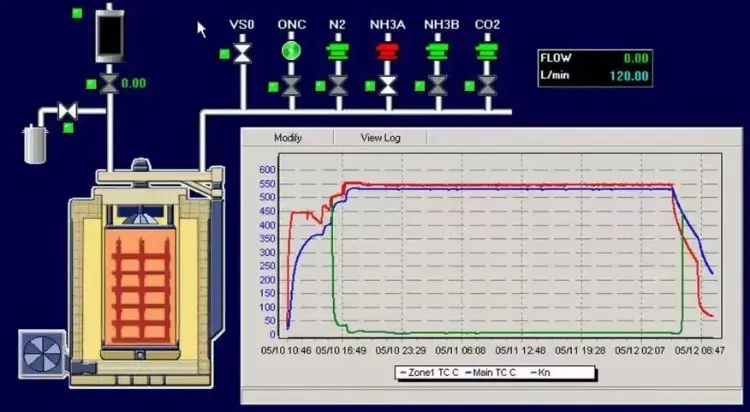
La nitruration gazeuse utilise une atmosphère contenant de l'azote pour générer de l'azote actif à la surface de l'acier. Les équipements modernes permettent de contrôler le résultat en ajustant la température, la durée et le potentiel de nitruration.
Ce procédé est adapté à la production en série. Il permet également de traiter des rainures, des petits trous et des surfaces complexes. Il est couramment utilisé pour les engrenages, les arbres de transmission et les vis d'extrudeuse qui nécessitent une zone de diffusion plus profonde.
Des procédés conventionnels mal maîtrisés peuvent donner lieu à une couche blanche trop épaisse ou trop cassante. La nitruration sous gaz contrôlée permet d'ajuster séparément la couche composite et la zone de diffusion.
Nitruration au plasma
La nitruration au plasma est également connue sous le nom de nitruration ionique. La pièce à traiter est soumise à une décharge luminescente au sein d'une atmosphère à basse pression contenant de l'azote.
Le bombardement ionique nettoie et active la surface. La structure des couches peut être ajustée en modifiant le rapport des gaz, la température, la pression et les paramètres électriques.
La nitruration au plasma convient aux arbres de précision, aux moules et aux outils. Elle facilite également le masquage sélectif. L'uniformité du traitement dans les trous borgnes profonds et les rainures étroites doit être évaluée séparément.
Nitrocarburation ferritique et QPQ
La nitrocarburation ferritique convient aux goupilles, aux petits engrenages, aux pièces hydrauliques et aux composants de transmission automobile. La brièveté de son cycle la rend particulièrement adaptée à la réalisation de couches de protection résistantes à l'usure de faible profondeur.
Le traitement QPQ comprend généralement la nitrocarburation, le polissage et la réoxydation. La surface traitée présente un aspect gris foncé ou noir et offre une bonne résistance à l'usure et à la corrosion.
Lors de l'achat de pièces traitées selon la norme QPQ, il convient de vérifier les exigences en matière de nettoyage, de résidus de sel, de post-oxydation et de conformité environnementale.
Avantages et inconvénients de la nitruration
| Avantage | Valeur de la pièce |
|---|---|
| Dureté superficielle élevée | Améliore la résistance à l'indentation et à la déformation plastique |
| Bonne résistance à l'usure | Réduit l'usure par glissement, par roulement et par abrasion |
| Faible distorsion de traitement | Convient aux pièces de précision dont les dimensions sont proches des dimensions finales |
| Bonnes performances en matière de fatigue | La contrainte de compression superficielle retarde l'apparition de fissures de fatigue |
| Préserve la résistance du noyau | Le noyau continue de résister aux chocs et aux charges structurelles |
| Permet un traitement sélectif | Les filetages, les surfaces d'accouplement et les zones de soudure peuvent être masqués |
| Inconvénient | Considérations relatives aux achats |
|---|---|
| En fonction de la composition du matériau | L'acier au carbone ordinaire ne permet pas d'obtenir le même résultat, à savoir une dureté élevée en profondeur, que l'acier nitruré. |
| Couche de cémentation relativement peu profonde | Ne convient pas aux pièces soumises à de fortes contraintes et nécessitant un trempage en profondeur |
| Cycle long pour les cas complexes | Une NHD plus élevée entraîne une augmentation des coûts et des délais de livraison |
| Risque de fragilité | Une couche de composé trop épaisse peut se fissurer ou s'écailler |
| Le changement dimensionnel se produit toujours | Les pièces de précision nécessitent une compensation et une validation du premier article |
| Exigences strictes concernant l'acier inoxydable | Une température inadaptée peut réduire la résistance à la corrosion d'origine. |
La nitruration convient aux composants qui nécessitent une dureté superficielle élevée, une bonne résistance à l'usure et une grande stabilité dimensionnelle. Il convient d'envisager la cémentation suivie d'une trempe ou le durcissement par induction lorsqu'une couche de durcissement profonde et une résistance élevée aux chocs sont requises.
Quels sont les matériaux adaptés à la nitruration ?
La composition du matériau détermine directement la dureté et la profondeur de cémentation obtenues après la nitruration. Les aciers contenant de l'aluminium, du chrome, du molybdène et du vanadium se prêtent bien à la nitruration.
| Catégorie de matériaux | Notes communes | Pièces typiques |
|---|---|---|
| Acier spécialement conçu pour la nitruration | 38CrMoAlA, 41CrAlMo7 | Engrenages, broches, composants du système d'alimentation en carburant |
| Acier allié au chrome-molybdène | 4140, 42CrMo, 4340 | Arbres, vilebrequins, engrenages, éléments de structure |
| Acier à outils pour travaux à chaud | H11, H13, SKD61 | Matrices de moulage sous pression, matrices de forgeage à chaud, matrices d'extrusion |
| Acier à outils pour travail à froid | D2, SKD11, Cr12MoV | Matrices d'estampage, matrices d'emboutissage, outils résistants à l'usure |
| Acier inoxydable durcissable par précipitation | 17-4PH, 17-7PH | Vannes, arbres, pièces résistantes à l'usure |
| Acier inoxydable austénitique | 304, 316, 316L | Pièces nécessitant une nitruration à basse température spécialisée |
| Fonte | Fonte ductile, fonte grise | Glissières, chemises, composants résistants à l'usure |
| Alliage de titane | Ti-6Al-4V et autres | Pièces aérospatiales et pièces spécialisées résistantes à l'usure |
Aciers à outils
Les aciers à outils et les aciers rapides sont généralement trempés puis revenus avant la nitruration. La température de nitruration doit rester inférieure à la température de revenu final. Sinon, le cœur subira un revenu supplémentaire et perdra de sa dureté.
L'épaisseur de la couche composite doit être contrôlée au niveau des arêtes de coupe, des rayons de matrice et des angles vifs. Une couche trop épaisse et cassante peut entraîner l'ébréchage des arêtes et l'écaillage de la surface.
Aciers inoxydables
Le film d'oxyde de chrome présent sur les aciers inoxydables 304, 316 et 316L limite la diffusion de l'azote. Une activation fiable de la surface est nécessaire avant le traitement.
Lorsqu'il est nécessaire de préserver la résistance à la corrosion, il convient d'utiliser un procédé de diffusion à basse température validé. Le résultat doit être confirmé par des essais de corrosion.
La nitruration conventionnelle à haute température favorise la précipitation de nitrure de chrome et réduit la résistance à la corrosion initiale du matériau.
Aciers au carbone simples
Les aciers au carbone simples ne contiennent pas d'éléments fortement nitrurants. La nitruration classique ne permet pas d'obtenir le même degré de durcissement que celui obtenu avec des aciers spécialement destinés à la nitruration.
La nitrocarburation est plus adaptée à ces matériaux. Elle vise principalement à améliorer la résistance à l'usure superficielle, la résistance au grippage et la résistance à la corrosion.
Comment les paramètres de nitruration sont-ils déterminés ?
Les paramètres de nitruration doivent être définis en fonction de quatre critères : la dureté de surface, la profondeur de dureté de nitruration, l'état de la couche composite et les tolérances dimensionnelles.
Température et durée
La température de nitruration influe sur la vitesse de diffusion, la précipitation des nitrures et les propriétés du cœur. La durée du traitement détermine principalement la profondeur de diffusion.
Les cycles courts de nitruration durent de quelques minutes à plusieurs heures. Ils conviennent aux outils, aux moules et à la trempe superficielle peu profonde. Les cycles longs durent de plus de dix heures à plusieurs dizaines d’heures et sont utilisés pour les engrenages, les arbres et les pièces d’usure soumises à de fortes contraintes.
Les mêmes paramètres ne donnent pas le même résultat selon les matériaux. Le cycle de traitement doit être adapté au matériau, à la dureté initiale et à la valeur NHD visée.
Dureté de la surface
La dureté de surface dépend du matériau, de la microstructure initiale et des conditions de traitement.
Le plan doit préciser la dureté micro-Vickers, la charge d'essai, l'emplacement de mesure et la quantité d'échantillons. Les essais HRC classiques ne permettent pas de valider directement une couche de nitruration mince.
Profondeur de dureté par nitruration
La profondeur de dureté de nitruration est généralement désignée par l'abréviation NHD. Elle est déterminée à partir du profil de dureté en coupe transversale et correspond à la profondeur à partir de laquelle l'endurement est fonctionnel.
Il ne faut pas confondre la NHD et l'épaisseur de la couche composite. La NHD est généralement exprimée en millimètres, tandis que l'épaisseur de la couche composite est généralement exprimée en micromètres.
Changement de dimension
La nitruration ne nécessite pas de trempe, de sorte que les variations dimensionnelles sont relativement faibles. Les pièces de précision subissent toutefois un léger allongement ou une légère déformation.
Les arbres longs, les pièces à parois minces et les composants asymétriques doivent faire l'objet d'un traitement de détente avant la nitruration. La compensation dimensionnelle doit également être vérifiée lors de la fabrication du premier article.
Procédé de fabrication de pièces nitrurées
- Vérifiez la nuance du matériau et les conditions de fourniture.
- Trempe et revenu complets ou pré-trempe.
- Effectuer l'usinage de dégrossissage.
- Pièces de précision soumises à un traitement de détente.
- Réaliser l'usinage de semi-finition ou de finition.
- Nettoyez et préparez les surfaces à nitrurer.
- Masquez les zones qui ne doivent pas être nitrurées.
- Effectuer la nitruration en respectant les paramètres approuvés.
- Laisser refroidir dans des conditions contrôlées.
- Vérifier la dureté, la dureté NHD, la microstructure et les dimensions.
- Procéder à un polissage léger, à un honage ou à un meulage de finition selon les besoins.
- Nettoyage complet, protection antirouille et conditionnement.
La nitruration est généralement réalisée lorsque la pièce a presque atteint ses dimensions finales. Il est toujours possible de procéder à un meulage après le traitement, mais l'enlèvement de matière doit être contrôlé.
Un meulage excessif endommage la couche composite et réduit la zone de diffusion effective.
Exigences en matière de sécurité et de conformité pour la nitruration
La nitruration implique des températures élevées, des gaz de procédé, des équipements sous vide et des alimentations haute tension. Les responsables des achats n'ont pas besoin de maîtriser le fonctionnement des fours, mais ils doivent vérifier les équipements de sécurité et les systèmes de gestion mis en place par le fournisseur.
Nitruration gazeuse
L'ammoniac est toxique, corrosif et inflammable. Les zones de production doivent être équipées de systèmes de détection des fuites, de ventilation, d'évacuation des gaz et de dispositifs de verrouillage de sécurité.
Les bouteilles de gaz, les canalisations, les vannes et les équipements sous pression doivent être inspectés conformément à la réglementation en vigueur.
Nitruration au plasma
Les équipements à plasma impliquent le vide, la haute tension et des températures élevées. Les portes des fours, les alimentations en gaz, les alimentations électriques et les systèmes de refroidissement doivent être équipés de dispositifs de verrouillage de sécurité.
L'entretien de l'équipement ne doit être effectué qu'après avoir coupé l'alimentation électrique, évacué la pression et laissé l'équipement refroidir suffisamment.
Nitrocarburation en bain de sel
Les sels fondus présentent des risques de brûlures thermiques et d'exposition à des produits chimiques. Les procédés traditionnels utilisant des bains de sel impliquent également la manipulation de produits chimiques dangereux et la gestion des déchets liquides.
Le fournisseur doit mettre en place des systèmes conformes aux normes en matière de stockage des produits chimiques, d'élimination des déchets de sel et de gestion des eaux usées issues du nettoyage.
Gestion du personnel et des processus
Le fournisseur doit veiller à ce que :
- Fiches de données de sécurité
- Dossiers de formation des opérateurs
- Systèmes de ventilation et de détection des fuites
- Équipement de protection individuelle
- Registres d'entretien et d'étalonnage des équipements
- Plans d'urgence en cas de fuites, d'incendies et de brûlures
- Registres relatifs à l'élimination des gaz résiduaires, des eaux usées et des déchets dangereux
Les zones où sont présents des gaz dangereux doivent être équipées d'une ventilation adéquate et de systèmes d'aspiration locaux. L'exposition doit être maîtrisée conformément aux consignes de sécurité relatives aux produits chimiques.
Les aspects liés à la sécurité et à l'environnement font également partie intégrante du système qualité. Un contrôle insuffisant des gaz et des équipements peut également entraîner des variations au niveau de la dureté, de la profondeur de cémentation et de la qualité de surface.
Quelles pièces sur mesure se prêtent à la nitruration ?
Transmission et pièces rotatives
Engrenages, arbres cannelés, les vilebrequins, les arbres à cames et les broches sont soumis à des charges de contact et à des charges cycliques.
La nitruration augmente la résistance à l'usure des dents d'engrenage et des tourillons tout en préservant la capacité de charge du cœur.
Moules et outils
Les matrices de moulage sous pression, les moules d'injection, les matrices de forgeage à chaud et les filières d'extrusion sont soumises à des phénomènes de frottement, d'adhérence et de cycles thermiques.
La nitruration réduit l'usure des cavités et retarde l'apparition de dommages par fatigue au niveau des rayons.
Pièces hydrauliques
Les tiroirs de soupapes, les manchons de soupapes, les tiges de piston et les arbres de pompe nécessitent des jeux de fonctionnement stables.
La nitruration à faible déformation permet de conserver la précision dimensionnelle et améliore la résistance aux éraflures.
Pièces pour équipements industriels
Les vis d'extrudeuses, les cylindres, les glissières de machines-outils et les manchons d'usure sont soumis à un frottement de glissement continu.
La nitruration ralentit l'usure superficielle et allonge les intervalles d'entretien.
Quels sont les problèmes courants liés à la nitruration ?
| Problème | Cause principale | Orientation corrective |
|---|---|---|
| Dureté superficielle insuffisante | Matériau inadapté, faible dureté initiale, potentiel de nitruration insuffisant | Vérifier le matériau et le traitement thermique préalable |
| NHD insuffisant | Temps insuffisant, température trop basse ou oxyde de surface | Améliorer le nettoyage et régler le cycle |
| Couche blanche cassante | Potentiel de nitruration excessif ou épaisseur excessive de la couche composite | Optimiser l'atmosphère et limiter l'épaisseur de la couche |
| Couche de nitruration irrégulière | Chargement incorrect ou répartition inégale du gaz ou du champ électrique | Ajuster la planification du chargement et des processus |
| Dimensions hors tolérance | Contraintes résiduelles, sections transversales irrégulières ou fixation inadéquate | Éliminer les contraintes et appliquer une compensation dimensionnelle |
Lorsque la dureté est insuffisante, il ne faut pas prolonger immédiatement la durée du traitement. Il convient d’abord de vérifier le matériau, la dureté au cœur et l’état de la surface.
Comment maîtriser les coûts de nitruration ?
Le coût de la nitruration dépend du matériau, du traitement thermique préalable, de la charge du four, du masquage, du contrôle qualité et de l'usinage ultérieur.
Préciser la dureté et le NHD appropriés
Une zone de diffusion plus profonde nécessite un cycle de traitement plus long. Augmenter la profondeur de diffusion (NHD) sans raison fonctionnelle allonge la durée de séjour dans le four et augmente les coûts énergétiques.
La dureté et la profondeur de cémentation doivent être déterminées en fonction de la charge, de l'usure admissible et de la durée de vie requise.
Choisissez le matériau approprié
Les aciers spécialement conçus pour la nitruration sont plus chers, mais ils garantissent des résultats de traitement stables. Ils réduisent les risques liés aux essais, aux retouches et aux rebuts.
Le choix des matériaux doit être fondé sur le coût total de fabrication plutôt que sur le seul prix des matières premières.
Améliorer le taux d'utilisation des fours
Les devis de nitruration prévoient généralement une charge minimale du four. Les pièces présentant les mêmes exigences en matière de matériau et de procédé peuvent être traitées ensemble afin de réduire le coût unitaire.
Les projets de faible envergure devraient, dans la mesure du possible, respecter des conditions relatives aux matériaux et des critères de réception cohérents.
Réduire les opérations inutiles de masquage et de meulage
Les alésages profonds, les rainures étroites et la nitruration sélective augmentent les coûts de préparation. La conception doit permettre d’identifier les surfaces fonctionnelles qui nécessitent réellement un durcissement.
Le fait de définir à l'avance la compensation dimensionnelle et la surépaisseur de rectification permet de réduire les retouches après la nitruration.
Définir un périmètre d'inspection adapté
Les pièces critiques doivent faire l'objet d'une vérification de la dureté, de la NHD et de la microstructure. Pour les pièces de série, un plan d'échantillonnage approuvé peut être utilisé.
Les acheteurs doivent comparer le prix total livré, comprenant l'usinage, le traitement thermique, la nitruration, la rectification de finition et le contrôle.
Quelles informations doivent figurer sur le plan et dans l'appel d'offres ?
L'appel d'offres concernant une pièce nitrurée doit comporter au moins les éléments suivants :
- Qualité et norme des matériaux
- État initial après traitement thermique et dureté du cœur
- Type de procédé de nitruration
- Dureté de surface et charge d'essai
- Exigences relatives au NHD et aux couches composites
- Zones masquées et tolérances dimensionnelles finales
- Documents d'inspection et exigences en matière de traçabilité des lots
- Quantité, délai de livraison et demande annuelle
Ces informations permettent aux fournisseurs de mettre en place un processus de fabrication stable et de proposer des devis comparables.
Comment faut-il contrôler les pièces nitrurées ?
Dureté et profondeur de cémentation
L'essai de dureté Micro-Vickers sert à mesurer le profil de dureté en surface et en section transversale. Le rapport doit préciser la charge, l'emplacement et les critères d'acceptation.
La dureté NHD doit être mesurée selon la méthode indiquée sur le plan. La norme ISO 18203 peut être utilisée pour évaluer la profondeur de dureté de nitruration.
Microstructure et dimensions
Une coupe transversale métallographique permet de contrôler l'épaisseur de la couche composite, sa porosité, sa continuité et la présence éventuelle de réseaux de nitrures anormaux.
Le contrôle dimensionnel doit porter sur le diamètre extérieur, le diamètre intérieur, la circularité, le faux-rond, la planéité et les caractéristiques d'ajustement critiques.
Couleur de la surface
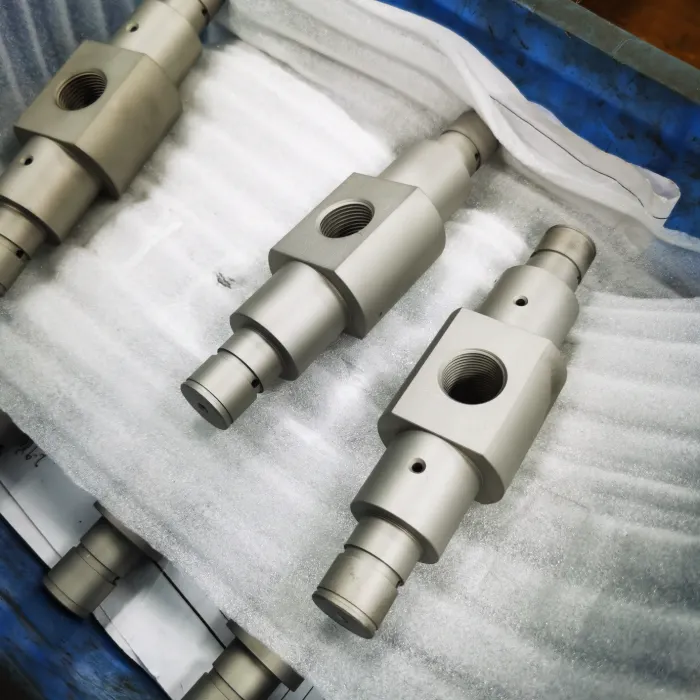
Après une nitruration au gaz classique, les pièces en acier présentent généralement une couleur allant du gris argenté au gris foncé. Les surfaces nitrurées au plasma ont généralement un aspect gris ou gris foncé plus uniforme.
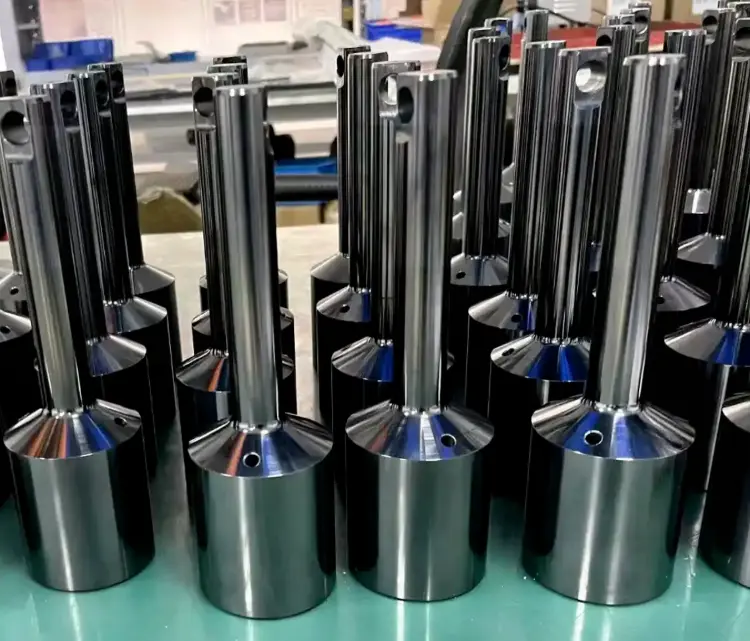
Les pièces nitrocarburées prennent une teinte gris foncé ou noire lorsqu'elles subissent ensuite un traitement d'oxydation. La couleur noire obtenue par le procédé QPQ provient principalement de la couche d'oxyde superficielle.
La couleur n'est qu'une caractéristique d'aspect. Elle ne peut se substituer à la dureté, au NHD ni à l'examen métallographique.
Comment entretenir et transporter en toute sécurité les pièces nitrurées ?
Les surfaces nitrurées sont dures et résistantes à l'usure, mais elles doivent tout de même être protégées contre une lubrification insuffisante, les chocs, la corrosion et un meulage excessif. L'entretien doit se concentrer sur les surfaces d'accouplement, de glissement et de support de charge.
Nettoyage et lubrification
Utilisez un produit nettoyant neutre pour éliminer les copeaux, l'huile et le liquide de refroidissement. N'utilisez pas d'acides puissants, d'abrasifs grossiers ni de procédés de sablage agressifs sur les surfaces nitrurées de précision.
Parmi les lubrifiants couramment utilisés, on peut citer :
| Type de pièce | Lubrifiant recommandé |
|---|---|
| Engrenages carénés | Huile pour engrenages à pression extrême CLP, ISO VG 150, 220 ou 320 |
| Bobines et manchons hydrauliques | Huile hydraulique anti-usure HM/HV, ISO VG 32, 46 ou 68 |
| Glissières de machines-outils | Huile pour glissières CGLP anti-glissement saccadé, généralement de classe ISO VG 68 |
| Canelures, goupilles et surfaces soumises à des charges à faible vitesse | Graisse au lithium NLGI 1 ou 2 EP |
| Roulements à grande vitesse | Graisse pour roulements NLGI 2 |
La viscosité finale doit être adaptée à la charge, à la vitesse, à la température et aux exigences de l'équipement. Il ne faut pas mélanger différents types de graisses sans s'être préalablement assuré de leur compatibilité.
L'inspection de routine doit permettre de vérifier l'absence d'usure anormale, de fissures, d'écaillages, de corrosion et de modifications du jeu de fonctionnement.
Comment traiter un manchon nitruré endommagé ?
Une pièce doit être mise hors service et isolée dès la constatation d'un endommagement de la couche de nitruration. Après nettoyage, inspectez les rayures, les fissures et les zones écaillées. Un contrôle par particules magnétiques ou par ressuage doit être effectué si nécessaire.
- Légère décoloration ou salissure : Nettoyer, protéger contre la corrosion, puis vérifier à nouveau.
- Rayures superficielles peu profondes : Effectuer un polissage contrôlé lorsque le plan le permet, puis vérifier les cotes et la rugosité.
- Dommages s'étendant jusqu'à la zone de diffusion : Retirez la zone endommagée et évaluez la marge d'usinage, la dureté au cœur et la NHD restante avant de déterminer si une nouvelle nitruration est autorisée.
- Fissures dans le métal de base, enfoncements profonds ou déformations importantes : Remplacer ou mettre au rebut la pièce.
Les retouches noires, l'huile et le polissage local ne permettent pas de restaurer un revêtement nitruré endommagé. La renitruration nécessite une expertise technique. La dureté, le NHD et les cotes critiques doivent être vérifiés à nouveau après la réparation.
Stockage et transport
Nettoyez et séchez les pièces avant de les stocker. Appliquez un produit antirouille adapté si nécessaire. Du papier VCI, des sacs hermétiques et des dessiccants peuvent être utilisés pour le stockage à long terme ou le transport maritime.
Pendant le transport :
- Séparer les pièces pour éviter les chocs et les frottements.
- Protège les filetages, les cannelures, les arêtes et les alésages de précision.
- Assurer le soutien des arbres longs en plusieurs points.
- Fixez solidement les équipements lourds et les moules dans des conteneurs rigides.
- Joindre à l'envoi les rapports d'inspection des fournitures et les documents relatifs à la traçabilité des lots.
Vérifiez l'emballage, les surfaces et les cotes critiques après la livraison. Les pièces présentant des traces de choc, de corrosion ou d'écaillage ne doivent pas être montées avant d'avoir été inspectées.
En quoi la nitruration se distingue-t-elle des autres procédés de durcissement ?
| Exigences relatives aux pièces | Procédé adapté |
|---|---|
| Dureté superficielle élevée, faible déformation, couche de protection résistante à l'usure de faible épaisseur | Nitruration |
| Carcasse trempée en profondeur, charges lourdes et chocs | Cémentation et trempe |
| Durcissement rapide de zones spécifiques | Trempe par induction |
| Trempe rapide et superficielle de l'acier au carbone | Nitrocarburation |
| Propriétés spécifiques de frottement ou de surface | Revêtement PVD |
Le choix du procédé doit tenir compte du matériau, de la charge, du mécanisme d'usure, de la profondeur de trempe et des tolérances dimensionnelles.
Comment choisir un fournisseur de pièces nitrurées ?
Un fournisseur fiable doit être capable de :
- Élaborer un itinéraire de traitement en fonction du matériau et de la charge
- Contrôle de la dureté de la surface, du NHD et de l'état de la couche de composé
- Prévoir et vérifier les variations dimensionnelles
- Fournir les registres relatifs au four, à la dureté, aux analyses métallographiques et à la traçabilité
- Coordonnée Usinage CNC, le traitement thermique et la rectification de précision
Pour les pièces sur mesure nécessitant plusieurs étapes de fabrication, une production coordonnée permet de réduire les coûts de transport et de communication. Elle permet également de définir clairement les responsabilités en matière de qualité.
Conclusion
La qualité d'une pièce nitrurée ne peut être évaluée uniquement sur la base de la dureté de surface. L'état du matériau, la profondeur de nitruration (NHD), la couche composite, les propriétés du cœur et la stabilité dimensionnelle sont tout aussi importants.
La définition de ces exigences dès les phases de conception et d'appel d'offres permet de réduire les risques liés aux tests, aux retouches et à la livraison.
Si vos engrenages, arbres, moules ou pièces hydrauliques doivent subir un traitement de nitruration, veuillez nous transmettre vos plans, le matériau, la quantité et les critères de réception à l'adresse suivante : Weldo Machining. Nous vous aiderons à évaluer le processus d'usinage CNC, le traitement thermique préalable, la nitruration et la rectification de précision, et nous vous fournirons des recommandations de fabrication ainsi qu'un cotation.
FAQ sur la finition par nitruration
La nitruration modifie-t-elle les dimensions des pièces ?
Oui. La diffusion de l'azote et la formation de nitrures entraînent un léger allongement dimensionnel. Les pièces de précision doivent tenir compte de cette variation, et celle-ci doit être vérifiée lors de la validation du premier article.
Une pièce peut-elle être rectifiée après la nitruration ?
Oui. La surépaisseur de rectification doit être contrôlée. La dureté de surface résiduelle et la dureté NHD doivent toujours respecter les exigences du plan après rectification.
Les trous profonds et les trous borgnes peuvent-ils être nitrurés ?
Oui. L'uniformité du traitement dépend du diamètre et de la profondeur du trou, ainsi que du type de procédé. Les surfaces à l'intérieur du trou qui doivent être traitées doivent être précisées dans l'appel d'offres.
Combien de temps dure le processus de nitruration ?
La durée du traitement dépend du matériau, du type de procédé et de la profondeur de nitruration (NHD) souhaitée. La nitrocarburation superficielle dure généralement plusieurs heures. La nitruration profonde au gaz nécessite entre plus de dix heures et plusieurs dizaines d'heures.
Comment réduire le coût des pièces nitrurées produites en petites séries ?
Appliquez des exigences cohérentes en matière de matériaux, de profondeur de trempe et de contrôle. Éliminez tout masquage sans utilité fonctionnelle et regroupez les pièces soumises aux mêmes exigences de traitement dans un même chargement de four. Les pièces complexes doivent faire l'objet d'une validation du premier article avant la production en série.