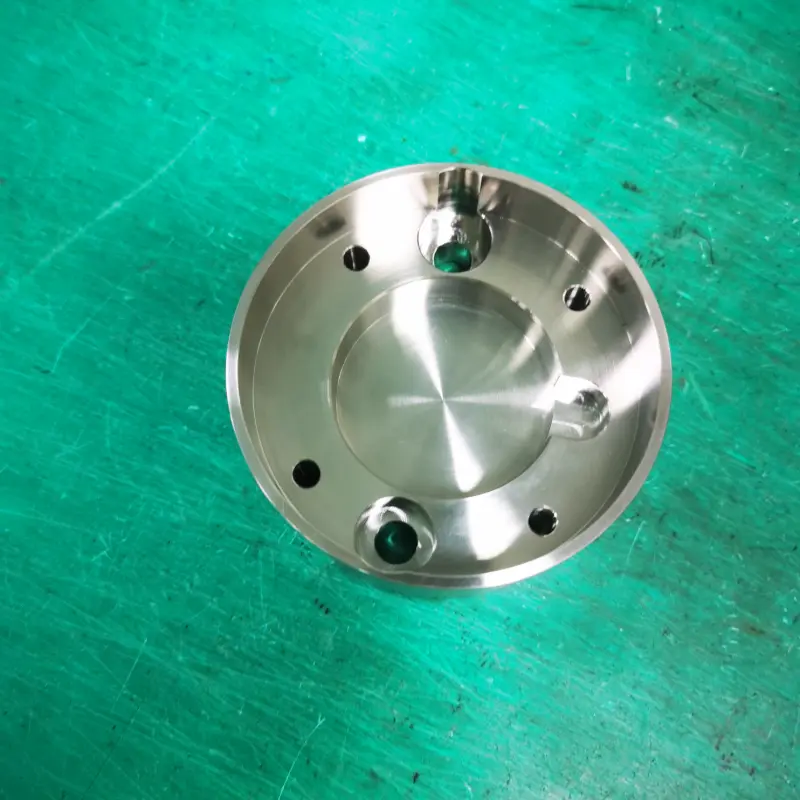
304 stainless steel is one of the most widely used austenitic stainless steels in manufacturing. It combines corrosion resistance, toughness, formability, and weldability, making it suitable for food-processing equipment, mechanical parts, piping components, housings, brackets, flanges, and fasteners.
Despite these advantages, 304 stainless steel machining can be challenging because the material is not free-machining. Its tendency to work-harden, relatively low thermal conductivity, and high ductility can cause rapid tool wear, long chips, built-up edge, burrs, and dimensional variation, so tooling, feed rate, depth of cut, coolant delivery, and chip evacuation must be carefully controlled.
What Is 304 Stainless Steel?
304 is an iron-based austenitic stainless steel alloyed primarily with chromium and nickel, and it is also commonly referred to as 18/8 stainless steel. Approximately 18% chromium provides its basic corrosion resistance, while nickel helps stabilize the austenitic structure and gives the material good toughness, ductility, formability, and weldability.
304 can be supplied as sheet, plate, bar, tube, wire, and forgings. It can also be CNC milled, turned, drilled, tapped, welded, and finished using a variety of surface treatments. Typical applications include kitchen equipment, food and beverage equipment, storage tanks, housings, valves, flanges, and general industrial components.
Equivalent Grades of 304 Stainless Steel
Different countries and standards systems use different designations for 304 stainless steel. The following grades are generally regarded as corresponding grades with similar composition and properties:
| Standards System | Common Grade |
| AISI / SAE | 304 |
| ASTM | Type 304 |
| UNS | S30400 |
| EN material number | 1.4301 |
| EN designation | X5CrNi18-10 |
| JIS | SUS304 |
| GB / T | 06Cr19Ni10 |
| Former BS designation | 304S15 |
These grades have broadly similar base compositions and application profiles, but different standards may specify different requirements for chemical composition, mechanical properties, product form, and delivery condition. When substituting materials, the applicable standard, material certificate, and service requirements of the part should all be checked rather than relying only on the name “304.”
304 vs. 304L Stainless Steel
304L is the low-carbon version of 304. The maximum carbon content of 304 is typically about 0.08%, while 304L is generally limited to 0.03% or less. The lower carbon content reduces chromium carbide precipitation in the heat-affected zone during welding and therefore lowers the risk of intergranular corrosion.
From a CNC machining perspective, 304 and 304L behave similarly, and both are prone to work hardening, heat accumulation, and poor chip breaking. 304L is generally more suitable when extensive welding is required or when solution annealing cannot be performed after welding; for ordinary machined parts, 304 may be selected based on material availability, strength, and cost.
Chemical Composition of 304 Stainless Steel
The chemical composition of 304 stainless steel may vary slightly depending on the applicable standard, material form, and producer. In actual procurement, the values specified in the relevant product standard and material certificate should be used.
| Element | Typical Content |
| Chromium (Cr) | 18.0%–20.0% |
| Nickel (Ni) | 8.0%–10.5% |
| Carbon (C) | ≤0.08% |
| Manganese (Mn) | ≤2.00% |
| Silicon (Si) | ≤1.00% |
| Nitrogen (N) | ≤0.10% |
| Phosphorus (P) | ≤0.045% |
| Sulfur (S) | ≤0.030% |
| Iron (Fe) | Balance |
Chromium
Chromium forms a stable passive film on the material surface and is the principal source of 304 stainless steel’s corrosion and oxidation resistance. A chromium content of about 18% to 20% makes it suitable for normal atmospheric, fresh-water, and food-contact environments, but it is not sufficient for prolonged exposure to high concentrations of chlorides.
Nickel
Nickel stabilizes the austenitic structure and improves the toughness, ductility, formability, and low-temperature performance of 304. The stable austenitic structure also makes the chips tougher, increasing the likelihood of continuous long chips and built-up edge during machining.
Carbon
Carbon can increase the strength and hardness of steel, but excessive carbon raises the risk of intergranular corrosion after welding. 304L improves post-weld corrosion reliability by reducing carbon content, although its work-hardening behavior remains similar to that of 304.
Manganese
Manganese is mainly used for deoxidation during steelmaking and can also help stabilize the austenitic structure. It can combine with sulfur to form sulfides, reducing the adverse effects of free sulfur on melting and hot-working performance.
Silicon
Silicon is mainly used as a deoxidizer during steelmaking and can slightly improve high-temperature oxidation resistance. Excessive silicon may affect ductility and surface quality, so its content in 304 is normally subject to an upper limit.
Nitrogen
Nitrogen can improve austenite stability, yield strength, and, to some extent, resistance to pitting. A higher nitrogen content can also increase material strength and cutting load, making machining more difficult.
Phosphorus
Phosphorus can increase strength to a limited extent, but excessive amounts reduce toughness and weldability. Its content in 304 is therefore kept low to reduce embrittlement and welding defects.
Sulfur
Sulfur helps improve chip breaking and machinability, but it reduces corrosion resistance, toughness, and weldability. The low sulfur content of 304 supports better corrosion resistance, but its machinability is generally poorer than that of higher-sulfur 303 stainless steel.
Iron
Iron is the principal matrix element in 304 stainless steel and makes up most of the alloy. Chromium, nickel, and other minor elements dissolve in the iron matrix to produce a stable austenitic structure and a balanced set of mechanical properties.
Mechanical Properties of 304 Stainless Steel
The following values are typical mechanical properties of annealed 304 stainless steel at room temperature. Actual values are affected by the applicable standard, product thickness, material form, degree of cold work, and heat-treatment condition.
| Mechanical Property | Typical Value |
| Tensile strength | Approx. 515–750 MPa |
| 0.2% yield strength | Typically not less than approx. 205 MPa |
| Elongation after fracture | Typically not less than 40% |
| Elastic modulus | Approx. 193–200 GPa |
| Poisson’s ratio | Approx. 0.29 |
| Brinell hardness | Typically no higher than 201 HB |
| Rockwell hardness | Typically no higher than 92 HRB |
Tensile Strength
The tensile strength of 304 is sufficient for brackets, housings, flanges, connectors, and general equipment components. Cold drawing or cold rolling can further increase strength, but it also raises cutting forces, tool wear, and residual stress.
Yield Strength
Annealed 304 has a moderate yield strength and is suitable for general structural and equipment components, but it is not a high-strength stainless steel. For heavily loaded shafts, fasteners, or parts requiring greater resistance to permanent deformation, materials such as 17-4 PH are usually more suitable.
Elongation
The elongation after fracture of 304 can typically reach 40% or more, indicating good ductility and formability. This high ductility also makes chips difficult to break and increases burr formation at hole exits, groove edges, and thin-wall features.
Elastic Modulus
The elastic modulus of 304 is approximately 193 to 200 GPa, close to that of ordinary carbon steel and significantly higher than that of aluminum alloys. Thin-walled parts and slender shafts can still deflect under cutting and clamping forces, so adequate support and limited tool overhang are required.
Poisson’s Ratio
The Poisson’s ratio of 304 is approximately 0.29 and is mainly used to calculate axial and transverse deformation under load. It has limited influence on ordinary cutting operations but is important in thin-wall parts, interference-fit components, and finite element analysis.
Hardness
Annealed 304 generally does not exceed 201 HB or 92 HRB, so its initial hardness is not especially high. Its main machining difficulty comes from the locally hardened layer produced during cutting rather than from excessive base-material hardness.
Work Hardening
304 rapidly increases in local strength and hardness after cold drawing, stamping, and machining. During machining, low feed, tool dwell, and rubbing with a dull cutting edge should be avoided, and the tool should remain engaged in material that has not already work-hardened.
Toughness and Fatigue Performance
304 has good toughness and is not prone to brittle fracture under low-temperature, impact, or vibration conditions. Its fatigue life is affected by tool marks, burrs, notches, welds, corrosion, and residual stress, so cyclically loaded parts require careful control of surface quality and geometric transitions.

Physical, Thermal, and Electrical Properties
The physical and thermal properties of 304 directly affect part weight, dimensional stability with temperature, and heat distribution during machining. The following are typical values for annealed 304.
| Property | Typical Value |
| Density | Approx. 7.9 g/cm³ |
| Thermal conductivity | Approx. 15–16 W/(m·K) |
| Specific heat capacity | Approx. 500 J/(kg·K) |
| Coefficient of thermal expansion | Approx. 16–17.2 × 10⁻⁶/K |
| Electrical resistivity | Approx. 0.72–0.73 Ω·mm²/m |
| Magnetism in annealed condition | Generally nearly nonmagnetic |
Density
The density of 304 is approximately 7.9 g/cm³, close to that of ordinary steel and about three times that of aluminum alloys. It is suitable for parts requiring corrosion resistance, stiffness, and structural stability, but not for structures where extreme weight reduction is the primary objective.
Thermal Conductivity
The thermal conductivity of 304 is approximately 15 to 16 W/(m·K), significantly lower than that of ordinary carbon steel. Cutting heat tends to concentrate at the tool tip and cutting zone, accelerating tool wear and increasing the risk of thermal distortion.
Thermal Expansion
304 has a higher coefficient of thermal expansion than ordinary carbon steel, so its dimensions change more noticeably as the workpiece temperature changes. During machining of thin-walled parts, long shafts, and close-tolerance components, heat input should be controlled and final measurements should be taken after the part has cooled.
Specific Heat Capacity
The specific heat capacity of 304 is approximately 500 J/(kg·K), which is in the mid-range for common metals. This property alone does not determine machining difficulty, but it must be considered together with the material’s low thermal conductivity when evaluating heat accumulation in the cutting zone.
Electrical Resistivity
The electrical resistivity of 304 is approximately 0.72 to 0.73 Ω·mm²/m, so its electrical conductivity is significantly lower than that of copper and aluminum. It is generally unsuitable as a high-conductivity material but can be used in components requiring corrosion resistance, structural strength, and a certain level of electrical resistance.
Magnetism
Annealed 304 is generally nearly nonmagnetic, but cold rolling, cold drawing, stamping, and severe machining deformation may introduce some magnetism. A magnet test should therefore not be used as the sole method of accurately identifying 304 stainless steel.
Corrosion Resistance
304 offers good corrosion resistance in normal atmospheric conditions, fresh water, food-contact applications, general cleaning agents, and many mild industrial environments. Its chromium-rich passive film separates the metal substrate from the external environment and can reform under clean, oxygen-containing conditions.
However, 304 has limited resistance to seawater, salt water, continuous salt spray, and high concentrations of chlorides, and prolonged exposure can lead to pitting, crevice corrosion, or stress-corrosion cracking. Molybdenum-bearing 316 or 316L generally provides better pitting resistance in most chloride environments, while high-temperature, high-salinity, or long-term marine service may require a higher-grade material such as duplex stainless steel.
After CNC machining, the 304 surface should also be protected from contact with carbon-steel chips, dust, or contaminated tools. Parts used in food, medical, humid, or high-cleanliness environments may be thoroughly cleaned, pickled, passivated, or electropolished after machining.
Common Forms, Applications, and Parts
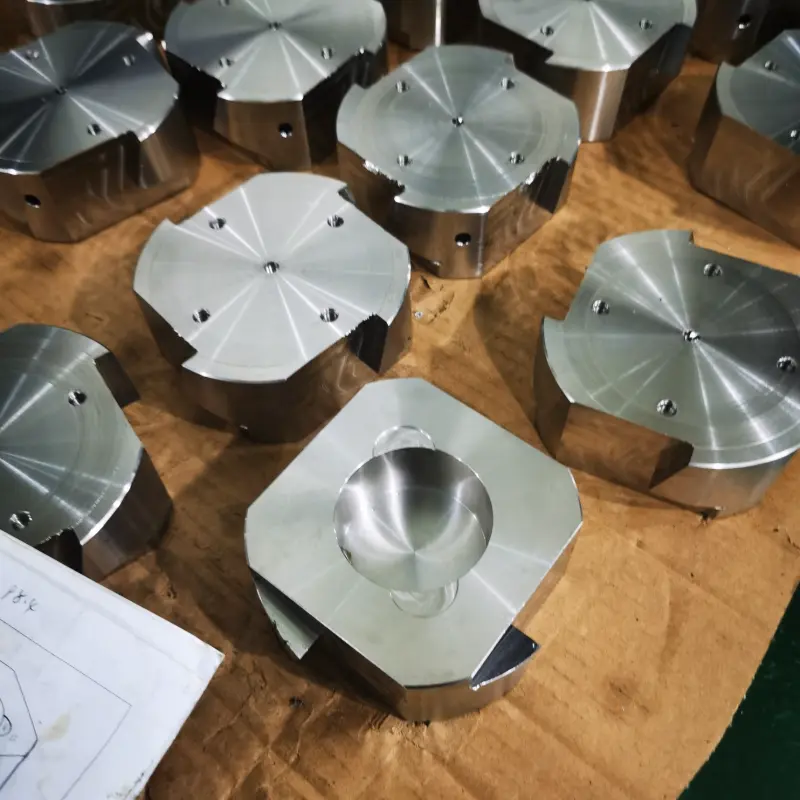
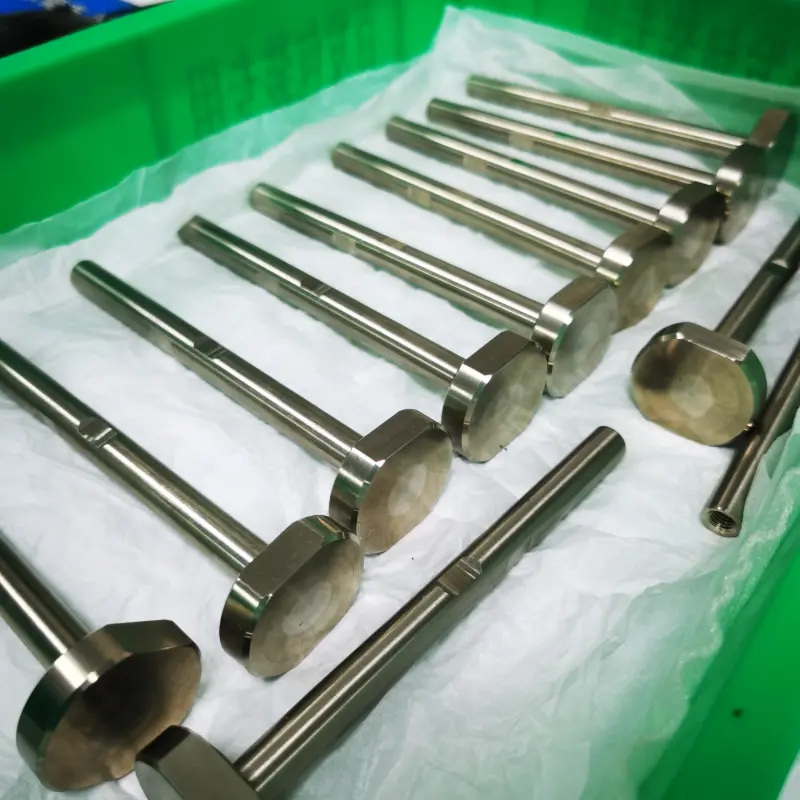
304 stainless steel is available in a wide range of forms, including sheet, plate, bar, tube, wire, and forgings. Selecting raw material that closely matches the finished-part geometry helps reduce material waste, machining allowance, and production time while lowering distortion and machining cost.
| Material Form | Typical Parts |
| Sheet and plate | Panels, brackets, enclosures, covers, flanges, and food-equipment parts |
| Round bar | Shafts, bushings, pins, fittings, bolts, and valve stems |
| Square and hexagonal bar | Nuts, connection blocks, valve fittings, and mounting bases |
| Tube and pipe | Sleeves, pipe fittings, transfer piping, and equipment frames |
| Wire | Springs, wire products, screws, and small fasteners |
| Forgings | Flanges, rings, highly loaded connectors, and valve-body blanks |
Sheet and Plate
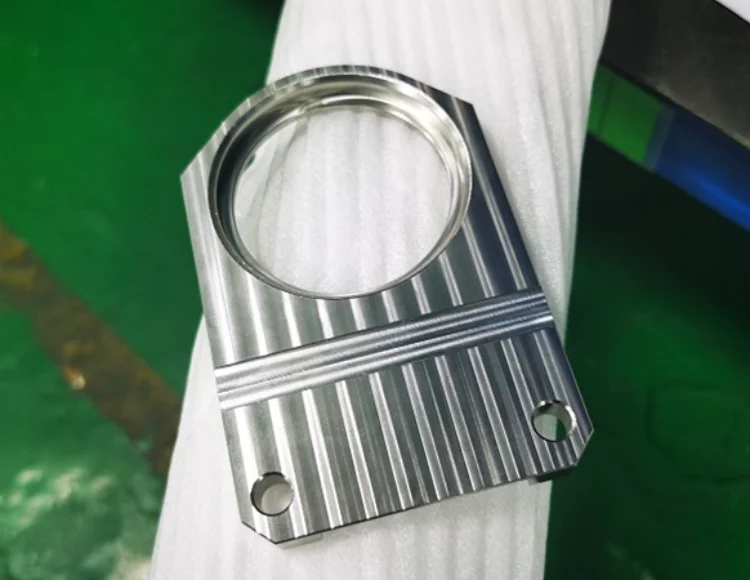
304 sheet is commonly used for equipment housings, panels, kitchen products, and food-processing equipment, while thicker plate is suitable for machining flanges, brackets, and mounting plates. When machining large-area or thin-walled plate parts, raw-material flatness, clamping force, and residual stress must be considered to prevent warping after substantial material removal.
Round, Square, and Hexagonal Bar
Round bar is suitable for turning shafts, bushings, pins, fittings, and valve stems, while square and hexagonal bar are useful for nuts, connection blocks, and mounting parts with flats, reducing part of the required milling allowance. Cold-drawn bar generally offers better dimensional accuracy and surface quality, but may have higher strength, hardness, and residual stress, so precision parts require an appropriate roughing and finishing sequence.
Tubes and Pipes
304 tube and pipe are commonly used for food-transfer lines, equipment frames, sleeves, and pipe fittings, combining corrosion resistance, weldability, and ease of cleaning. Thin-wall tubing can lose roundness during turning, drilling, or slot milling, and clamping distortion can be controlled with soft jaws, expanding mandrels, or internal support.
Wire
304 wire is mainly used for springs, wire products, retaining rings, screws, and small fasteners and is commonly processed by drawing. Cold working increases its strength and hardness but also makes forming, straightening, and subsequent machining more difficult, and it may introduce some magnetism.
Forgings
304 forgings are suitable for flanges, rings, valve-body blanks, and highly loaded connectors, and the metal flow and dense structure produced by forging are beneficial for impact and complex loading. Before machining, scale, surface defects, and allowance distribution should be checked to avoid direct tool contact with a hard surface layer or insufficient local allowance.
Cast Parts
304 is primarily a wrought stainless-steel grade used for rolled or forged products, while the approximate cast equivalent CF8 is commonly used for pump bodies, valve bodies, and complex housings. CF8 is not completely identical to rolled or forged 304 in permitted composition range, microstructure, and mechanical properties, so design and procurement should be verified separately against the applicable casting standard.
Advantages and Limitations of 304 Stainless Steel
Advantages
- Good corrosion resistance: Suitable for normal atmospheric conditions, fresh water, food contact, and general industrial environments.
- High toughness and ductility: Resists brittle fracture and is suitable for bending, stamping, drawing, and complex forming.
- Good weldability: Can be used in a wide range of welded assemblies, storage tanks, and equipment structures.
- Wide material availability: Sheet, plate, bar, tube, wire, and forgings are readily available.
- Many surface-finishing options: Can be brushed, polished, blasted, pickled, passivated, or electropolished.
- Easy to clean: Suitable for food-processing equipment, kitchen components, and general hygienic environments.
Limitations
- Limited resistance to chlorides: Seawater, high-salinity, and continuous salt-spray environments usually require a more corrosion-resistant material.
- Moderate wear resistance: Not suitable for prolonged high-friction, heavily loaded sliding, or severe abrasive service.
- Strength is not exceptional: Highly loaded parts may require 17-4 PH or duplex stainless steel.
- Relatively high weight: Its density is close to that of ordinary steel, making it unsuitable for highly weight-sensitive structures.
- Lower machinability than 303: Work hardening, long chips, and heat accumulation increase tool consumption and production time.
304 Stainless Steel Machining Guide
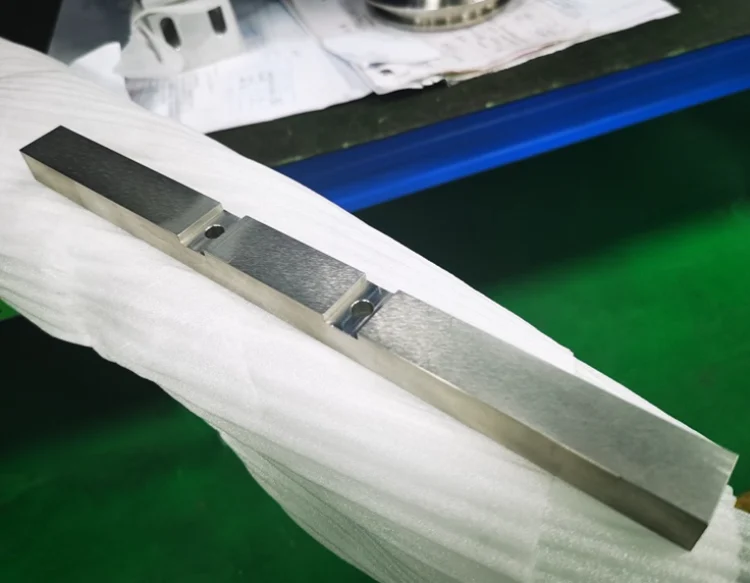
The machining difficulty of 304 does not come from an excessively high initial hardness, but from the combined effects of work hardening, low thermal conductivity, and high ductility. Stable machining should focus on tool selection, effective cutting, and control of heat and chips.
1. Use Sharp and Suitable Cutting Tools
Coated carbide tools designed for austenitic stainless steel should be preferred, together with sharp cutting edges, positive rake geometry, and a suitable chip breaker. Sharp tools help reduce material squeezing, cutting force, built-up edge, and exit burrs.
Tools should be replaced promptly when obvious wear appears. Continuing to use a dull tool increases friction and work hardening, making subsequent cutting more difficult.
2. Maintain Stable Feed and Cutting Depth
A continuous and stable feed should be maintained so that the tool cuts the material rather than lightly rubbing the surface. Feed rates that are too low, depths of cut that are too small, or frequent tool dwell can all create a hardened surface layer.
The depth of cut should pass through the hardened region left by the previous pass wherever possible. Actual parameters should be adjusted according to tool size, machine rigidity, material condition, and part geometry rather than attempting to solve every problem simply by reducing cutting speed.
3. Control Heat and Chip Evacuation
Because 304 has low thermal conductivity, coolant should be directed accurately into the cutting zone. Continuous machining, deep grooves, and deep holes may use abundant coolant, directed cooling, or through-tool coolant to control tool-tip temperature and improve lubrication.
The chip breaker, feed, and depth of cut should be matched to prevent long chips from wrapping around the tool or workpiece. Chips trapped in holes, pockets, or the cutting zone can cause recutting, surface scratches, chip blockage, and tool damage.
Surface Finishing After Machining
After CNC machining, 304 can be given different surface treatments according to appearance, surface roughness, cleanliness, and service environment.
- Mechanical polishing: Reduces tool marks and minor scratches and improves surface smoothness.
- Brushing: Produces a consistent directional texture suitable for panels, housings, and decorative parts.
- Sandblasting or bead blasting: Creates a uniform matte surface, but clean media should be used to avoid iron contamination.
- Pickling: Removes weld heat tint, oxides, and some surface contamination.
- Passivation: Removes free iron and helps restore a clean, stable passive surface.
- Electropolishing: Reduces microscopic peaks and surface roughness and is suitable for food, medical, and high-cleanliness components.
For ordinary industrial parts, thorough cleaning and passivation where necessary are generally sufficient. Parts requiring higher appearance quality, hygiene, cleanability, or corrosion reliability may additionally use mechanical polishing or electropolishing.
Recycling Value and U.S. Scrap Price
304 stainless steel contains recyclable chromium and nickel, and sheet offcuts, scrapped parts, and CNC machining chips can all be recycled. Based on U.S. market reference data shown by iScrap App as of June 27, 2026, a consistent reference price for 304 stainless steel scrap is approximately $0.32 per pound, equivalent to about $640 per short ton or $705 per metric ton.
This price is intended only as a market reference and does not represent a fixed purchase price at every U.S. scrap yard. Actual quotations are affected by location, quantity, scrap form, purity, nickel price, and the oil content of machining chips.
Clean solid offcuts generally receive a higher price than turning chips containing large amounts of cutting fluid and contaminants. Machining companies should collect solid 304 scrap, machining chips, and other metals separately and keep the material as clean and dry as possible, avoiding contamination by carbon steel, aluminum, brass, or other stainless-steel grades.
How to Select 304 Stainless Steel for Machining
304 is suitable for general industrial parts, food-processing equipment, housings, brackets, flanges, and piping components, providing a good balance of corrosion resistance, weldability, mechanical properties, and material cost.
When a part requires extensive welding, 304L may be preferred. Its lower carbon content reduces carbide precipitation in the heat-affected zone and lowers the risk of intergranular corrosion.
When cutting efficiency and high-volume production are more important, 303 stainless steel may be considered. 303 provides better chip breaking and machinability, but its corrosion resistance and weldability are generally lower than those of 304.
In most seawater, salt-spray, or high-chloride environments, 316 or 316L is generally more reliable than 304. For shafts, valve components, or fasteners requiring greater strength, hardness, and load-carrying capacity, 17-4 PH stainless steel may be considered.
Conclusion
304 stainless steel combines corrosion resistance, toughness, weldability, and wide material availability, making it a common choice for food-processing equipment, mechanical parts, housings, brackets, bushings, flanges, and piping components. Although its initial hardness is not high, work hardening, low thermal conductivity, and continuous long chips increase the difficulty of CNC machining.
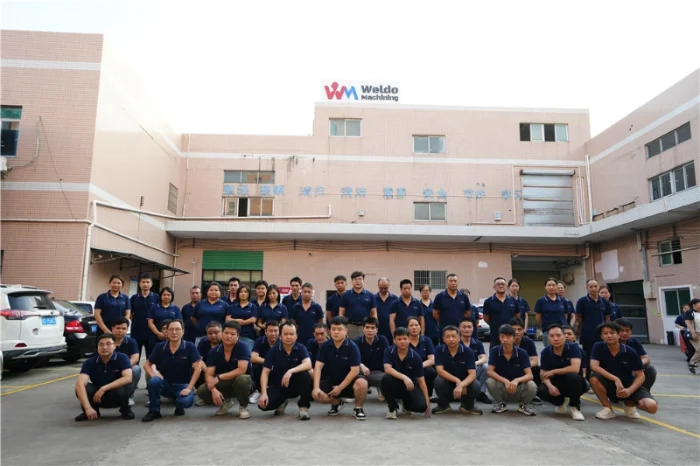
Weldo Machining provides CNC milling, turning, drilling, tapping, and surface-finishing services for 304 stainless steel and develops suitable machining solutions according to part geometry, tolerances, quantity, and service environment. Proper control of tooling, workholding, feed, cooling, and chip evacuation helps achieve stable dimensional accuracy, surface quality, and machining efficiency.