
Beim Vergleich von Phosphorbronze und Berylliumkupfer für Sonderanfertigungen liegen die wesentlichen Unterschiede in den Festigkeitsmechanismen, den Leistungsbereichen und den Herstellungskosten. Beide Werkstoffe werden für elektrische Kontakte, Federkomponenten und verschleißfeste mechanische Teile verwendet. Phosphorbronze erhält ihre Eigenschaften in erster Linie durch die Legierungszusammensetzung und Kaltumformung, während bei Berylliumkupfer die Legierungszusammensetzung, Kaltumformung und Aushärtung genutzt werden, um unterschiedliche Kombinationen aus Festigkeit und elektrischer Leitfähigkeit zu erzielen.
Für Käufer von Sonderanfertigungen hat die Materialauswahl nicht nur Auswirkungen auf den Rohstoffpreis. Sie wirkt sich auch direkt auf den Bearbeitungsaufwand, Verformungen durch Wärmebehandlung, die Oberflächenbeschaffenheit, die Prüfanforderungen und die Lieferzeiten aus. Eine fundierte Entscheidung beginnt mit der Betrachtung der Belastungen, der Betriebstemperatur, des verfügbaren Einbauraums und der Lebensdauer des Bauteils, gefolgt von der Materialbeschaffenheit und dem Fertigungsverfahren.
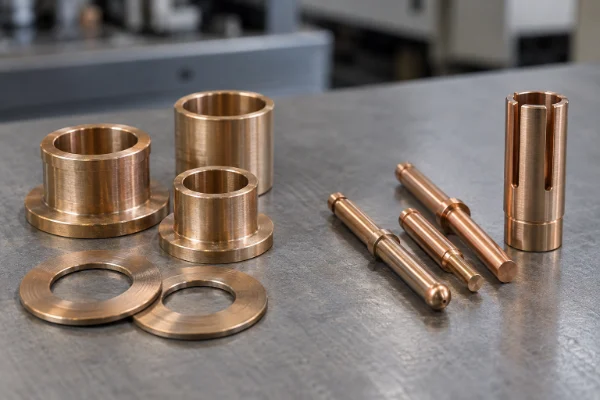
Phosphorbronze vs. Berylliumkupfer: Was ist das Richtige für Ihre Sonderanfertigungen?
Phosphorbronze: Erfüllt die üblichen Anforderungen an Elastizität, Verschleißfestigkeit und Leitfähigkeit
Phosphor Bronze eignet sich für Buchsen, Verschleißscheiben, elektrische Kontakte und Federkomponenten in Instrumenten. Wenn die Abmessungen, Belastungen und Betriebstemperatur des Bauteils es zulassen, dass Phosphorbronze die Konstruktionsanforderungen erfüllt, besteht keine Notwendigkeit, allein zum Zweck einer höheren Zugfestigkeit auf Berylliumkupfer umzusteigen.
Herkömmliche Phosphorbronze lässt sich durch eine ausscheidungshärtende Wärmebehandlung nicht in gleichem Maße festigkeitssteigernd bearbeiten wie aushärtbares Berylliumkupfer. Ihre Festigkeit hängt eng mit ihrem Kaltverformungszustand zusammen. Mit steigender Festigkeit nehmen Dehnung und Umformbarkeit ab. Käufer müssen daher zwischen den Zuständen „geglüht“, „halbhart“ und „hart“ unterscheiden, anstatt die Festigkeitsdaten für dünne Bänder direkt auf Teile anzuwenden, die aus Stangen mit großem Durchmesser gefertigt wurden.
Berylliumkupfer: Geeignet für beengte Platzverhältnisse und hohe Anforderungen an die elastische Belastung
Berylliumkupfer eignet sich für Bauteile, die bei kleinem Querschnitt eine hohe elastische Belastbarkeit aufweisen müssen, wie beispielsweise geschlitzte Kontaktbuchsen, Präzisionsfederklemmteile und stark beanspruchte Steckverbinderkomponenten.
Berylliumkupfer ist kein Werkstoff mit einheitlichen Eigenschaften. Hochfestes und hochleitfähiges Berylliumkupfer dienen unterschiedlichen Leistungszielen. Die maximale Festigkeit einer Baureihe darf nicht mit der maximalen Leitfähigkeit einer anderen Baureihe kombiniert werden, um eine Beschaffungsspezifikation zu erstellen. Die endgültigen Eigenschaften hängen zudem vom Lieferzustand und vom Alterungsprozess ab. Materions Leitfaden zur Wärmebehandlung von Kupfer-Beryllium
Ermitteln Sie zunächst die Fehlerart, die das Bauteil abdecken muss.
Achten Sie bei der Auswahl eines Materials vor allem auf die folgenden drei Fragen:
- Entsteht an dem Bauteil eine bleibende Verformung? Konzentrieren Sie sich auf die Streckgrenze, die tatsächliche Spannung und die Spannungskonzentrationen im Bauteil, anstatt lediglich die Zugfestigkeit zu vergleichen.
- Nimmt die Kontaktkraft mit der Zeit ab? Prüfen Sie die Betriebstemperatur, die Dauerbelastungszeit und das Verhalten bei der Spannungsrelaxation. Die Härte bei Raumtemperatur allein liefert keine Antwort.
- Überhitzt sich das Teil oder nutzt es sich zu schnell ab? Überprüfen Sie den Stromflussweg, den Kontaktwiderstand, den Schmierzustand und das Gegenmaterial jeweils separat. Der Wechsel zu einem Material mit höherer Festigkeit löst nicht automatisch jedes Problem.
Wichtigste mechanische Eigenschaften von Phosphorbronze und Berylliumkupfer
Die folgenden Daten dienen als Grundlage für eine vorläufige Materialauswahl und fassen veröffentlichte Werte bei Raumtemperatur für repräsentative Phosphorbronze- und hochfeste Berylliumkupfersorten in verschiedenen Liefer- und Aushärtungszuständen zusammen.
| Eigentum | Phosphor-Bronze | Hochfestes Beryllium-Kupfer |
|---|---|---|
| Zugfestigkeit | ca. 330–750 MPa | ca. 410–1550 MPa |
| Streckgrenze, Rp0,2 | ca. 90–710 MPa | ca. 130–1380 MPa |
| Bruchdehnung | ca. 2%–60% | ca. 2%–75% |
| Elastizitätsmodul | Typischer Wert: ca. 110 GPa | Typischer Wert: ca. 131 GPa |
Diese Bereiche stellen weder Abnahmegrenzwerte für einen einzelnen Materialzustand dar, noch decken sie alle handelsüblichen Legierungen und Produktformen ab. Die Tabelle fasst typische Werte und ausgewählte Mindestanforderungen für verschiedene Zustände zusammen. Die maximale Festigkeit und die maximale Dehnung lassen sich nicht gleichzeitig erreichen. Die endgültige Abnahme muss dem jeweiligen Werkstoff, dem Lieferzustand, den Querschnittsabmessungen und dem Prüfverfahren entsprechen. Materialdaten zu Phosphorbronze, Daten zu Beryllium-Kupfer-Stangen
Bei Federkomponenten sollte die Streckgrenze Vorrang haben
Federkontakte, Klemmelemente und geschlitzte Konstruktionen müssen nach Entlastung wieder ihre ursprüngliche Form annehmen. Die Streckgrenze bezeichnet das Spannungsniveau, bei dem das Material eine bestimmte dauerhafte Verformung aufweist, weshalb sie für diese Bauteile relevanter ist als die Zugfestigkeit allein.
Eine Erhöhung der Werkstofffestigkeit ist jedoch kein Ersatz für eine konstruktive Optimierung. Scharfe Schlitzwurzeln, zu kleine Verrundungen und abrupte Querschnittsänderungen führen zu lokalen Spannungskonzentrationen. Diese können lokale plastische Verformungen oder Ermüdungsrisse verursachen, selbst wenn die Gesamtbelastung nicht hoch ist.
Eine höhere Festigkeit bedeutet nicht zwangsläufig eine proportionale Zunahme der Steifigkeit
Die Festigkeit beschreibt die Widerstandsfähigkeit eines Werkstoffs gegen Verformung oder Bruch. Die Steifigkeit beschreibt die Widerstandsfähigkeit eines Bauteils gegen Verformung unter Belastung.
Der obere Festigkeitsbereich von Berylliumkupfer liegt deutlich über dem von herkömmlichem Phosphorbronze, doch ist der Unterschied im Elastizitätsmodul wesentlich geringer als der Unterschied in der Festigkeit. Bei gleicher Geometrie führt der Wechsel zu Berylliumkupfer nicht zu einer Verringerung der elastischen Verformung, die proportional zur Festigkeitssteigerung ist. Zur Begrenzung der Durchbiegung müssen nach wie vor Wandstärke, Länge, Querschnittsform und Auflagebedingungen berücksichtigt werden.
Die Dehnung gibt Aufschluss über die Duktilität, nicht jedoch direkt darüber, wie stark sich ein Bauteil verbiegen lässt
Eine höhere Dehnung hilft einem Werkstoff, plastische Verformungen aufzunehmen, lässt sich jedoch nicht direkt in einen zulässigen Biegewinkel oder einen Mindestbiegeradius umrechnen. Das Umformverhalten hängt zudem von der Dicke, der Bearbeitungsrichtung, der Kantenqualität und dem Zustand des Werkstoffs ab.
Bei Sonderteilen, die nach der CNC-Bearbeitung ein Einpressen, Nieten oder punktuelles Umformen erfordern, müssen die anschließenden Montagevorgänge in die Werkstoffbewertung einbezogen werden. Die Auswahl von übermäßig hartem Rohmaterial, die sich ausschließlich auf die Endfestigkeit stützt, kann später zu Problemen führen.
Inwiefern beeinflussen elektrische Leitfähigkeit, Betriebstemperatur und die Einsatzumgebung die Auswahl?
Bei elektrischen Bauteilen reicht ein Vergleich der Leitfähigkeit allein nicht aus
Ein typisches zinnhaltiges Phosphorbronze-Material weist eine elektrische Leitfähigkeit von etwa 15% IACS auf, während gealtertes hochfestes Berylliumkupfer etwa 25%–30% IACS erreicht. IACS steht für den „International Annealed Copper Standard“ (Internationaler Standard für geglühtes Kupfer). Diese Werte gelten nicht für alle Phosphorbronze- oder Berylliumkupfer-Serien.
Bei Steckverbindern, Kontaktstiften und Federkontaktbuchsen ergibt sich der Gesamtwiderstand sowohl aus dem Material selbst als auch aus der Kontaktfläche. Unzureichender Anpressdruck, Oxidschichten, Verunreinigungen und abgenutzte Beschichtungen können den Kontaktwiderstand erhöhen und zu lokaler Erwärmung führen.
Elektrische Bauteile müssen daher hinsichtlich Leitfähigkeit, Kontaktkraft und Oberflächenbeschichtung gemeinsam bewertet werden. Der Temperaturanstieg muss bei der vorgegebenen Stromstärke und Umgebungstemperatur überprüft werden, anstatt die Strombelastbarkeit allein anhand der Materialleitfähigkeit zu bestimmen.
Bauteile, die bei erhöhten Temperaturen unter Belastung stehen, erfordern eine Bewertung der Spannungsrelaxation
Federkomponenten, die einer Dauerbelastung ausgesetzt sind, unterliegen einer temperatur- und zeitabhängigen Spannungsrelaxation, was zu einer Verringerung der Kontakt- oder Klemmkraft führt. Dies unterscheidet sich von einem Ermüdungsbruch, der durch wiederholte Belastung verursacht wird.
For parts held in compression or bending over long periods, performance must be evaluated at the actual temperature, initial stress, and duration. High-strength beryllium copper must also be selected in a validated material condition. Room-temperature strength must not be treated as a direct measure of contact force retention at elevated temperatures.
Wear and Corrosion Resistance Depend on Operating and Mating Conditions
The service life of Buchsen, sliding washers, and wear sleeves depends on contact pressure, sliding speed, lubrication, mating shaft hardness, and surface roughness. Higher hardness is not the only criterion. Insufficient lubrication or unsuitable clearance can still cause overheating, wear, and galling.
For both materials, corrosion resistance must be checked against the actual chemical medium, concentration, and temperature. When connected to other metals, galvanic corrosion must also be considered in damp or electrolyte-containing environments, rather than assuming that all contact between dissimilar metals causes corrosion.

How Do Raw Material Condition and CNC Machining Affect Part Quality?
Product Form and Material Condition Must Match the Part
Bar stock is suitable for bushings, pins, threaded parts, and rotational components. Plate is suitable for clamping components, connection blocks, and complex profiles. Strip is primarily used for thin spring structures and stamped parts.
Even under the same material name, properties differ with product form, dimensions, and processing condition. Material certificates and engineering drawings should specify the grade, applicable standard, supplied condition, and final property requirements. Comparing material families in this article does not mean that the specific grade can be omitted from purchasing documents.
Some free-machining copper alloys contain added lead to improve machinability. Projects involving electronics, medical applications, or specific environmental requirements must verify composition restrictions. Substitution with a free-machining material requires approval.
Thin Walls and Slotted Structures Require Clamping and Burr Control
Both phosphor bronze and beryllium copper can be turned, milled, drilled, and machined with precision slots, but tooling and cutting parameters must match the actual hardness and material condition.
For thin-walled bushings and slotted spring components, excessive clamping force can produce dimensions that pass inspection while clamped but move out of tolerance after release. Process planning should control clamping force, support locations, and machining sequence, with critical dimensions inspected after unclamping.
Fine slots, intersecting holes, and thread exits are prone to burr formation. These burrs can interfere with assembly, scratch mating parts, or break loose and contaminate the system. Entgraten requirements must therefore be established alongside machining requirements.
Beryllium Copper Aging Requires Provision for Dimensional Control
For age-hardenable beryllium copper, a common route is to complete most cutting in a more machinable condition, perform aging, and then carry out the necessary finishing and inspection. Prehardened material can also be purchased where suitable sizes are available, but cutting loads, tool wear, and supply conditions differ.
Aging produces dimensional changes and releases some machining-induced residual stress. A single shrinkage compensation value must not be applied to every geometry. Critical bore diameters, slot widths, flatness, and fit dimensions should be confirmed through first-article evaluation. Materion’s Guide to Controlling Shape Distortion
Annealing or stress relief must not be added arbitrarily for phosphor bronze either. Subsequent heating affects strength obtained through cold working. Brazing, assembly heating, and other elevated-temperature operations must be included in the manufacturing route review.
Beryllium Copper Machining Requires Appropriate Safety Controls
The primary hazards in beryllium copper processing arise from beryllium-containing dust, fumes, and inhalable particles, rather than from the part’s name alone. Exposure risks must be assessed separately for cutting, grinding, polishing, welding, and other operations.
The machining facility should establish effective engineering controls, cleaning procedures, and waste management measures based on the material safety data sheet and applicable requirements. Using coolant does not replace comprehensive exposure control. Compressed-air blowdown and dry sweeping should not be used to remove beryllium-containing residues. Materion Material Safety Information
Post-Processing: Deburring, Surface Finishing, and Ultrasonic Cleaning
Burr and Sharp-Edge Removal: Preserve Functional Dimensions and Edge Geometry
Deburring aims to remove loose metal, sharp burrs, and assembly interference while preserving the specified edges and dimensions.
For spring slots, thin-walled structures, and contact edges, excessive grinding can reduce the cross-section, change the contact location, or affect spring performance. Internal bores, intersecting holes, and thread roots must also be checked for retained chips rather than treating only visible external edges.
Tumbling, brushing, and manual deburring should be selected according to the geometry. One method must not be applied indiscriminately to all precision copper alloy parts.
Surface Finishing: Select for Contact, Protection, and Wear Requirements
Both materials can receive surface plating according to the application. Common options include:
- Tin plating: Used where solderability and electrical contact performance are required. Repeated mating, micromotion, and contact pressure requirements must be evaluated together with the plating system.
- Vernickeln: Used for protection, wear resistance, or as an underlayer beneath other coatings. Plating thickness and ductility must accommodate part deformation and assembly requirements.
- Gold plating: Used on critical electrical contact areas requiring stable contact resistance. Thickness and underlayer design should be determined by mating cycles, wear, and the environment rather than simply specifying “gold plated.”
Plating changes final dimensions. With ideal uniform deposition, an outside diameter increases by approximately twice the coating thickness, while a bore diameter decreases accordingly. Actual results also depend on geometry and coating distribution. Precision fit dimensions must therefore specify whether acceptance applies before or after plating.
Ultrasonic Cleaning: Remove Contamination, Not Attached Burrs
Ultrasonic cleaning is suitable for removing cutting oil, coolant, polishing residues, and loose particles. It does not replace mechanical removal of attached burrs or guarantee the removal of every oxide layer.
The cleaning agent, temperature, duration, and ultrasonic settings should be compatible with the substrate and plating. Compatibility must be confirmed before cleaning to prevent discoloration or surface damage. Parts should be separated during loading to reduce collisions, and trapped air must be allowed to escape from holes and cavities. Cleaning should be followed by thorough rinsing, drying, and clean packaging.
Bath solutions, filter materials, and residues generated when cleaning beryllium-containing parts must be included in the appropriate occupational health and waste management procedures.
How Should Materials Be Selected for Typical Parts and Applications?
Electrical Contacts and Connector Components
Phosphor bronze is used for contacts, connecting strips, and spring structures that require a balance between performance and cost. Beryllium copper is suitable for slotted sockets, precision contacts, and connector components with demanding miniaturization, elastic load capacity, or contact force retention requirements.
Selection should consider the current-carrying cross-section, spring travel, contact pressure, and plating together. When contact resistance is excessive, contact design and surface condition should be checked first rather than relying solely on a change of base material.
Instruments and Precision Spring Mechanisms
Spring components in instruments and precision clamping mechanisms require consistent springback and dimensional uniformity. Phosphor bronze is suitable for conventional structures that meet the load requirements. Beryllium copper deserves closer evaluation when space is limited and stress levels are high.
Thin stamped strip springs and three-dimensional spring components CNC-machined from bar stock have different material conditions and manufacturing routes. The same performance, cost, or service-life data must not be applied directly to both.
Bushings, Sleeves, and Wear Washers
Phosphor bronze is a common candidate for bushings, sliding washers, and wear sleeves. Selection should focus on load, sliding speed, lubrication conditions, and compatibility with the mating shaft or guide.
Evaluate an appropriate beryllium copper material when the part also requires higher strength, specific anti-galling performance, or thermal conductivity. Its higher price does not mean that it will last longer under every friction and wear condition.
Mold and Thermal Management Components
Certain beryllium copper materials are used for mold inserts and components that need a combination of thermal conductivity and mechanical performance. Selection for these applications should consider the heat flow path, operating temperature, strength, and surface requirements.
Phosphor bronze is not a direct substitute for these beryllium copper parts. Temperature distribution, dimensional stability, and load capacity must be revalidated before substitution.
How Should Phosphor Bronze and Beryllium Copper Parts Be Maintained?
Protect Contact Surfaces and Plating During Cleaning
Before maintenance, stop the equipment and isolate the relevant electrical power and mechanical loads. Use a cleaning agent compatible with the copper alloy, plating, and surrounding plastics and seals. Avoid indiscriminate use of abrasive paper or polishing compounds on electrical contacts, precision mating surfaces, and plated areas.
Schleifen and polishing repairs on beryllium copper parts should be performed by personnel working under appropriate control conditions. These parts must not be dry-ground on site as though they were ordinary metal components.
Lubricate According to the Design, Not an Assumption of Self-Lubrication
A copper alloy bushing is not automatically suitable for operation without lubrication simply because its name includes “bronze.” Use the specified lubricant and check lubrication passages, service intervals, and contamination.
Ordinary mechanical lubricating oil must not be applied directly to electrical contacts. Where lubrication is required, use a product suitable for the contact system and plating.
Focus Inspection on Changes That Affect Function
Electrical contacts should be checked for contact resistance, temperature rise, contact force, and plating wear. Bushings and sliding components should be checked for clearance, wear, and lubrication condition.
Parts with cracks, permanent deformation, or a significant loss of contact force should be segregated and assessed. Bending them back by hand or lightly polishing them does not restore damaged material properties. Spare parts should be kept dry, packaged separately, and retain their material and batch identification.
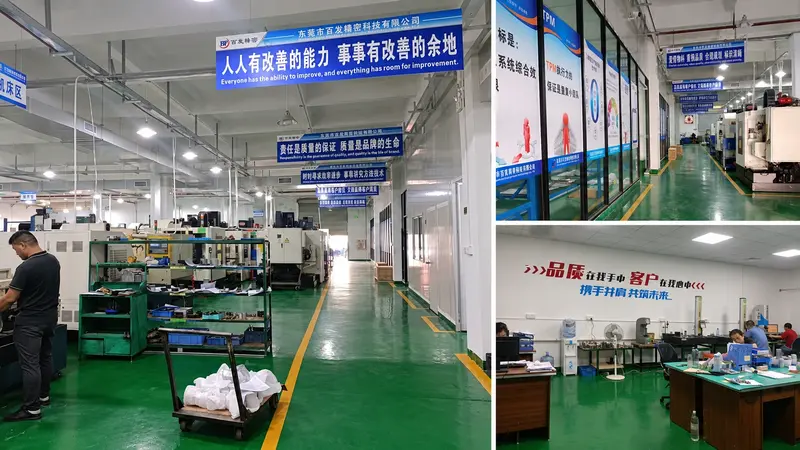
How Can You Control Costs, Lead Times, and Procurement Risks?
Compare Finished-Part Costs, Not Just Raw Material Prices
Custom part costs include raw material and waste, machining, heat treatment, surface finishing, cleaning, inspection, and tooling. Beryllium copper generally has higher material costs and more demanding processing controls than conventional phosphor bronze, but the actual difference depends on material condition, geometry, and order quantity.
Focus on three measures to control costs:
- Select the material and condition for the function: Avoid unnecessary strength or processing steps when the performance requirements are already met. Where forming or aging is needed, determine the appropriate raw material condition in advance.
- Concentrate strict requirements on critical features: Define tolerances for mating bores, contact surfaces, and spring structures. Apply reasonable requirements to nonfunctional dimensions rather than machining every feature to the highest precision.
- Validate the first article before stabilizing batch production: Confirm the final results after machining, heat treatment, and plating. Separate one-time tooling or development charges from repeat-order unit prices in the quotation.
Lead Time Depends on the Entire Manufacturing Route
Lead time includes more than CNC machining. It also covers material procurement, aging, plating schedules, cleaning, inspection, and packaging.
For precision spring components being produced for the first time, the schedule should allow for first-article validation. For repeat orders, the material condition and process route should be fixed, with clear approval requirements for changes to materials or subcontracted operations to reduce rework and lead-time variation.
Material Substitution Requires Revalidation of Critical Functions
Phosphor bronze and beryllium copper cannot be directly interchanged solely because the parts have the same shape or similar hardness. Substitution assessment should cover stress, contact force, temperature rise, cycle life, and assembly requirements.
If the replacement material lacks sufficient elastic load capacity, the structure or material selection must be revised. Adding plating cannot compensate for insufficient substrate strength.
Acceptance Should Address Three Levels
- Material consistency: Check material certificates, supplied condition, and batch identification against the purchasing requirements.
- Final part quality: Inspect critical dimensions, geometric tolerances, surfaces, and burr condition after heat treatment and surface finishing are complete.
- Actual function: Verify contact force, resistance, and temperature rise, or assess assembly, wear, and cycle life according to the application.
Retain approval records after the first article passes inspection. Changes to the material, aging process, plating, or critical machining route should trigger a reassessment of their effect on function.
Weldo’s Support for Custom Copper Alloy Parts
Weldo bietet CNC-Bearbeitungsdienstleistungen for prototypes, small batches, and repeat production, with turning, milling, and subsequent operations planned around bushings, sleeves, contact pins, threaded parts, and precision connecting components.
During project evaluation, we review the manufacturing route against the material condition, thin walls, fine slots, critical tolerances, and assembly requirements. The quotation also defines the scope of deburring, surface finishing, cleaning, and inspection.
Orders involving beryllium copper require an acceptance review based on the specific material, processing operations, and safety controls. Parts requiring aging or precision plating should also have clearly defined final dimensions and performance requirements after treatment.
You can submit your drawings and project requirements, including the material, quantity, critical functions, and target delivery date, for a manufacturing assessment and quotation.
Conclusion: When Should You Choose Phosphor Bronze or Beryllium Copper?
For conventional wear-resistant, conductive, and spring components, evaluate phosphor bronze first. For precision parts with limited space and higher load or contact force requirements, focus on beryllium copper.
| Part Requirements and Application | Material Selection Advice |
|---|---|
| Bushings, sliding washers, and wear sleeves with defined loads and lubrication conditions, where cost control matters | Consider phosphor bronze first. Confirm wear resistance, fit clearance, and lubrication requirements. |
| Conventional electrical contacts and instrument spring components whose existing dimensions meet conductivity and springback requirements | Consider phosphor bronze first. There is no need to increase material and machining costs solely for higher strength. |
| Small spring contacts, slotted sockets, and precision spring clamping components that must carry greater elastic loads in limited space | Focus on high-strength beryllium copper. Confirm yield strength and service life for the specified aged condition. |
| Connector contacts held under sustained compression or operating at elevated temperatures that require stable contact force | Evaluate beryllium copper closely. Verify stress relaxation performance at the actual temperature and loading duration. |
| High-current contacts or heat-dissipating inserts requiring a combination of electrical conductivity, thermal conductivity, and strength | Evaluate high-conductivity beryllium copper series. Do not directly apply high-strength beryllium copper property data. |
Keep one principle in mind when purchasing: If phosphor bronze meets the performance requirements, prioritize cost optimization. Choose an appropriate beryllium copper material when strength, contact force retention, or thermal and electrical conductivity becomes the limiting factor. Confirm the final choice using the specific material condition and finished-part test results rather than substituting on material names alone.