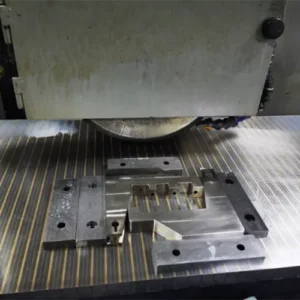

What Is a Flange Bolt?
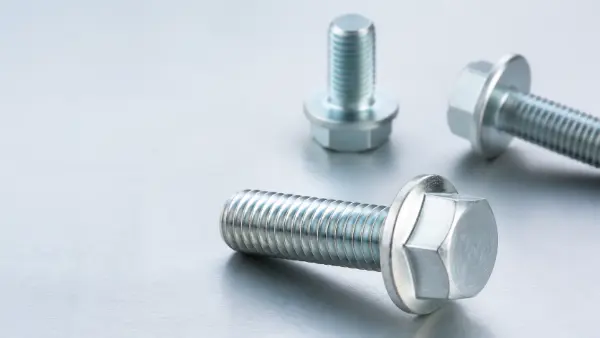
If you are asking, “What is a flange bolt?”, it is a threaded fastener with an integral circular flange beneath its head. The flange increases the contact area with the workpiece, distributes clamping force more evenly, and often eliminates the need for a separate washer.
Flange bolts are available with different bearing faces. A smooth flange helps protect coatings and precision-finished surfaces, while a serrated flange can resist loosening in vibration-prone assemblies where the serrations are permitted to bite into the mating surface.
For procurement teams, identifying a flange bolt is only the first step. A complete specification should confirm the thread, flange geometry, material, property class, surface treatment, quantity, and inspection documentation. These requirements determine whether a standard bolt, modified standard bolt, or fully custom CNC-machined flange bolt is the right solution.
This article focuses on fasteners with an integral flange beneath the head. In piping applications, “flange bolt” may also refer to a heavy hex bolt or stud bolt used to connect two pipe flanges; these are different fastener types.
How Does a Flange Bolt Work?
When a flange bolt is tightened, the installation torque creates axial tension in the bolt and establishes clamping force between the joined components. The flange beneath the head transfers this clamping force over a larger contact area.
This design can:
- Reduce localized contact pressure beneath the bolt head;
- Reduce the risk of indenting the surface of a softer workpiece;
- Improve support around slotted or oversized mounting holes;
- Reduce the need for a separate washer and additional assembly steps;
- Simplify fastener procurement and assembly management.
The flange itself cannot guarantee that the joint will never loosen. Joint stiffness, initial preload, vibration, temperature, contact-surface friction, and tightening method all affect connection reliability.
What Is the Difference Between a Flange Bolt and a Regular Hex Bolt?
| Comparison item | Flange bolt | Regular hex bolt |
| Bearing structure | Integral flange beneath the head | Relies mainly on the underside of the hex head |
| Separate washer | Usually unnecessary | Often fitted separately |
| Load distribution | Larger contact area | Depends on the head and washer |
| Assembly efficiency | Fewer individual components | May require simultaneous installation of a washer |
| Locking options | Available with a smooth or serrated flange | Usually requires a separate locking feature |
| Häufige Anwendungsbereiche | Automotive, machinery, and equipment assembly | General mechanical fastening |
| Customizable features | Flange, serrations, head style, shank, and thread | Mainly the head, shank, and thread |
A flange bolt must not replace a regular bolt and washer without verification. Before making a substitution, check the bearing area, joint preload, workpiece material, available installation space, and surface-protection requirements.
Common Types of Flange Bolts
Serrated Flange Bolts
A serrated flange bolt has radial serrations on the underside of its flange. After tightening, the serrations mechanically engage the contact surface and improve the bolt’s resistance to rotation.
It is commonly used in automotive chassis, engine accessories, industrial brackets, and vibrating equipment. The serrations leave impressions on the contact surface, so this design is unsuitable for decorative surfaces, sealing faces, thin coatings, anodized surfaces, or softer plastic components.
Smooth Flange Bolts
A smooth flange bolt has an even bearing face. It distributes the clamping force while reducing damage to workpiece coatings and precision-finished surfaces.
It is suitable for painted sheet-metal parts, aluminum housings, precision mounting surfaces, and assemblies that require repeated disassembly.
Hex Flange Bolts
A hex flange bolt has an external hex head and can be installed with a standard wrench or socket. It is one of the most common flange-bolt designs used in automotive, machinery, and general industrial assembly.
12-Point Flange Bolts
A 12-point head provides more tool-engagement positions and is suitable for assemblies with limited operating angles or restricted head space. It is commonly used in powertrain systems, racing components, aerospace equipment, and high-performance machinery.
Socket Flange Bolts
A socket flange bolt is installed with a hex key and is suitable for automation equipment and precision machinery where radial space is limited or an external wrench cannot be used conveniently.
What Parts Commonly Use Flange Bolts?
Flange bolts are suitable for connections that require a larger bearing area, fewer washers, or greater assembly efficiency.
Zu den üblichen Anwendungen gehören:
- Engine brackets and transmission housings;
- Automotive chassis, suspension, and braking systems;
- New-energy vehicle battery housings and electric-drive systems;
- Motors, gearboxes, and transmission assemblies;
- Pump bodies, valve bodies, and compressors;
- Industrial robot joints;
- Automation equipment and precision fixtures;
- Construction and agricultural machinery;
- Electrical cabinets and equipment frames;
- Marine equipment and outdoor machinery.
Actual selection cannot be based solely on the industry or part name. Load direction, vibration level, installation space, operating temperature, and workpiece surface condition must also be considered.
What Technical Specifications Must Be Confirmed When Purchasing Flange Bolts?
A buyer should not provide only a brief description such as “M8 flange bolt.” Even when the thread diameter is the same, the flange, head, pitch, material, and property class may be entirely different.
Product Standard
Specify the ISO, ASME, DIN, JIS, company, or customer-drawing standard and confirm the applicable revision.
ISO 4162:2012 applies to certain small-series hexagon flange bolts from M5 to M16. ASME B18.2.1 covers inch-series hex flange head screws and other products.
If an obsolete standard or an internal company standard is used, the drawing should retain all dimensions and tolerances to prevent misunderstandings between different revisions.
Thread Specification
Specify whether the thread is metric, UNC, or UNF, along with the nominal diameter, pitch, direction, tolerance class, and effective thread length.
For example, M10 × 1.25-6g provides more complete manufacturing and inspection information than simply specifying M10.
Flange Geometry
Specify the flange outside diameter, thickness, radii, chamfers, and bearing-face design. For a serrated flange, the serration direction, depth, and distribution should also be defined by the product standard or drawing.
Head and Shank
Specify an external hex, 12-point, internal hex, or another drive form, together with the head height, width across flats, plain shank, steps, locating sections, and undercuts.
Material and Mechanical Properties
The material grade and finished property class must be specified separately. 4140 and 42CrMo4 are material grades, while 8.8, 10.9, and 12.9 are fastener property classes.
The finished bolt’s property class can be confirmed only when the material, heat treatment, and mechanical properties all meet the applicable requirements.
Oberflächenbehandlung
Specify the treatment type, coating thickness, color, corrosion-resistance requirements, and thread-dimension allowances. Surface treatment changes the coefficient of friction, so installation torque must correspond to the final surface condition.
Qualitätsdokumentation
Material certificates, first-article reports, heat-treatment records, and surface-treatment reports affect price and lead time and must be specified before purchase rather than added after production is complete.
Should You Purchase a Standard Part, a Modified Part, or a Custom CNC-Machined Part?
Not every flange bolt requires CNC machining. Selecting the correct manufacturing route helps control cost and lead time.
| Procurement option | Suitable situation | Hauptvorteil |
| Standard flange bolt | Standard dimensions, material, and property class meet the requirements | Lower cost and stable supply |
| Modified standard part | Only shortening, drilling, slotting, or a surface-treatment adjustment is required | More economical than full customization |
| Fully custom CNC-machined part | The flange, head, shank, thread, or material is non-standard | Suitable for prototypes, special geometries, and small batches |
| Cold-headed or forged production | The design is stable and long-term demand is high | Lower unit cost in volume, but tooling investment is required |
When to Prioritize a Standard Part
A standard part should be purchased first when the standard product’s thread, length, flange, material, property class, and surface treatment all satisfy the design.
When to Modify a Standard Part
If the body of a standard bolt can be used and only shortening, drilling, slotting, adjustment of thread length, or a different surface treatment is required, modifying a standard part can be evaluated.
Before modification, check whether the additional machining will damage the original heat-treated layer, coating, or mechanical properties.
When Full CNC Customization Is Appropriate
The following projects are more suitable for CNC machining:
- Non-standard flange diameter or thickness;
- Special head or drive geometry;
- Stepped, locating, or reduced-diameter shanks;
- Special pitch, left-hand, or multi-start threads;
- Titanium alloys, nickel-based alloys, or special stainless steels;
- Prototype and small-batch validation;
- Spare parts for discontinued equipment;
- Reverse engineering from an existing sample;
- Drawing requirements for concentricity, runout, or face perpendicularity;
- Material and dimensional traceability requirements.
What Metal Materials Can Be Used for Flange Bolts?
Weldo Machining can evaluate flange bolts in carbon steel, alloy steel, stainless steel, aluminum alloy, titanium alloy, nickel-based alloy, and copper alloy based on customer drawings or approved samples.
| Material category | Gängige Güteklassen | Main characteristics | Typische Anwendungen |
| Kohlenstoffstahl und legierter Stahl | 1045, C45, 4140, 42CrMo4, 4340 | High strength with good fatigue resistance and heat-treatment response | Automotive, heavy equipment, and industrial machinery |
| Rostfreier Stahl | 303, 304/304L, 316/316L, 17-4PH | Corrosion resistant, with options that balance strength and machinability | Food equipment, pumps and valves, marine, and outdoor equipment |
| Aluminum alloy | 6061-T6, 6082-T6, 7075-T6 | Lightweight, corrosion resistant, and readily machinable | Electronic equipment, instruments, and lightweight assemblies |
| Titanium alloy | 2. Klasse, 5. Klasse | High strength-to-weight ratio and good corrosion resistance | Aerospace, marine, and specialized equipment |
| Nickel-based alloy | Inconel 625, Inconel 718, Hastelloy C276 | Resistant to high temperatures and chemical corrosion | Energy, chemical processing, and high-temperature exhaust systems |
| Messing und Bronze | C360, C630, C954 | Good machinability, corrosion resistance, or electrical conductivity | Electrical equipment, instruments, and marine assemblies |
For high-strength steel flange bolts with electroplated finishes, the risk of hydrogen embrittlement must be evaluated. The final material, heat treatment, coating, and performance-verification method should be confirmed in the drawing or purchase order.
Can Engineering Plastics Be Used to Machine Flange Bolts?
Yes. Engineering-plastic flange bolts are suitable for lightly loaded assemblies that require electrical insulation, chemical resistance, weight reduction, or non-magnetic performance.
| Engineering plastic | Main characteristics | Geeignete Umgebung | Beschränkungen |
| Nylon/PA | Lightweight, tough, and electrically insulating | Electronic equipment, covers, and light-duty machinery | Moisture absorption, creep, and limited tightening torque |
| POM | Low moisture absorption, good dimensional stability, and low friction | Instruments and precision light-duty assemblies | Unsuitable for prolonged high-temperature service |
| PEEK | Heat resistant, chemically resistant, with relatively good mechanical performance | Semiconductor, chemical-processing, and electrical equipment | High cost and lower stiffness than metal |
| PVDF | Chemical resistance, weather resistance, and electrical insulation | Chemical-processing and laboratory equipment | Lower load capacity than metal |
| PTFE | Corrosion resistant with a very low coefficient of friction | Specialized corrosive environments | Significant creep and poor preload retention |
Engineering-plastic bolts cannot directly replace high-strength metal flange bolts. Tightening torque, sustained load, temperature, humidity, chemical media, thread engagement, and long-term creep must be controlled during design.
Weldo can evaluate non-standard engineering-plastic flange bolts in materials such as PA, POM, PEEK, and PVDF based on drawings. Plastic hex fasteners are also commercially available in nylon, PA, PEEK, PP, and PVDF.
Common Surface Treatments for Flange Bolts
Surface treatment affects corrosion resistance, wear resistance, appearance, dimensions, and installation friction. A drawing should not merely state “rust prevention”; it should define the treatment type, thickness, color, and acceptance requirements.
Verzinkung
Zinc plating provides sacrificial corrosion protection for carbon- and alloy-steel parts, and the purchase specification should define the electroplating or other zinc process, color, thickness, salt-spray requirement, and hexavalent-chromium restriction.
Vernickeln
Nickel plating improves the corrosion resistance, wear resistance, and appearance of steel, brass, and copper-alloy flange bolts, and the specification should distinguish electroplated nickel from electroless nickel and define the coating thickness.
Black Oxide
Schwarzes Oxid forms a black conversion layer on steel, primarily improving appearance and providing limited rust protection, and it normally requires supplementary rust-preventive oil.
Phosphate Coating
Phosphate coating improves oil retention, friction behavior, and the adhesion of subsequent coatings on steel bolts, and the drawing should identify zinc or manganese phosphate and whether a sealer is required.
Zinc-Flake Coating
Zinc-flake coating is suitable for automotive and outdoor fasteners that require higher corrosion resistance, and the specification should define the coating system, thickness, salt-spray duration, and coefficient-of-friction range.
Stainless-Steel Passivation
Passivierung removes free iron and machining contamination from stainless-steel surfaces to help restore a stable corrosion-resistant surface, but it does not form a metal coating of significant thickness.
Elektropolieren
Electropolishing removes a small amount of material from a stainless-steel surface to reduce microscopic peaks and is suitable for assemblies that require improved cleanliness, appearance, and corrosion performance.
Standard Anodizing
Standard Eloxieren forms an oxide layer on aluminum alloy to improve corrosion resistance and appearance, and the specification should define the color, film thickness, and whether threads must be masked.
Hartanodisierung
Hard anodizing forms a thicker, wear-resistant oxide layer suitable for mechanical components, but dimensional allowance must be made for its effect on outside diameters, holes, and thread fit.
Chemische Umwandlungsbeschichtung
Chemical conversion coating is suitable for aluminum parts that require corrosion protection, paint preparation, or electrical conductivity, and the purchase specification should define conductivity, color, and environmental requirements.
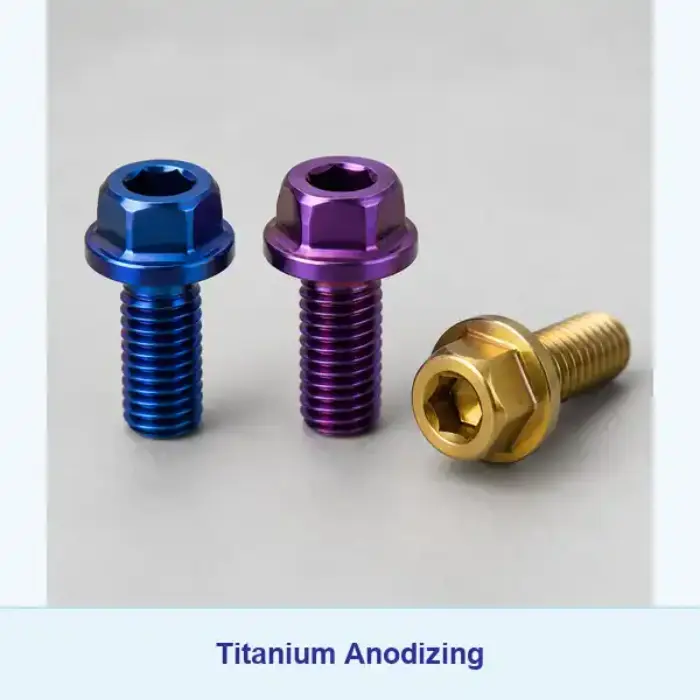
Titanium Anodizing
Titanium anodizing can create identification colors through an oxide film and improve surface condition, and it is commonly used for assembly identification in aerospace, medical, and precision equipment.
Polieren
Mechanik Polieren can reduce surface roughness and improve the appearance of stainless-steel, brass, bronze, or titanium bolts, but excessive material removal from critical bearing faces must be avoided.
Deburring and Polishing Engineering Plastics
Engineering-plastic parts are normally left in the as-machined condition, with fine deburring or localized polishing used to improve thread entries, flange edges, and visible surfaces.
Critical joints should have their installation torque validated in the final material, coating, and lubrication condition; torque data for untreated bolts must not be applied directly.
What Non-Standard Features Can Weldo Machining Produce?
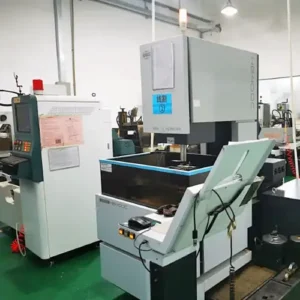
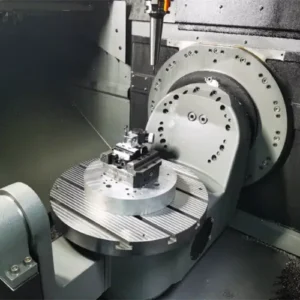
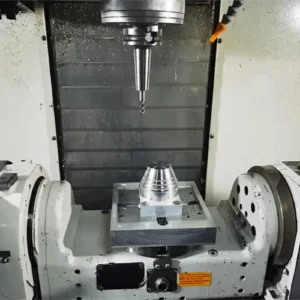
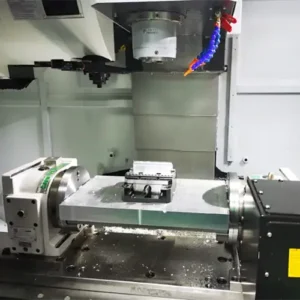
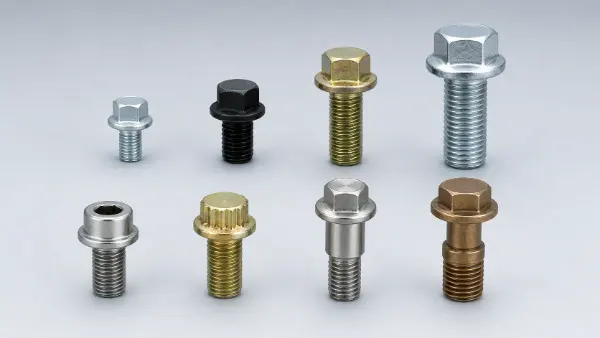
Weldo can use CNC-Drehen and milling to produce drawing-specified flange-bolt features, including:
- Special Flansch diameters and thicknesses;
- Hex, 12-point, and internal-hex heads;
- Smooth or serrated bearing faces;
- Stepped, reduced-diameter, and locating shanks;
- Cross holes, slots, and mechanical locking features;
- Metric, UNC, and UNF threads;
- Left-hand threads and special pitches;
- Metal and selected engineering-plastic fasteners;
- Prototypes, maintenance spares, and small-batch parts.
Weldo determines whether a modified standard part or full CNC-Bearbeitung is more appropriate based on the drawing, material, quantity, and performance requirements.
What Factors Affect the Price and Lead Time of Custom Flange Bolts?
Rohmaterial
Standard steel, stainless steel, titanium alloy, PEEK, and nickel-based alloys differ in material cost, minimum purchase quantity, and machining difficulty.
Geometric Complexity
Special flanges, 12-point heads, internal hex features, stepped shanks, cross holes, slots, and locking serrations add setups and machining operations.
Thread-Manufacturing Method
Cut threads are suitable for prototypes and non-standard specifications, while rolled threads are more appropriate for stable production designs but require the correct material condition and process preparation.
Heat Treatment and Surface Treatment
Hardening, tempering, plating, passivation, and anodizing add production stages, and dedicated verification can further extend lead time.
Purchase Quantity
Small-batch orders are affected mainly by programming, tooling, and first-article inspection costs, while higher quantities may justify reevaluation of cold heading, forging, or dedicated tooling.
Dokumentation der Inspektion
Material certificates, FAI, PPAP, hardness records, and coating reports increase inspection work and must therefore be specified before quotation.
Manufacturing Process for Custom Flange Bolts
1. Drawing Review
Review the thread, head, flange, shank, material, performance, heat treatment, surface treatment, and inspection requirements.
2. Manufacturing-Route Selection
Determine whether to use a modified standard part, full CNC machining, thread rolling, cold heading, or another manufacturing method based on geometry and quantity.
3. Material Preparation
Verify the material grade, supply condition, and material certificate, then cut the bar stock to the required length.
4. CNC Turning
Machine the flange profile, bearing face, shank, steps, locating surfaces, and thread-preparation diameter.
5. CNC-Fräsen
Machine the hex, 12-point, internal hex, cross holes, slots, or other drive and locking features.
6. Thread Production
Select cutting, rolling, or another appropriate thread-manufacturing method based on material, quantity, and performance requirements.
7. Wärmebehandlung and Surface Treatment
Complete hardening, tempering, passivation, plating, anodizing, or another treatment as specified by the drawing.
8. Inspection and Packaging
Complete dimensional, thread, hardness, coating, and visual inspection, then protect the threads and surfaces during packaging.
What Must Be Inspected on Custom Flange Bolts?
Thread GO/NO-GO Gauging
Use the corresponding thread ring gauges to confirm that the external thread assembles correctly and that the treated thread still meets tolerance requirements.
Thread Pitch and Form
Use thread gauges, optical equipment, or profile measurement to confirm pitch, flank angle, and root form, with special threads inspected by the method specified on the drawing.
Flange Dimensions
Measure the flange outside diameter, thickness, radii, and chamfers to confirm that the flange provides the specified bearing area without interfering with adjacent parts.
Head Dimensions
Inspect the hex width across flats, 12-point profile, internal hex, and head height to ensure correct engagement with the installation tool.
Shank Diameter and Straightness
Measure the plain shank, steps, and locating sections and check for bending that could interfere with assembly.
Overall Length and Thread Length
Inspect the under-head length, overall length, effective thread length, and thread-relief position to prevent insufficient engagement or loss of location.
Face Runout and Perpendicularity
Inspect the runout and perpendicularity of the flange bearing face relative to the bolt axis to prevent eccentric loading after tightening.
Härte
Hardness testing verifies the heat-treated condition, while critical products also require tensile or proof-load testing.
Beschichtungsdicke
Measure the coating or conversion-layer thickness to confirm corrosion requirements and dimensional effects and to prevent excessive buildup from obstructing thread assembly.
Oberflächenrauhigkeit
Measure the roughness of the flange bearing face, locating section, or other specified surface to verify friction, fit, or sealing requirements.
Burrs and Visual Condition
Inspect thread entries, flange edges, cross holes, and slots for burrs, cracks, impact damage, or coating defects.
Zertifizierung von Materialien
Verify the material grade, heat number, chemical composition, and supply condition, and link the source-material records to the finished batch.
Batch Traceability
Confirm that part labels, packaging, material records, production records, and inspection records use a consistent batch number.
First-Article Dimensional Report
Inspect the agreed dimensions on the first article before batch production to confirm the program, tooling, and measurement method.
What Quality Documents Must Be Defined at the Quotation Stage?
FAI
FAI confirms whether the first manufactured part complies with the drawing, and the buyer should specify a full-dimensional, key-characteristic, or industry-specific format.
PPAP Documentation
PPAP is used for production-process approval in automotive projects, and the quotation request should specify the submission level, sample quantity, and required documents.
Material Test Report
The material report verifies the grade, chemical composition, mechanical properties, and heat information and should correspond to the production batch.
Heat-Treatment Report
The heat-treatment report records the process, temperature, time, and results and is used to confirm compliance with hardness or mechanical-property requirements.
Surface-Treatment Report
The surface-treatment report verifies the coating type, film thickness, color, and corrosion-test results.
Tensile Testing
Tensile testing verifies the finished part’s tensile strength, yield behavior, or fracture condition, and the sampling quantity and acceptance basis must be specified.
Proof-Load Testing
Proof-load testing confirms that the bolt does not undergo unacceptable permanent deformation under a specified axial load.
Torque–Tension Testing
Torque–tension testing evaluates the relationship between installation torque and preload under the actual coating and lubrication condition.
Salt-Spray Testing
Salt-spray testing verifies the corrosion performance of the coating system, and the test duration and failure criteria must be specified.
Batch-Traceability Documentation
Traceability documentation links finished parts to raw material, machining, heat treatment, surface treatment, and inspection records.
The documents and tests above are not automatically included in a standard order and must be specified in the quotation request and purchase order.
How Should You Select a Custom Flange-Bolt Supplier?
When purchasing non-standard flange bolts, do not compare unit price alone. Also check whether the supplier can:
- Review the thread, flange, head, and shank geometry;
- Distinguish between material grade and property class;
- Determine whether modification of a standard part or full CNC machining is more appropriate;
- Use the corresponding thread gauges;
- Control heat treatment and surface treatment;
- Provide material and batch traceability;
- Support sample or first-article approval;
- Inspect runout, concentricity, and perpendicularity;
- Provide the agreed dimensional report;
- Protect precision threads and visible surfaces;
- Isolate, analyze, and correct nonconforming products.
For long-term procurement programs, sample lead time, production lead time, batch management, packaging method, and annual demand should also be confirmed separately.
What Information Is Needed to Quote Custom Flange Bolts?
2D Drawing
The 2D drawing defines dimensions, tolerances, threads, material, surface treatment, and inspection requirements; critical dimensions must not be communicated only through a 3D model.
3D Model
A STEP or similar 3D model helps identify the overall geometry, interference relationships, and special contours.
Product Standard
Specify the ISO, ASME, DIN, JIS, or company standard and the applicable revision to prevent inconsistencies between standards.
Thread Specification
Provide the thread system, nominal diameter, pitch, direction, and tolerance, such as M10 × 1.25-6g.
Length and Shank
Specify the under-head length, effective thread length, plain shank, steps, and locating-section dimensions.
Flange Geometry
Specify the flange outside diameter, thickness, radii, chamfers, and smooth or serrated bearing face.
Head Style
Specify a hex, 12-point, internal hex, or another design, together with the tool-fit dimensions.
Material and Condition
Define the material standard, specific grade, and supply or heat-treated condition; “stainless steel” or “high-strength steel” alone is not sufficient.
Performance Requirements
Specify the property class or directly define tensile strength, yield strength, hardness, and other mechanical properties.
Oberflächenbehandlung
Specify the treatment type, thickness, color, salt-spray requirement, coefficient of friction, and areas that must be masked.
Purchase Quantity
Provide the prototype quantity, initial order quantity, and estimated annual demand separately so that the appropriate manufacturing route can be selected.
Dokumentation der Inspektion
Specify FAI, PPAP, material certification, hardness, coating reports, and other special testing requirements.
Serviceumgebung
Provide load, vibration, temperature, corrosive media, and indoor or outdoor service conditions.
Verpackung und Lieferung
Specify rust prevention, thread protection, batch labels, sample due date, and production-delivery arrangements.
How Does Weldo Machining Support Non-Standard Flange-Bolt Projects?
Weldo Machining can evaluate metal and selected engineering-plastic flange bolts based on drawings or approved samples.
Project review includes:
- Whether a standard part can be used directly;
- Whether modification of a standard part is appropriate;
- The CNC turning and milling route;
- The thread-manufacturing method;
- Material, heat treatment, and surface treatment;
- First-article and batch inspection requirements;
- Prototype and subsequent production planning.
Complete drawings, material, quantity, and quality-document requirements help support a more accurate evaluation of the manufacturing route, price, and lead time.
Häufig gestellte Fragen
What Do M6, M8, and M10 Mean?
The letter “M” indicates an ISO metric thread, and the following number is the nominal major thread diameter in millimeters; it is not the bolt-head or flange diameter.
Which Type of Bolt Thread Is Strongest?
No single thread is best for every service condition; fine threads generally provide a larger tensile-stress area, while coarse threads better resist damage and are more suitable for softer materials and frequent assembly.
How Is the Installation Torque for a Flange Bolt Determined?
Installation torque must be determined from the thread, property class, coating, lubrication, target preload, and internal-thread strength, and critical joints should use validated torque–tension data.
Can Serrated Flange Bolts Be Reused?
The serrations, threads, head, and contact surface should be inspected after removal, and the bolt should be replaced if the serrations are worn or the locking performance cannot be confirmed.
How Can Thread Galling Be Reduced on Stainless-Steel Flange Bolts?
Keeping the threads clean, controlling installation speed, using a compatible anti-seize compound, and selecting an appropriate bolt-and-nut material combination can reduce adhesion and cold welding.
Can a Flange Bolt Be Customized from an Old Sample Without a Drawing?
A complete and not severely worn sample can be measured and modeled, but the material, heat treatment, thread standard, surface treatment, and service load still need to be confirmed.
How Can Production Scale Up After Prototype Validation?
CNC machining can be used during the prototype stage to validate dimensions and assembly, after which a modified standard part, cold heading, forging, or thread rolling can be evaluated to reduce volume-production cost.