
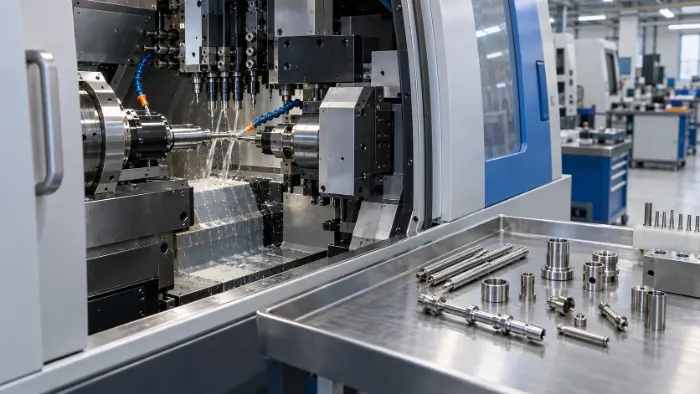
Swiss CNC machining is suitable for producing small-diameter, slender, and multi-feature precision parts, such as miniature shafts, locating pins, bushings, valve spools, connectors, medical screws, and precision fittings. This process uses a guide bushing to support the bar stock close to the cutting tool, reducing bending, vibration, and tool deflection during machining.
For custom parts buyers, selecting a Swiss CNC supplier should not be based solely on unit price. A factory’s machining diameter range, ability to produce complex features, tolerance stability, inspection methods, material traceability, and actual lead times all affect the final procurement cost and assembly quality. This guide compares 9 trusted Swiss CNC machining suppliers representing different cooperation models, including digital manufacturing platforms, in-house machining factories, and comprehensive contract manufacturing services.
Quick Ranking of the 9 Trusted Swiss CNC Machining Suppliers
| Поставщик | Основные характеристики | Best-Suited Projects |
|---|---|---|
| Xometry | Digital manufacturing network, online quoting, and extensive supplier resources | Cross-regional sourcing, rapid price comparison, and multi-process projects |
| RapidDirect | Combines Swiss machining with multi-process manufacturing | Prototypes, complex precision parts, and low-to-medium-volume production |
| Обработка Weldo | In-house factory, direct engineering communication, and one-stop manufacturing | Shafts, pins, bushings, fittings, and repeat orders |
| Runsom Precision | Combines Swiss turning with multi-axis CNC machining | Multi-feature precision rotational parts |
| 3ERP | Rapid manufacturing, DFM review, and flexible production volumes | Product validation, low-volume, and bridge production |
| Prolean Tech | Multi-material Swiss turning and mill-turn capabilities | Precision small parts in metals and engineering plastics |
| WayKen | Focuses on rapid prototyping and low-volume manufacturing | R&D testing, design validation, and trial production |
| Fictiv | Digital supply chain and project management | Multi-regional supplier management and integrated sourcing |
| PTSMAKE | China-based manufacturing resources and precision small-part machining | Low-volume, production-volume, and cost-sensitive projects |
1. Xometry
Xometry provides Swiss machining services through a digital manufacturing network. Buyers can upload CAD files to obtain pricing, lead-time information, and preliminary DFM feedback, making it suitable for projects that require rapid comparison of multiple manufacturing solutions.
Its manufacturing network supports complex small-diameter parts in aluminum, brass, copper, stainless steel, titanium, superalloys, and various engineering plastics. Its quality systems and optional certification services support applications in the medical, automotive, aerospace, and industrial equipment sectors.
Xometry’s advantages include extensive manufacturing resources, an efficient quotation process, and the ability to coordinate multiple materials and surface finishes. As a platform-based supplier, it is not the same as working with a single in-house factory. For long-term production sourcing, buyers should confirm the actual manufacturing location, process inspection responsibilities, and whether repeat orders will be produced under the same manufacturing conditions.
2. RapidDirect
RapidDirect provides Swiss CNC machining for sample validation, low-volume orders, and production runs. The process supports the bar stock with a guide bushing and uses live tooling and a sub-spindle to complete multiple part features within the same machining cycle.
This production method is suitable for complex parts containing external diameters, internal bores, threads, cross holes, flats, grooves, and back-side features. Swiss machining can also be combined with conventional CNC turning, milling, grinding, and surface finishing, reducing the need for buyers to manage multiple contract manufacturing factories separately.
For tight-tolerance projects, buyers should confirm the actual machine configuration, bar diameter, critical dimensional capability, and inspection plan based on the drawing. Medical, aerospace, and safety-critical parts also require verification that the relevant quality certifications cover the corresponding production location and manufacturing process.
3. Weldo Machining
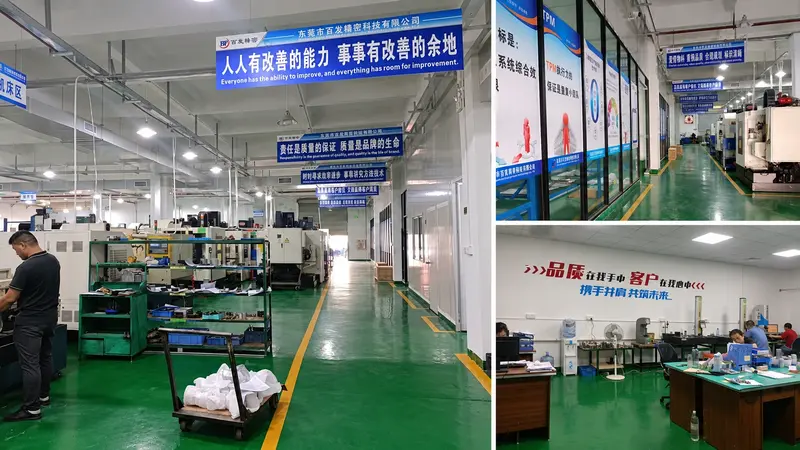
Обработка Weldo operates an in-house machining factory and provides Swiss CNC machining services for custom shafts, pins, втулки, fittings, fasteners, and other small precision parts.
Before quoting, engineers review the part diameter, length-to-diameter ratio, material, tolerances, surface roughness, and feature locations. They then plan main-spindle turning, live-tool machining, sub-spindle part transfer, and back-side finishing based on the part geometry. Reducing secondary setups provides more stable control over concentricity, runout, and the positional relationships between features.
Weldo provides one-stop services covering material sourcing, CNC machining, heat treatment, grinding, surface finishing, and final inspection. First-article approval, in-process inspection, and final inspection are used to maintain batch consistency and reduce errors and delays caused by supply-chain handoffs.
After the technical requirements are confirmed, standard projects are generally shipped within 3–15 days. Lead times for production orders and projects involving precision grinding, heat treatment, or special coatings are agreed upon according to the quantity and manufacturing route. This cooperation model is suitable for buyers who value direct engineering communication, production transparency, and long-term supply stability.
4. Runsom Precision
Runsom Precision provides Swiss CNC machining services for small, high-precision, and complex rotational parts. Its machinable materials include aluminum, brass, copper, stainless steel, alloy steel, and engineering plastics.
Runsom can combine Swiss turning with 3-axis, 4-axis, and 5-axis CNC machining. When a part contains side holes, grooves, flats, or complex end-face features in addition to rotational profiles, these multi-process capabilities can reduce outsourcing and repeated positioning.
Buyers need to confirm the maximum bar diameter, guide-bushing type, live-tool configuration, post-heat-treatment finishing method, and inspection method for critical dimensions based on the specific drawing. Production orders should also address tool-life management, automatic compensation, and dimensional trend monitoring.
5. 3ERP
3ERP uses Swiss machining to produce slender parts such as medical screws, miniature shafts, precision pins, and electronic connectors. It also provides multi-axis milling, CNC turning, EDM, и precision grinding services.
The supplier supports prototypes, low-volume production, bridge production, and production orders, making it suitable for projects that still require design validation but are expected to scale in volume. Engineers can evaluate thin walls, deep holes, groove widths, threads, and tolerance requirements before machining, reducing repeated modifications during the sample stage.
For parts requiring micron-level fits, strict roundness, or fine surfaces, the dimensions after Swiss turning and the final dimensions after grinding should be specified separately. This prevents all precision requirements from being assigned to a single turning operation and creates a more practical inspection plan.
6. Prolean Tech
Prolean Tech provides Swiss CNC-related manufacturing services and uses sliding headstocks, guide bushings, live tooling, and sub-spindles to produce slender, multi-feature parts.
Its material range includes aluminum, carbon steel, stainless steel, brass, titanium, and engineering plastics such as PEEK, POM, and PTFE. This material coverage gives buyers more design options for parts requiring corrosion resistance, electrical insulation, low friction, or lightweight construction.
For tight-tolerance projects, buyers should confirm whether critical features are produced directly on a Swiss machine or completed through grinding, lapping, or other secondary processes. When industry certifications are involved, the scope of the quality certificates and the actual production factory must also be verified.
7. WayKen
WayKen focuses on rapid prototyping, design validation, and low-volume manufacturing, including precision machining requirements related to Swiss machining.
WayKen is better suited to R&D teams that need functional samples quickly, particularly for projects that still require verification of assembly relationships, material performance, and structural design. Swiss machining can improve dimensional stability for parts with small diameters, high length-to-diameter ratios, or complex side features.
Before sourcing, buyers should ask the machine shop to confirm the relevant Swiss machine models, bar diameter range, number of live tools, inspection equipment, and experience with similar parts. Its actual capabilities should be validated through low-volume trial production before proceeding to long-term production cooperation.
8. Fictiv
Fictiv is a digital manufacturing and supply-chain management platform that coordinates CNC machining projects through a managed manufacturing network.
Its main advantages are supplier selection, project tracking, quality documentation, and logistics coordination. This model reduces supply-chain management work for purchasing teams that lack the internal resources to manage multiple machining factories, post-processing suppliers, and logistics providers.
A platform-based model also adds a management layer between the buyer and the actual production factory. Long-term repeat orders require clearly defined manufacturing-location change rules, first-article approval procedures, quality responsibilities, and process-change notification requirements to maintain consistency between batches.
9. PTSMAKE
PTSMAKE provides machining solutions for slender shafts, hydraulic valve spools, cross holes, grooves, and other precision features related to Swiss machining.
This contract manufacturing factory is suitable for projects that use China’s manufacturing supply chain for samples, low-volume orders, and subsequent production. Guide-bushing support helps reduce deflection in slender parts, while live tooling enables side holes, flats, and grooves to be completed in one setup.
Buyers should request machine information, bar-stock ranges, tolerance capabilities, and an inspection plan corresponding to the specific order. General accuracy data provided by the machine shop cannot be applied directly as the acceptance standard for every part. Final requirements must be established in the engineering drawing, quotation, and quality documents.

Main Advantages of Swiss Machining
Greater Stability for Slender Parts
A conventional lathe generally supports the workpiece from the chuck. As bar overhang increases, bending and vibration caused by cutting forces become more pronounced. A Swiss machine positions the guide bushing close to the cutting area, significantly shortening the unsupported length and making it better suited to miniature shafts, needle shafts, locating pins, and slender sleeves.
Multiple Features Can Be Completed in One Setup
Live tooling can machine cross holes, grooves, flats, eccentric holes, and threads, while the sub-spindle receives the part and completes back-side machining on the cut-off end. By reducing secondary setups, external diameters, internal bores, and side features can be maintained from a common machining datum.
Suitable for Continuous Production
An automatic bar feeder continuously supplies material. Once the program, collet, guide bushing, and tooling layout are stabilized, a Swiss machine can continuously produce identical parts and use tool compensation to maintain dimensional consistency throughout the batch.
Reduced Process Handoffs
Turning, drilling, milling, tapping, and cutoff operations can be completed on one machine, reducing waiting time, handling, repositioning, and the time and quality risks associated with supplier handoffs.
Main Disadvantages of Swiss Machining
Higher Initial Setup Costs
Swiss machining requires programming, guide-bushing and collet preparation, tooling layout, first-article setup, and collision checks. For very small quantities of simple parts with low length-to-diameter ratios, conventional CNC turning is generally more economical.
Strict Bar-Stock Requirements
Bar diameter, roundness, straightness, and surface condition directly affect guide-bushing fit. Bent bar stock causes vibration, while excessive diameter variation can create inconsistent clearance or material feeding problems. High-precision projects require stable bar stock that has been straightened, cold-drawn, or precision-ground.
Part Size Is Limited by Machine Specifications
Swiss machines are primarily designed for small-diameter bar stock. Large-diameter, short, and rigid rotational parts do not require the additional support of a guide bushing and are better suited to conventional CNC turning centers.
Some Precision Requirements Still Require Grinding
Strict roundness, cylindricity, dimensional fits, post-heat-treatment tolerances, and low surface roughness often require cylindrical grinding, centerless grinding, honing, or lapping. Swiss turning cannot replace every precision finishing process.
How to Select a Swiss CNC Supplier for Your Project
When fast online quoting, cross-regional sourcing, and broad manufacturing resources are required, Xometry, RapidDirect, and Fictiv are better suited to platform-based procurement. These suppliers can reduce the time required to locate different process partners, but long-term projects must clearly define the actual production location and quality responsibilities.
When direct communication with engineers at an in-house factory is required, Обработка Weldo, Runsom, and 3ERP are more suitable. For parts involving high length-to-diameter ratios, thin walls, special materials, heat-treatment distortion, or strict inspection requirements, direct technical communication helps identify manufacturing risks before production.
WayKen, Prolean, and PTSMAKE are more suitable for prototypes, low-volume orders, or cost comparisons. Buyers can first verify dimensions, materials, and surface quality through sample production, then decide whether to increase the order volume based on quality stability, responsiveness, and actual lead times.
Long-term production projects should focus on automatic bar feeding, tool-life management, in-process compensation, machine capacity, material traceability, and change control. The ability to produce a one-time sample does not automatically demonstrate stable long-term production capability.
How to Control Swiss CNC Machining Costs
Plan Order Quantities Appropriately
Swiss machining requires investment in programming, guide bushings, collets, tooling layouts, and first-article setup. Combining orders of the same revision and using practical batch quantities distributes these preparation costs. Repeat orders can also reuse validated programs and tooling.
Apply Tight Tolerances Only to Critical Dimensions
Locating diameters, sealing surfaces, bearing seats, and moving fits require strict control, while non-functional geometry can use reasonable general tolerances. Overly tight tolerances increase finishing operations, tool-compensation frequency, and inspection costs.
Use Standard Materials and Bar Sizes
Common materials and standard bar sizes are easier to source, with more stable pricing and lead times. Non-standard diameters, special material conditions, or precision-ground bar stock increase material costs, minimum order quantities, and preparation time.
Reduce Secondary Setups and Special Tooling
Cross holes, grooves, flats, threads, and back-side features should be completed with live tooling and a sub-spindle whenever practical. Standard hole diameters, groove widths, and thread sizes reduce special tooling, additional fixtures, and transfer-machining expenses.
Set Surface and Post-Processing Requirements Appropriately
Strict surface roughness should be specified only for fitting, sealing, and sliding surfaces. Heat treatment, grinding, plating, and special cosmetic finishes should be selected according to part function, avoiding unnecessarily high-grade requirements across the entire part.
How to Verify a Swiss CNC Factory’s Actual Capabilities
First, require the supplier to complete a DFM review. Effective engineering feedback should address bar-stock condition, guide-bushing compatibility, length-to-diameter ratio, thin-wall deformation, tool accessibility, sub-spindle part transfer, burr locations, and inspection methods rather than providing only a price.
Next, validate dimensional accuracy, surface quality, material compliance, and delivery performance through a first article or low-volume order. The first-article inspection report should correspond to the numbered critical dimensions on the drawing and identify the inspection equipment used. For concentricity, runout, roundness, and miniature features, confirm that the measurement method accurately represents the functional requirement.
For long-term orders, confirm that the production factory, machine type, material source, and critical processes remain fixed. When a supplier changes equipment, bar-stock sources, or post-processing partners, it should notify the buyer in advance and repeat the required first-article validation.
Start a Swiss CNC Project with Weldo
Weldo Machining provides drawing review, material sourcing, Swiss CNC machining, post-processing, and inspection services for custom shafts, pins, bushings, fittings, fasteners, and other small precision parts.
Its in-house factory enables engineers to directly evaluate tolerances, length-to-diameter ratios, toolpaths, and production risks. Standard projects are generally shipped within 3–15 days after the technical requirements are confirmed, while production orders and special-process projects follow an agreed production schedule.
ЧАСТО ЗАДАВАЕМЫЕ ВОПРОСЫ
What Part Diameters Are Suitable for Swiss CNC Machining?
The actual diameter range depends on the machine model and guide-bushing specifications. Swiss machining is primarily used for small-diameter bar stock, with typical parts including miniature shafts, pins, screws, sleeves, and precision fittings. The supplier must select the equipment according to the maximum finished diameter, machining allowance, and feature sizes.
Is Swiss CNC Machining Always More Accurate Than Conventional Turning?
Not necessarily. The Swiss configuration makes it easier to control deflection when machining slender, small-diameter parts, but final accuracy still depends on machine condition, tooling, bar stock, temperature, programming, and inspection methods. Short, rigid parts can also achieve tight tolerances on a high-quality conventional CNC lathe.
How Can Buyers Verify the Extreme Tolerances Claimed by a Machine Shop?
Apply the tolerance to a specific dimension, material, part length, and order quantity, then require the factory to complete a DFM review and first-article inspection. An extreme tolerance achieved on one ideal dimension does not mean that every feature on the part can maintain the same tolerance level throughout production.
How Should Buyers Choose Between a Platform-Based Supplier and an In-House Factory?
A platform-based supplier is suitable for rapid price comparison, cross-regional sourcing, and multi-process coordination. An in-house factory is better suited to projects requiring direct engineering communication, fixed machines, and long-term batch consistency. For critical parts, buyers should clearly identify the actual manufacturer and its quality responsibilities.
What Factors Can Extend Swiss Machining Lead Times?
Non-standard bar stock, custom collets, special tooling, heat treatment, precision grinding, special coatings, full-dimensional inspection, and first-article approval can all extend lead times. Defining the material, tolerances, post-processing, and acceptance standards in advance reduces waiting during production.
Is Swiss Machining Suitable for Small Prototype Quantities?
Swiss machining can produce small prototype quantities, but setup costs represent a larger portion of the unit price. Using a Swiss machine is valuable when the sample is intended to validate the subsequent production process. For a simple one-off prototype, conventional CNC turning should also be evaluated.